
 MSDS File
What is ATO evaporation material?
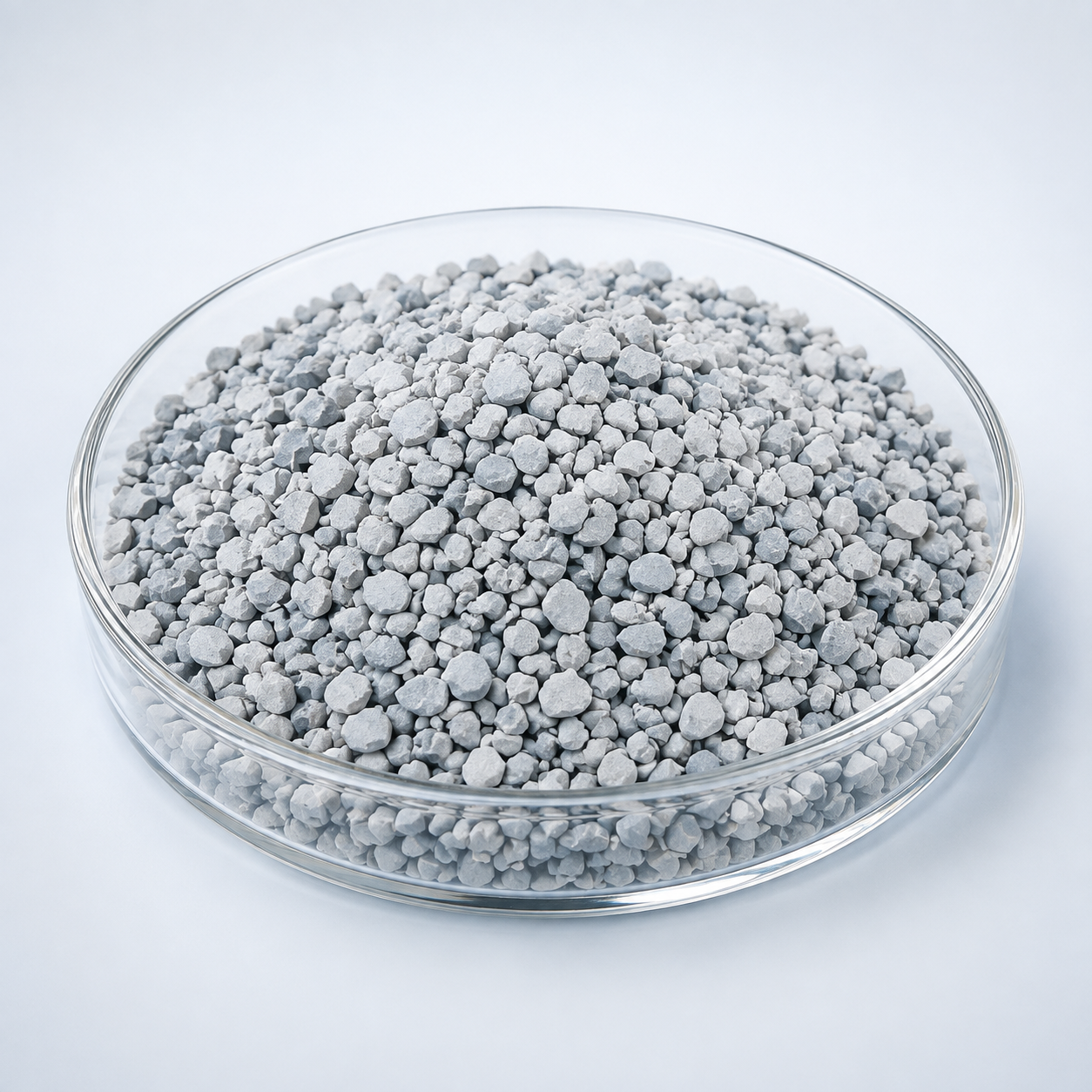
Antimony-doped tin oxide (ATO) evaporation material is a tin-oxide-based source containing antimony for depositing conductive or semiconducting oxide films by vacuum evaporation. The RFQ should state the requested SnO2/antimony-oxide composition and its basis, because the source composition, evaporation behavior, and deposited-film composition are related but are not automatically identical. Film electrical, optical, composition, and phase requirements must be verified on the intended deposition process.
Use the Evaporation Materials catalog when the source material or form is still being selected.
Evaporation Behavior and Process Considerations
Electron-beam evaporation is frequently evaluated for ceramic oxides because many have high melting temperatures. During heating, oxygen can be lost or the source can partially dissociate, so oxygen partial pressure, substrate temperature, deposition rate, and any post-deposition anneal may need optimization. The source should be conditioned gradually to minimize cracking, spitting, and sudden outgassing.
ATO evaporation material selection data
| Selection field | What to specify | Why it matters |
|---|---|---|
| Material identity | Antimony-doped tin oxide; state the requested SnO2/antimony-oxide composition | Separates the requested source chemistry from other transparent conductive oxides |
| Composition basis | State wt%, mol%, at%, or another defined basis | Prevents ambiguity between the RFQ, quotation, and lot documentation |
| Source form | Requested form, dimensions, mass, and quantity | The charge must be reviewed against the available crucible, boat, or e-beam pocket |
| Deposition method | Thermal or electron-beam system, source holder, and operating constraints | Heating mode and equipment geometry affect source conditioning and process development |
| Process and film checks | Oxygen strategy plus required film composition, electrical, optical, phase, or thickness measurements | The deposited film must be qualified under the intended process window |
| Inspection and documents | List required composition, dimensional, visual, or lot-document evidence | Keeps required acceptance evidence distinct from unverified catalog assumptions |
ATO or another transparent conductive oxide?
Compare candidate oxides using the required film function, substrate and temperature limits, deposition equipment, composition-control plan, and acceptance measurements. Do not treat a source-material comparison as proof that one material will reproduce another material’s film performance without process-specific testing.
Typical Thin-Film Applications
- Transparent conductive and antistatic oxide-film research
- Optical and electrical functional-film development where ATO is under evaluation
- Studies of source composition, oxygen content, deposited phase, and post-deposition treatment
Application fit depends on the specified film requirements and qualified process. Review the broader thin-film application categories before finalizing the source-material RFQ.
Source Form and Ordering Considerations
For an ATO quotation, provide the requested SnO2/antimony-oxide composition and basis, purity basis, source form and dimensions, mass or quantity, evaporation method, and the crucible, boat, or e-beam pocket dimensions. Include required film-composition or performance measurements and any inspection or lot-document requirements. Send the available specification and source-holder information to TFM for review; form, dimensions, composition, documentation, and feasibility remain subject to quotation and approved specification.
Frequently Asked Questions
Is Antimony Doped Tin Oxide commonly evaporated by electron beam?
Electron-beam evaporation is frequently evaluated for high-melting ceramic oxides because it can provide localized heating. The exact method depends on the oxide, source form, and required film properties.
Can Antimony Doped Tin Oxide lose oxygen during evaporation?
Yes. Some oxides can partially dissociate or become oxygen-deficient under vacuum heating. Oxygen partial pressure, substrate temperature, deposition rate, and post-annealing can influence the final film composition.
Why can oxide evaporation sources spit or crack?
Rapid heating, trapped gas, porosity, and thermal gradients can cause cracking or particle ejection. A gradual conditioning ramp and stable source geometry help reduce these effects.
Does the deposited film always match the composition of ATO Evaporation Materials?
Not always. Preferential evaporation, oxygen loss, decomposition, and substrate conditions can shift film chemistry or phase relative to the source material.
What source form is suitable for Antimony Doped Tin Oxide?
Pellets, tablets, pieces, or granules may be used depending on the e-beam pocket or crucible. A dense and mechanically stable source form is usually easier to condition reproducibly.
What information should I provide for an Antimony Doped Tin Oxide quotation?
Provide formula or composition, purity, source form and size, quantity, evaporation method, source-holder dimensions, and any film-composition or documentation requirements.
Reviews
There are no reviews yet.