
Introduction
Chromium powder is a strategically important metallic material widely used across surface engineering, advanced manufacturing, energy systems, electronics, and high-temperature industrial processes. Owing to its excellent corrosion resistance, high melting point, strong affinity for oxygen, nitrogen, and carbon, and its ability to form stable oxides and carbides, chromium plays a unique and often irreplaceable role in both traditional industries and cutting-edge technologies.
In powder form, chromium offers enhanced reactivity, precise compositional control, and compatibility with modern powder-based manufacturing methods such as thermal spraying, powder metallurgy, and additive manufacturing. These advantages have significantly expanded its usage scenarios beyond bulk alloys or electroplated chromium layers.
This article provides a systematic and in-depth analysis of chromium powder application scenarios, focusing on why chromium powder is selected, how it performs in different environments, and what technical value it brings to each field.
Fundamental Material Characteristics Relevant to Applications
Before discussing application scenarios, it is essential to understand the intrinsic material properties that define chromium powder’s industrial value:
- High melting point (~1907 °C), suitable for extreme thermal environments
- Outstanding corrosion and oxidation resistance, especially via Cr₂O₃ passivation
- High hardness and wear resistance when used in coatings or alloys
- Strong chemical activity in powder form, enabling solid-state reactions
- Good compatibility with alloy systems (Fe-Cr, Ni-Cr, Co-Cr, etc.)
These characteristics directly determine where chromium powder excels and where it outperforms alternative metallic powders.
Surface Engineering and Protective Coatings
Thermal Spray Coatings
One of the most established uses of chromium powder is in thermal spray technologies, including plasma spraying, HVOF (High-Velocity Oxygen Fuel), and detonation spraying.
Chromium-based coatings are widely used to:
Enhance wear resistance
Improve corrosion protection in harsh chemical environments
Provide high-temperature oxidation resistance
In particular, chromium powder is frequently blended or pre-alloyed to form:
Chromium oxide (Cr₂O₃) ceramic coatings
Chromium-containing metal or cermet coatings
These coatings are common in:
Hydraulic rods and cylinders
Pump shafts and valve components
Paper and printing rolls
Chemical processing equipment
Compared with traditional hard chrome electroplating, chromium powder-based thermal spray coatings avoid hexavalent chromium processes, offering a more environmentally acceptable solution while delivering superior thickness and durability.
Diffusion and Pack Cementation Coatings
Chromium powder is also used in chromizing processes, where chromium diffuses into steel or alloy substrates at elevated temperatures.
Application scenarios include:
- Heat exchanger tubes
- Furnace components
- Petrochemical reactor internals
Chromized layers formed using chromium powder exhibit:
- Excellent sulfidation and carburization resistance
- Improved lifespan in high-temperature corrosive atmospheres
This application remains critical in industries where component replacement costs are extremely high.
Powder Metallurgy and Alloy Manufacturing
Chromium Powder in Steel and Superalloy Production
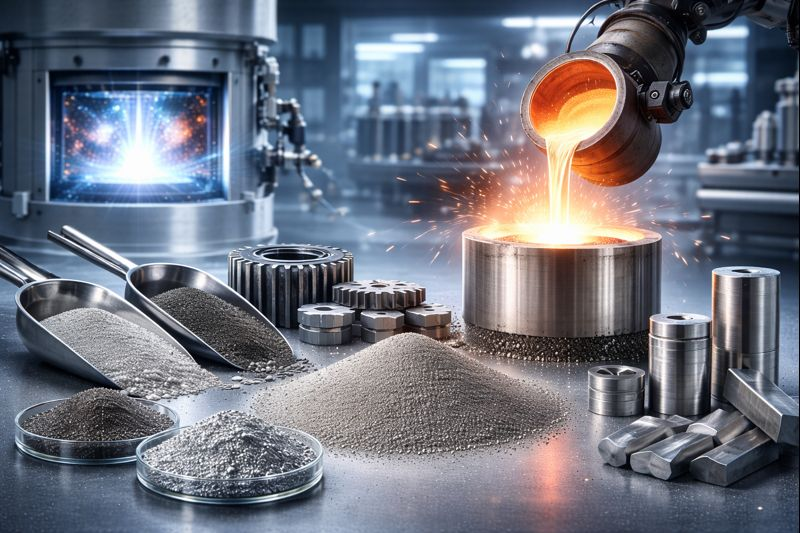
Chromium is a cornerstone element in stainless steels and high-performance alloys. Chromium powder plays an important role in powder metallurgy routes where precise control of alloy composition is required.
Typical scenarios include:
- Stainless steel PM parts
- Tool steels with enhanced wear resistance
- Iron-chromium magnetic or structural materials
Powder-based chromium addition allows:
- Homogeneous microstructure
- Reduced segregation compared to ingot metallurgy
- Tailored chromium distribution at grain boundaries
This is especially important for sintered components used in automotive, aerospace, and industrial machinery.
Master Alloys and Reactive Sintering
Chromium powder is often used in:
- Chromium master alloys
- Reactive sintering systems to form carbides or nitrides
For example:
- Chromium + carbon → chromium carbides (Cr₃C₂, Cr₇C₃)
- Chromium + nitrogen → chromium nitrides
These reaction-formed phases are critical in wear-resistant composites, cutting tools, and protective coatings.
Energy, High-Temperature, and Chemical Industries
High-Temperature Structural Components
In energy generation and thermal processing industries, chromium powder supports the production of materials capable of long-term service at elevated temperatures.
Key applications include:
- Gas turbine components
- Industrial furnace fixtures
- Heat-resistant alloys for power plants
Chromium’s ability to form a stable oxide layer significantly slows oxidation and material degradation under cyclic thermal loading.
Chemical Processing and Corrosion-Resistant Systems
Chromium powder is indirectly or directly involved in manufacturing materials used in:
- Acidic and alkaline processing environments
- Chloride-containing chemical systems
- High-pressure reactors
Chromium-rich alloys and coatings fabricated using chromium powder offer strong resistance to pitting and crevice corrosion, particularly where nickel-based systems alone are insufficient or cost-prohibitive.
Electronics, Thin Films, and Functional Materials
Thin Film Deposition and Sputtering-Related Uses
Although chromium powder itself is not typically used directly in sputtering systems, it is an essential feedstock material for:
- Chromium sputtering targets
- Chromium alloy targets
Chromium thin films deposited from these targets are widely used for:
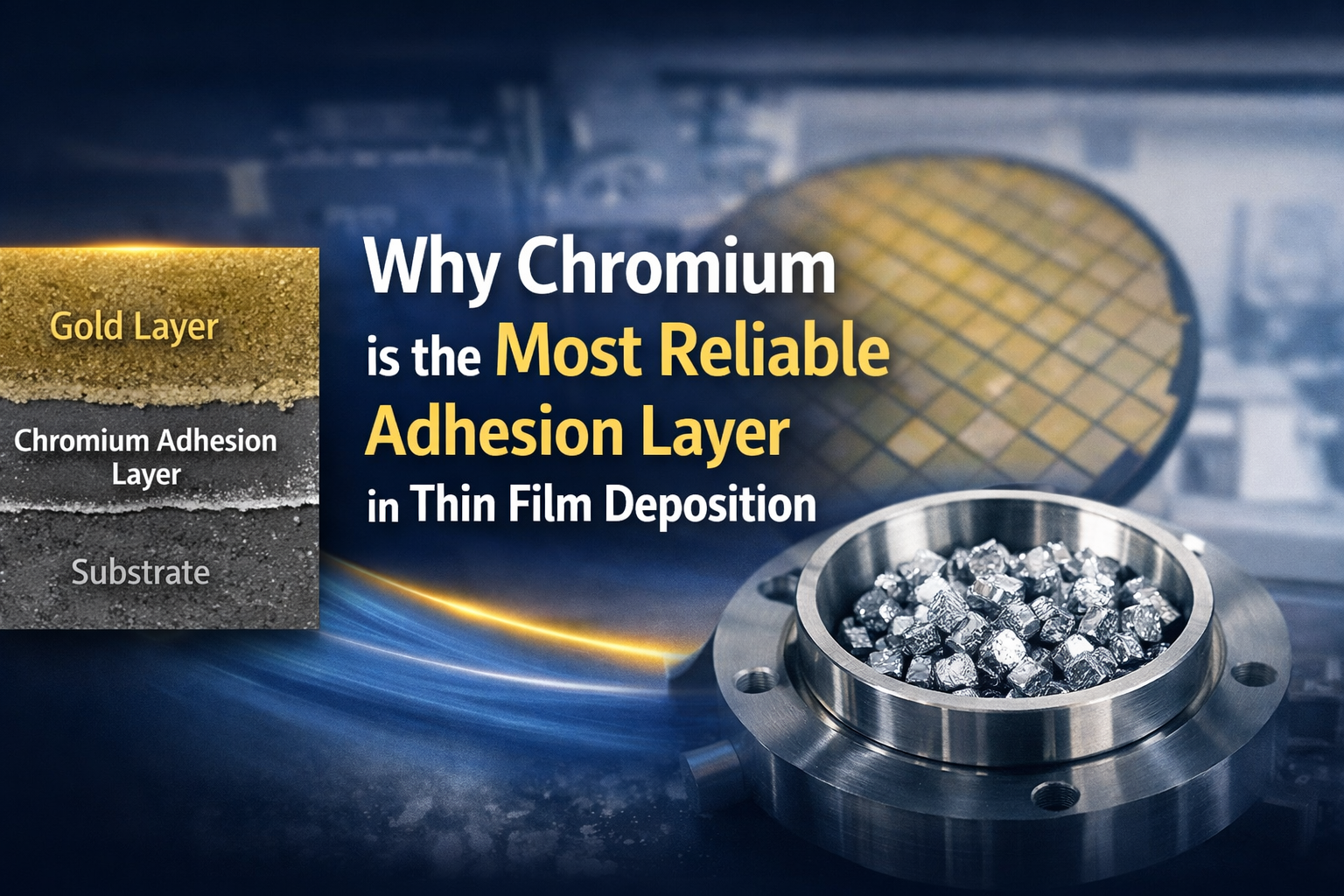
- Adhesion layers in microelectronics
- Diffusion barriers
- Decorative and functional coatings
The powder’s purity, particle size distribution, and oxygen content directly influence target density and film performance.
Electrical and Magnetic Applications
Chromium powder finds niche usage in:
- Resistor materials
- Magnetic alloy systems (Fe-Cr based)
- EMI shielding and conductive composites
Its controlled oxidation behavior enables stable electrical performance over a wide temperature range, making it suitable for demanding electronic environments.
Additive Manufacturing and Advanced Fabrication
Metal Additive Manufacturing (AM)
With the rapid growth of metal additive manufacturing, chromium powder is increasingly studied and applied as:
- A standalone material for research
- An alloying component in AM feedstocks
In laser powder bed fusion (LPBF) and directed energy deposition (DED), chromium contributes to:
- Improved oxidation resistance of printed parts
- Enhanced high-temperature mechanical stability
However, due to chromium’s high melting point and oxidation sensitivity, powder morphology, flowability, and surface chemistry must be carefully controlled.
Functionally Graded Materials (FGMs)
Chromium powder enables the design of functionally graded structures where:
- Chromium-rich layers provide surface protection
- Core materials maintain toughness or thermal conductivity
Such designs are increasingly relevant in aerospace and advanced tooling applications.
Research, Development, and Emerging Technologies
Catalysis and Chemical Research
Chromium powder is widely used in laboratory research for:
- Catalyst precursor synthesis
- Model reactions in surface chemistry
- Oxidation-reduction studies
Its predictable oxidation states and surface behavior make it valuable in both academic and industrial R&D environments.
Environmental and Replacement Technologies
With global restrictions on hexavalent chromium plating, chromium powder-based technologies are gaining momentum as safer alternatives.
Application trends include:
- Replacement of hard chrome plating
- Development of chromium-based cermet coatings
- Hybrid chromium-oxide protective systems
These developments are expected to expand chromium powder demand in regulated markets.
Key Considerations When Selecting Chromium Powder
When evaluating chromium powder for specific applications, engineers and researchers typically focus on:
- Purity level (industrial vs research grade)
- Particle size and distribution
- Surface oxygen content
- Powder morphology (spherical vs irregular)
- Handling and storage conditions
Each parameter directly influences performance, especially in sintering, spraying, or reactive processing scenarios.
Conclusion
Chromium powder is far more than a simple metallic raw material. Its unique combination of chemical stability, mechanical strength, and high-temperature performance makes it indispensable across surface engineering, powder metallurgy, energy systems, electronics, and advanced manufacturing technologies.
From traditional wear-resistant coatings to emerging additive manufacturing and environmentally compliant alternatives to electroplating, chromium powder continues to evolve in both application breadth and technical sophistication. As industries demand materials that perform reliably under harsher conditions while meeting stricter environmental standards, chromium powder will remain a critical enabler of next-generation material solutions.
For detailed specifications, customized particle sizes, and application-specific guidance, professional material suppliers can provide tailored chromium powder solutions to meet both industrial and research requirements.