

 MSDS File
Introduction
Aluminum Copper Evaporation Materials (Al/Cu) are alloy evaporation sources commonly used in thin film deposition processes for semiconductor devices, microelectronics, and advanced coating technologies. The combination of aluminum and copper provides improved electrical conductivity, enhanced electromigration resistance, and stable film formation during deposition.
Al/Cu alloys are widely used in integrated circuit metallization, semiconductor interconnects, and thin film electronics, where reliable conductive layers are required. When deposited using thermal evaporation or electron beam evaporation, Al/Cu evaporation materials allow the formation of uniform metallic films with controlled composition and excellent electrical performance.
Detailed Description
Aluminum Copper evaporation materials are produced from high-purity aluminum and copper through controlled alloy melting and casting processes. These manufacturing techniques ensure homogeneous distribution of copper within the aluminum matrix, which is critical for maintaining consistent film properties during evaporation deposition.
Pure aluminum has long been used as a metallization material in semiconductor devices due to its excellent electrical conductivity and compatibility with silicon. However, pure aluminum films can suffer from electromigration under high current densities. The addition of a small amount of copper—typically 0.5–4 wt% Cu—significantly improves the reliability of the metal interconnects by reducing electromigration and enhancing structural stability.
During evaporation deposition, Al/Cu materials provide smooth film growth and good adhesion to common semiconductor substrates. The alloy composition can be carefully controlled to achieve the desired balance between conductivity, reliability, and film stability.
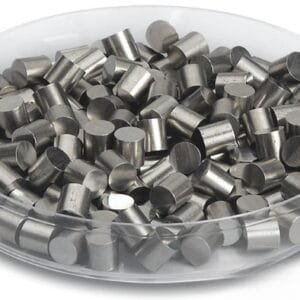
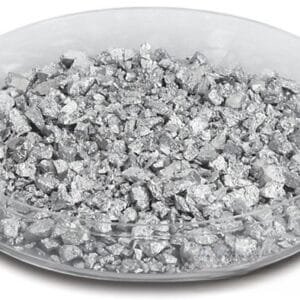
Al/Cu evaporation materials are typically supplied in pellets, granules, tablets, wires, or pieces, optimized for electron beam evaporation or resistive heating evaporation systems. High-purity materials and uniform alloy composition ensure stable evaporation rates and consistent thin film quality.
Applications
Aluminum Copper evaporation materials are widely used across semiconductor and electronic industries:
Integrated circuit metallization for conductive interconnect layers
Semiconductor device fabrication requiring reliable metal contacts
Thin film electronics used in microelectronic devices
Display and sensor technologies requiring conductive coatings
MEMS devices requiring stable metal layers
Research and development of advanced electronic materials
Technical Parameters
| Parameter | Typical Value / Range | Importance |
|---|---|---|
| Purity | 99.99% – 99.999% | High purity ensures reliable electronic performance |
| Composition | Al with 0.5 – 4 wt% Cu | Improves electromigration resistance |
| Form | Pellets / Granules / Tablets / Wire | Compatible with evaporation sources |
| Particle Size | 1 – 6 mm typical | Supports stable evaporation rates |
| Density | High-density alloy material | Ensures uniform evaporation behavior |
| Deposition Method | E-beam evaporation / Thermal evaporation | Suitable for PVD thin film deposition |
Comparison with Related Materials
| Material | Key Advantage | Typical Application |
|---|---|---|
| Aluminum Copper (Al/Cu) | Improved electromigration resistance compared with pure Al | Semiconductor interconnect layers |
| Aluminum (Al) | Excellent electrical conductivity and low density | Metallization layers in electronics |
| Copper (Cu) | Very high conductivity and thermal performance | Advanced semiconductor interconnects |
FAQ
| Question | Answer |
|---|---|
| What forms are available for Al/Cu evaporation materials? | They are typically supplied as pellets, granules, tablets, wire, or custom pieces depending on the evaporation system. |
| What copper concentration is commonly used? | Typical compositions contain 0.5–4 wt% copper, depending on the required reliability and conductivity. |
| Which deposition methods are suitable for Al/Cu materials? | Aluminum copper alloys are commonly used in electron beam evaporation and thermal evaporation systems. |
| What substrates are suitable for Al/Cu thin films? | Films can be deposited on silicon wafers, glass, ceramic substrates, and other electronic materials. |
| Why add copper to aluminum in semiconductor metallization? | Copper improves resistance to electromigration and enhances the reliability of aluminum interconnects. |
Packaging
Our Aluminum Copper Evaporation Materials (Al/Cu) are meticulously tagged and labeled externally to ensure efficient identification and maintain high standards of quality control. The materials are packaged in vacuum-sealed bags or inert atmosphere containers to prevent oxidation and contamination. Protective cushioning and export-grade cartons or wooden crates ensure safe storage and transportation.
Conclusion
Aluminum Copper Evaporation Materials (Al/Cu) provide a reliable solution for depositing conductive thin films used in semiconductor devices and electronic systems. By combining aluminum’s excellent conductivity with copper’s ability to improve electromigration resistance, these materials support stable and durable metallization layers.
With customizable alloy compositions, high purity levels, and consistent evaporation performance, Al/Cu evaporation materials remain an important choice for modern semiconductor manufacturing and advanced thin film electronics.
For detailed specifications and a quotation, please contact us at sales@thinfilmmaterials.com.

Reviews
There are no reviews yet.