

Introduction
The Chromium-doped Silicon Monoxide Sputtering Target (SiO/Cr) is a functional composite target developed for thin-film applications that require enhanced film stability, controlled electrical behavior, and improved adhesion compared with conventional silicon monoxide coatings. By introducing a controlled amount of chromium into the SiO matrix, this material enables advanced optical, electronic, and protective coatings with tailored performance.
SiO/Cr sputtering targets are widely used in optical coating systems, microelectronics research, and functional thin-film development where precise compositional control and repeatable deposition behavior are essential.
Detailed Description
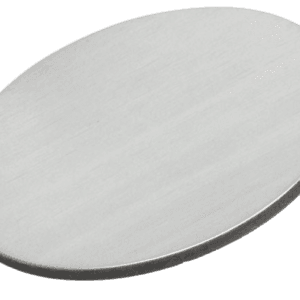
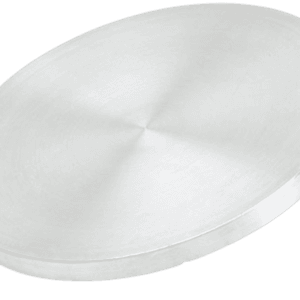
Chromium-doped Silicon Monoxide sputtering targets are produced using high-purity silicon monoxide and chromium raw materials through carefully controlled powder blending, consolidation, and sintering processes. The resulting target exhibits uniform chromium distribution, high density, and stable microstructure—key factors for consistent sputtering rates and film composition.
In thin-film deposition, chromium acts as an effective dopant that enhances film adhesion, mechanical strength, and electrical conductivity while maintaining the desirable optical characteristics of SiO. Compared with pure SiO films, SiO/Cr coatings show improved resistance to cracking, delamination, and environmental degradation, especially in multilayer optical stacks or demanding device environments.
The SiO/Cr sputtering target is compatible with RF magnetron sputtering systems commonly used for ceramic and composite materials. Deposition parameters such as chromium content, sputtering power, oxygen partial pressure, and substrate temperature can be adjusted to fine-tune film refractive index, absorption, and electrical properties.
Applications
Chromium-doped Silicon Monoxide sputtering targets are commonly used in:
Optical coatings with enhanced durability
Adhesion-promoting interlayers in multilayer thin films
Thin-film resistors and functional electronic layers
Infrared and visible optical components
Protective and wear-resistant coatings
Research and development of doped oxide films
Technical Parameters
| Parameter | Typical Value / Range | Importance |
|---|---|---|
| Chemical Composition | SiO with Cr dopant | Controls film functionality |
| Chromium Content | Custom (wt% or at%) | Tunes electrical & mechanical properties |
| Purity | 99.9% – 99.99% | Ensures film uniformity |
| Target Diameter | 25 – 300 mm (custom) | Fits standard sputtering systems |
| Thickness | 3 – 6 mm (custom available) | Influences sputtering stability |
| Density | ≥ 95% of theoretical | Promotes uniform erosion |
| Deposition Method | RF Magnetron Sputtering | Suitable for ceramic composites |
Comparison with Related Materials
| Material | Key Advantage | Typical Application |
|---|---|---|
| SiO/Cr | Improved adhesion & stability | Optical & functional films |
| Pure SiO | High optical transparency | Optical coatings |
| SiO₂ | Chemical stability | Insulating layers |
| Cr Metal | Strong adhesion, conductivity | Adhesion layers |
FAQ
| Question | Answer |
|---|---|
| Can the chromium content be customized? | Yes, Cr concentration can be adjusted based on application needs. |
| Is RF sputtering required? | RF sputtering is recommended due to the ceramic nature of SiO/Cr. |
| Can this target replace separate SiO and Cr layers? | In many designs, SiO/Cr enables simplified multilayer structures. |
| Are small research targets available? | Yes, lab-scale sizes are supported. |
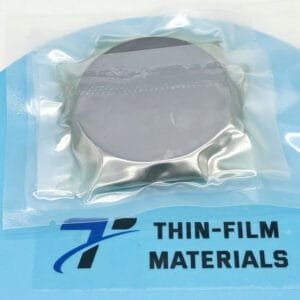
| How is the target packaged? | Vacuum-sealed with protective cushioning to prevent contamination. |
Packaging
Our Chromium-doped Silicon Monoxide Sputtering Targets (SiO/Cr) are meticulously vacuum-sealed and externally labeled for efficient identification and strict quality control. Protective cushioning and moisture-resistant packaging are used to prevent mechanical damage or contamination during storage and international transportation.
Conclusion
The Chromium-doped Silicon Monoxide Sputtering Target (SiO/Cr) offers a reliable solution for depositing advanced oxide thin films with improved adhesion, durability, and tunable functional properties. With customizable composition, stable sputtering behavior, and consistent quality, SiO/Cr targets are well suited for optical, electronic, and research-driven thin-film applications.
For detailed specifications and a quotation, please contact us at sales@thinfilmmaterials.com.
Reviews
There are no reviews yet.