

Introduction
Cobalt Iron Sputtering Target (CoFe) is a high-performance magnetic alloy target widely used for depositing soft magnetic thin films in spintronics, magnetic sensors, memory devices, and advanced microelectronic components. With its high saturation magnetization and excellent magnetic permeability, CoFe thin films play a critical role in magnetic tunnel junctions (MTJs), read/write heads, and magnetic shielding layers.
Engineered for uniform sputtering behavior and compositional stability, CoFe sputtering targets support both research-scale deposition and high-volume industrial production.
Detailed Description
Cobalt Iron (CoFe) is a binary ferromagnetic alloy typically formulated in controlled atomic or weight ratios such as Co₅₀Fe₅₀, Co₇₀Fe₃₀, or customized compositions. The alloy exhibits:
High saturation magnetization
Low coercivity (soft magnetic behavior)
Good thermal stability
Strong spin polarization
These properties make CoFe thin films particularly suitable for high-sensitivity magnetic and spin-dependent electronic applications.
CoFe sputtering targets are manufactured through vacuum melting and controlled alloying processes to ensure chemical homogeneity and dense microstructure. Hot isostatic pressing (HIP) or precision casting may be applied to improve density and reduce porosity, resulting in stable sputtering rates and minimized particle generation.
Targets are available in:
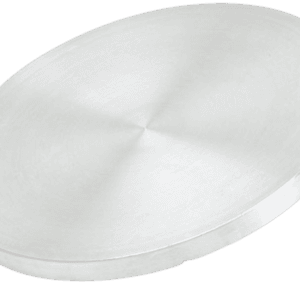
Planar round or rectangular geometries
Bonded configurations with copper backing plates (indium or elastomer bonding)
Unbonded forms for laboratory-scale deposition
Careful control of grain structure enhances sputtering uniformity and ensures consistent magnetic film performance.
Applications
Cobalt Iron Sputtering Target (CoFe) is widely used in:
Magnetic tunnel junction (MTJ) layers
Spintronic devices
MRAM (Magnetoresistive Random Access Memory)
GMR/TMR sensor fabrication
Magnetic recording heads
Soft magnetic thin films
Microwave and RF magnetic components
Magnetic shielding coatings
In spintronic structures, CoFe films are often combined with MgO or other insulating layers to form high-efficiency tunneling devices.
Technical Parameters
| Parameter | Typical Value / Range | Importance |
|---|---|---|
| Composition | Co₅₀Fe₅₀, Co₇₀Fe₃₀ (custom) | Defines magnetic properties |
| Purity | 99.9% – 99.99% (metal basis) | Reduces impurities in films |
| Density | ≥ 99% theoretical density | Stable sputtering behavior |
| Diameter | 25 – 300 mm (custom) | Matches sputtering cathodes |
| Thickness | 3 – 6 mm (custom) | Influences target lifetime |
| Bonding | Copper backing (optional) | Improves heat dissipation |
| Sputtering Method | DC / RF Magnetron | Process flexibility |
Comparison with Related Materials
| Material | Key Advantage | Typical Application |
|---|---|---|
| CoFe | High saturation magnetization | Spintronics & MTJ |
| CoFeB | Amorphous structure, smooth interfaces | Advanced MTJ stacks |
| Pure Co | Strong magnetic response | Magnetic films |
| Pure Fe | Cost-effective magnetic layer | Basic magnetic coatings |
Compared with pure cobalt or iron, CoFe alloy offers optimized magnetic performance and improved film stability. Compared with CoFeB, it provides higher crystalline magnetic properties without boron-induced amorphization.
FAQ
| Question | Answer |
|---|---|
| Can the Co/Fe ratio be customized? | Yes, alloy composition can be tailored to meet specific magnetic performance requirements. |
| Is a copper backing plate necessary? | For high-power sputtering, bonding to a copper backing plate is recommended for thermal management. |
| What sputtering methods are supported? | Suitable for both DC and RF magnetron sputtering. |
| Can small R&D quantities be supplied? | Yes, flexible quantities are available for laboratory research. |
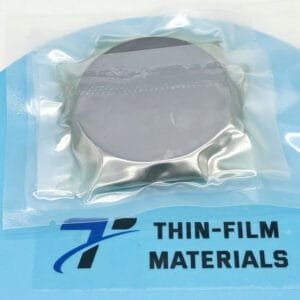
| How is the target packaged? | Vacuum-sealed packaging with protective cushioning ensures safe transport. |
Packaging
Our Cobalt Iron Sputtering Target (CoFe) products are meticulously tagged and labeled externally to ensure efficient identification and maintain high standards of quality control. Each target is carefully protected to prevent surface damage and contamination during storage and transportation.
Conclusion
Cobalt Iron Sputtering Target (CoFe) provides a reliable and high-performance solution for depositing soft magnetic thin films in spintronics, memory devices, and magnetic sensing technologies. With customizable compositions, high density, and optional backing plate configurations, CoFe targets deliver consistent sputtering performance and magnetic film quality.
For detailed specifications and a quotation, please contact us at sales@thinfilmmaterials.com.

Reviews
There are no reviews yet.