

 MSDS File
Introduction
Gadolinium(III) Oxide Evaporation Materials (Gd₂O₃) are high-purity rare earth oxide sources designed for advanced thin film deposition in optical, electronic, magnetic, and nuclear-related research applications. With a high dielectric constant, strong paramagnetic behavior, and excellent thermal stability, Gd₂O₃ is widely used in functional oxide thin films and multilayer coating systems.
In physical vapor deposition (PVD) processes such as electron beam evaporation and high-temperature thermal evaporation, material purity and stoichiometric stability directly impact film performance. Carefully processed Gd₂O₃ evaporation materials ensure consistent evaporation behavior, low contamination levels, and reproducible thin film characteristics.
Detailed Description
Gadolinium(III) Oxide (Gd₂O₃) is a white crystalline rare earth oxide with a melting point of approximately 2330–2420°C, depending on crystalline phase. It exhibits a high refractive index, strong dielectric properties, and paramagnetic characteristics, making it suitable for both electronic and optical thin film systems.
Key features include:
High Purity Levels (3N–5N typical) – Minimizes metallic impurities that may affect dielectric strength or optical transmission.
Stable Stoichiometric Composition – Ensures predictable refractive index and electrical properties in deposited films.
High Thermal Stability – Suitable for high-temperature deposition and post-deposition annealing processes.
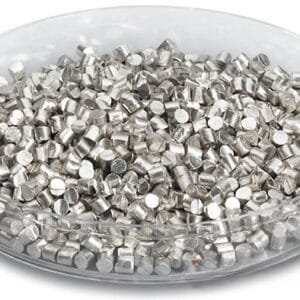
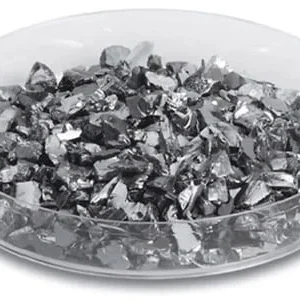
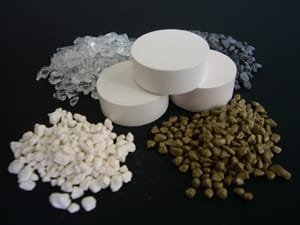
Controlled Particle Morphology – Available in powder, granule, or pellet form for stable melting and evaporation.
Due to its high melting point, electron beam evaporation is typically recommended to achieve dense and uniform films. Controlled power ramping helps prevent spitting and ensures stable vapor flux. Gd₂O₃ films can also serve as precursors for doped rare earth oxide systems and mixed dielectric materials.
Applications
Gadolinium(III) Oxide Evaporation Materials are widely used in:
High-k Dielectric Films
Gate dielectric research and advanced semiconductor device development.Optical Coatings
High-index layers in multilayer interference filters and laser optics.Magnetic & Spintronic Research
Paramagnetic thin films for magnetic and magneto-optical studies.Nuclear & Radiation Research (R&D scale)
Gd-containing thin films for neutron interaction studies.Rare Earth Doped Thin Films
Host material in luminescent and phosphor-based film systems.
Technical Parameters
| Parameter | Typical Value / Range | Importance |
|---|---|---|
| Purity | 99.9% – 99.999% (3N–5N) | Reduces defect density and contamination |
| Chemical Formula | Gd₂O₃ | Ensures consistent stoichiometry |
| Melting Point | ~2330–2420°C | Suitable for high-temperature deposition |
| Refractive Index | ~1.9 (visible range, film) | Critical for optical stack design |
| Form | Powder / Granules / Pellets | Compatible with evaporation systems |
| Packaging | Vacuum-sealed / moisture-protected | Preserves chemical integrity |
Comparison with Related Oxide Materials
| Material | Key Advantage | Typical Application |
|---|---|---|
| Gadolinium Oxide (Gd₂O₃) | High dielectric constant & paramagnetic behavior | Electronic & magnetic films |
| Yttrium Oxide (Y₂O₃) | Excellent thermal and plasma resistance | Optical & protective layers |
| Hafnium Oxide (HfO₂) | Very high dielectric constant | Advanced gate dielectrics |
| Lanthanum Oxide (La₂O₃) | High-k performance | Semiconductor research |
Compared to Y₂O₃, Gd₂O₃ offers enhanced magnetic properties and slightly higher dielectric characteristics. Compared to HfO₂, it provides rare earth functionality combined with strong thermal stability.
FAQ
| Question | Answer |
|---|---|
| Is Gd₂O₃ suitable for thermal evaporation? | Due to its high melting point, electron beam evaporation is generally preferred. |
| Can purity levels be customized? | Yes, multiple purity grades are available to meet optical or electronic requirements. |
| Does Gd₂O₃ absorb moisture? | It is relatively stable but should be stored in sealed, dry packaging to prevent contamination. |
| What forms are available? | Powder, granules, and pellets can be supplied based on equipment compatibility. |
| Which industries use Gd₂O₃ films most? | Semiconductor research, optical coating production, magnetic material development, and advanced materials laboratories. |
Packaging
Our Gadolinium(III) Oxide Evaporation Materials are meticulously tagged and labeled externally to ensure efficient identification and maintain high standards of quality control. We take great care to prevent any potential damage during storage and transportation, ensuring the materials arrive in perfect condition.
Conclusion
Gadolinium(III) Oxide Evaporation Materials (Gd₂O₃) provide a high-purity, thermally stable solution for depositing dielectric, optical, and magnetic rare earth oxide thin films. With controlled stoichiometry, flexible supply formats, and compatibility with advanced evaporation systems, Gd₂O₃ supports demanding semiconductor, optical, and research-driven applications.
For detailed specifications and a quotation, please contact us at sales@thinfilmmaterials.com.
Reviews
There are no reviews yet.