

Introduction
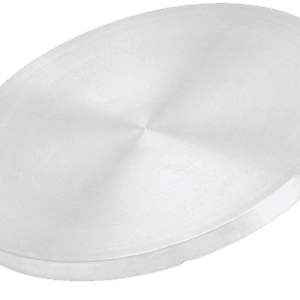
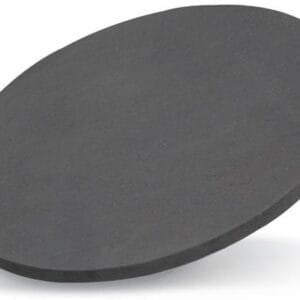
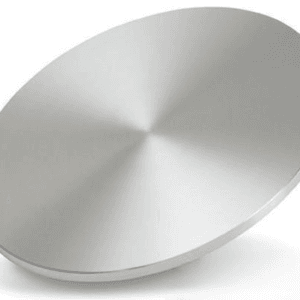
Germanium Dioxide (GeO₂) sputtering targets are high-purity ceramic materials designed for the deposition of optical, dielectric, and semiconductor-related thin films. As an important germanium oxide compound, GeO₂ plays a critical role in infrared optics, optical fiber technology, and advanced electronic materials.
With its high refractive index, good chemical stability, and compatibility with vacuum deposition processes, GeO₂ sputtering targets are widely used in research laboratories and industrial thin-film production environments.
Detailed Description
Germanium Dioxide crystallizes in hexagonal or tetragonal forms and is typically processed into dense ceramic sputtering targets using controlled powder preparation and sintering technologies. High-density GeO₂ targets are engineered to achieve:
High purity levels (3N–5N depending on application)
Uniform microstructure and grain size
Low porosity for stable sputtering behavior
Controlled stoichiometry to ensure consistent film composition
The density and microstructural uniformity directly influence sputtering stability, deposition rate, and the optical consistency of deposited films. For demanding applications, targets can be fabricated with copper or titanium backing plates to enhance heat dissipation and minimize cracking during high-power RF sputtering.
GeO₂ is typically sputtered using RF systems due to its insulating nature. The resulting films exhibit high transparency in the visible and infrared ranges, along with a relatively high refractive index, making them suitable for optical multilayer stacks and waveguide structures.
Applications
Germanium Dioxide sputtering targets are commonly used in:
Optical Coatings
High-refractive-index layers in antireflective coatings and optical filters.Infrared Optics
Thin films for IR lenses and sensor systems.Optical Fiber Preforms
Doping material for modifying refractive index profiles in fiber optics.Semiconductor & Dielectric Films
Gate dielectrics and passivation layers in specialized devices.Photonic Devices
Waveguides and integrated optical components.Research & Development
Thin-film material studies in universities and national laboratories.
Technical Parameters
| Parameter | Typical Value / Range | Importance |
|---|---|---|
| Chemical Formula | GeO₂ | Defines film composition |
| Purity | 99.9% – 99.999% (3N–5N) | Reduces optical and electrical defects |
| Density | ≥ 95–99% theoretical density | Ensures stable sputtering behavior |
| Diameter | 1″ – 6″ (custom sizes available) | Fits various sputtering cathodes |
| Thickness | 3 – 8 mm | Influences target lifetime |
| Bonding | Cu or Ti backing plate optional | Improves thermal management |
| Sputtering Type | RF recommended | Suitable for insulating materials |
Comparison with Related Materials
| Material | Key Advantage | Typical Application |
|---|---|---|
| Germanium Dioxide (GeO₂) | High refractive index, IR transparency | Optical & IR coatings |
| Silicon Dioxide (SiO₂) | Low refractive index, high stability | Antireflective layers |
| Titanium Dioxide (TiO₂) | Very high refractive index | Optical multilayers |
| Hafnium Oxide (HfO₂) | High dielectric constant | Advanced electronics |
GeO₂ is often selected when infrared transmission and refractive index tuning are primary design considerations.
FAQ
| Question | Answer |
|---|---|
| Is GeO₂ target suitable for DC sputtering? | Due to its insulating nature, RF sputtering is generally recommended. |
| Can target size and thickness be customized? | Yes, diameter, thickness, and bonding configuration can be tailored. |
| What purity level is recommended for optical applications? | 4N or higher purity is typically preferred for precision optical coatings. |
| Are bonded targets available? | Yes, copper or titanium backing plates are available for improved thermal stability. |
| How is the product packaged? | Vacuum-sealed with protective foam and export-grade cartons or wooden crates. |
Packaging
Our Germanium Dioxide Sputtering Targets are meticulously tagged and labeled externally to ensure efficient identification and maintain high standards of quality control. We take great care to prevent any potential damage during storage and transportation, ensuring the targets arrive in perfect condition.
Conclusion
Germanium Dioxide (GeO₂) sputtering targets provide a reliable solution for depositing high-quality optical and dielectric films, particularly in infrared and photonic applications. With controlled purity, optimized density, and customizable configurations, GeO₂ targets support both precision research and industrial-scale thin-film production.
For detailed specifications and a quotation, please contact us at sales@thinfilmmaterials.com.
Reviews
There are no reviews yet.