

Germanium Silicon Sputtering Target
Introduction
The Germanium Silicon (Ge₈₅Si₁₅) Sputtering Target is a key material for thin film deposition in the semiconductor and optoelectronic industries. By combining the superior carrier mobility of germanium with the thermal stability and oxidation resistance of silicon, Ge-Si alloy targets enable precise control over bandgap and strain engineering in advanced device fabrication. This material is particularly valuable for producing thin films in high-performance electronics, photonics, and infrared sensing applications.
Detailed Description
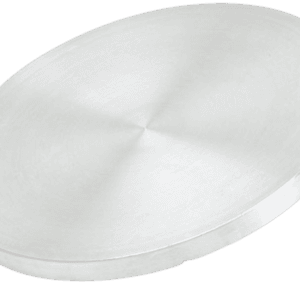
The Ge₈₅Si₁₅ sputtering target consists of 85 at.% germanium and 15 at.% silicon, resulting in a material that offers a balanced combination of electronic conductivity and structural integrity. This specific ratio is commonly used to produce epitaxial or amorphous thin films with tunable electrical and optical characteristics.
The target is typically fabricated using vacuum melting, hot pressing, or zone refining to ensure high purity and uniform microstructure. These processes minimize impurities and grain boundary defects that can otherwise affect film quality and deposition consistency. The resulting target exhibits excellent density, uniform sputtering behavior, and strong adhesion to backing plates when bonded with indium or elastomer interfaces.
Applications
The Germanium Silicon Sputtering Target is used across several high-tech sectors:
Semiconductor fabrication: for strained-layer SiGe epitaxial films and heterojunction devices.
Optoelectronics: in infrared detectors, LEDs, and photonic integrated circuits.
Thin film transistors (TFTs): for next-generation display and sensor technologies.
Solar cells: to improve carrier mobility and light absorption efficiency.
MEMS and sensors: where precision-engineered thin films enhance signal performance.
Technical Parameters
| Parameter | Typical Value / Range | Importance |
|---|---|---|
| Composition | Ge₈₅Si₁₅ (at.%) | Defines alloy properties and bandgap |
| Purity | 99.9% – 99.999% | Higher purity ensures superior film quality |
| Density | 5.2 – 5.4 g/cm³ | Affects sputtering rate and film uniformity |
| Diameter | 25 – 300 mm (customizable) | Compatible with various sputtering systems |
| Thickness | 3 – 6 mm | Influences deposition efficiency |
| Bonding | Indium / Elastomer | Enhances thermal stability and adhesion |
| Form | Disc / Rectangle / Custom | Adaptable for magnetron sputtering systems |
Comparison with Related Materials
| Material | Key Advantage | Typical Application |
|---|---|---|
| Ge₈₅Si₁₅ | Tunable electrical and optical properties | Semiconductor and IR devices |
| Pure Ge | High carrier mobility | Detectors and IR optics |
| Pure Si | Excellent thermal and oxidation resistance | CMOS and microelectronics |
FAQ
| Question | Answer |
|---|---|
| Can the composition be customized? | Yes, Ge-Si ratios from Ge₉₅Si₅ to Ge₇₀Si₃₀ are available upon request. |
| How is the target bonded? | Typically with indium or elastomer to ensure efficient heat dissipation and mechanical stability. |
| What is the packing method? | Each target is vacuum-sealed, cushioned with anti-static foam, and packed in export-safe wooden crates. |
| What sputtering systems are compatible? | Compatible with RF and DC magnetron sputtering systems. |
| What industries commonly use it? | Semiconductor, infrared optics, solar energy, and R&D applications. |
Packaging
Our Germanium Silicon Sputtering Targets are carefully vacuum-sealed and labeled to ensure full traceability and protection from contamination. External cartons or wooden crates provide impact resistance during transit, guaranteeing that each target arrives in pristine condition.
Conclusion
The Ge₈₅Si₁₅ Sputtering Target combines germanium’s superior electronic mobility with silicon’s stability, offering a versatile solution for high-precision thin film applications. With customizable compositions, bonding, and sizes, it supports the evolving needs of advanced semiconductor and photonic manufacturing.
For detailed specifications and a quotation, please contact us at [sales@thinfilmmaterials.com].


Reviews
There are no reviews yet.