
Introduction
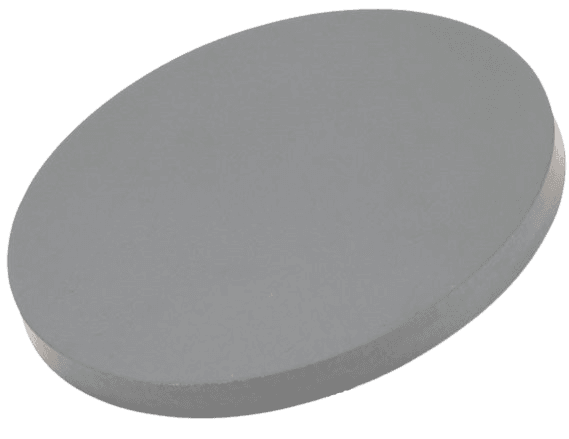
The Iridium Manganese Sputtering Target (Ir/Mn) is a specialized alloy target widely used in the fabrication of magnetic thin films for spintronic and magnetic storage devices. Iridium manganese alloys are best known for their role as antiferromagnetic pinning layers in advanced magnetic multilayer structures. These materials are critical in technologies such as magnetoresistive sensors, magnetic tunnel junctions (MTJs), and spin-valve devices.
Using magnetron sputtering or other physical vapor deposition (PVD) methods, Ir/Mn sputtering targets enable the deposition of thin films that exhibit strong exchange bias properties, high thermal stability, and excellent magnetic performance. These features make IrMn alloys essential materials in modern data storage and magnetic sensing technologies.
Detailed Description
Iridium Manganese sputtering targets are typically manufactured from high-purity iridium and manganese using vacuum melting, powder metallurgy, or hot isostatic pressing (HIP) techniques. These manufacturing processes ensure a dense, homogeneous alloy structure with precise control of composition, which is crucial for maintaining stable sputtering behavior and consistent thin film performance.
Iridium provides excellent chemical stability, corrosion resistance, and high melting temperature, while manganese contributes the antiferromagnetic characteristics necessary for exchange bias effects in magnetic devices. When combined in specific compositions—commonly IrMn₃ or Ir₀.₂Mn₀.₈ (approximately 20–25 at% Ir)—the alloy forms a highly stable antiferromagnetic phase.
Thin films deposited from Ir/Mn sputtering targets are widely used to pin the magnetization direction of adjacent ferromagnetic layers in multilayer magnetic stacks. This exchange bias effect is fundamental for devices that rely on stable magnetic reference layers, including read heads in hard disk drives and various spintronic components.
High-density Ir/Mn targets are essential for maintaining uniform sputtering rates and minimizing particle generation during deposition. For high-power sputtering systems, these targets are often supplied as bonded targets with copper backing plates, typically using indium bonding or diffusion bonding to enhance heat transfer and mechanical stability.
Applications
Iridium Manganese sputtering targets are used in several advanced magnetic and electronic technologies:
Spin-valve structures used in magnetic read heads
Magnetic tunnel junctions (MTJs) in spintronic devices
Magnetoresistive random-access memory (MRAM)
Magnetic sensors used in automotive and industrial systems
Advanced magnetic storage technologies
Research on exchange bias and antiferromagnetic materials
Technical Parameters
| Parameter | Typical Value / Range | Importance |
|---|---|---|
| Purity | 99.9% – 99.99% | Ensures stable magnetic and structural properties |
| Composition | Ir/Mn customizable (e.g., 20/80 at%, IrMn₃) | Determines exchange bias behavior |
| Diameter | 25 – 300 mm (custom) | Compatible with most sputtering systems |
| Thickness | 3 – 6 mm | Influences sputtering efficiency and target lifespan |
| Density | ≥ 99% theoretical density | Improves film uniformity and sputtering stability |
| Bonding | Copper backing plate / Indium bonded | Enhances thermal conductivity and durability |
Comparison with Related Materials
| Material | Key Advantage | Typical Application |
|---|---|---|
| Iridium Manganese (Ir/Mn) | Strong exchange bias and thermal stability | Spin valves and magnetic sensors |
| Platinum Manganese (Pt/Mn) | Good exchange bias with strong corrosion resistance | Magnetic recording heads |
| Nickel Iron (NiFe) | Soft magnetic properties | Magnetic sensing layers |
FAQ
| Question | Answer |
|---|---|
| What is the primary function of Ir/Mn thin films? | Ir/Mn films act as antiferromagnetic pinning layers that create exchange bias in magnetic multilayer devices. |
| What sputtering methods are suitable for Ir/Mn targets? | Ir/Mn sputtering targets are commonly used in DC magnetron sputtering systems for magnetic thin film deposition. |
| Can the Ir/Mn composition be customized? | Yes. The iridium-to-manganese ratio can be tailored depending on the desired exchange bias properties. |
| Are bonded sputtering targets available? | Yes. Ir/Mn targets can be bonded to copper backing plates to improve heat dissipation during sputtering. |
| What industries commonly use Ir/Mn sputtering targets? | Data storage, semiconductor manufacturing, spintronics research, and magnetic sensor development. |
Packaging
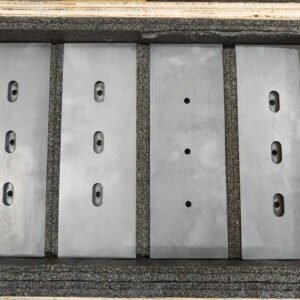
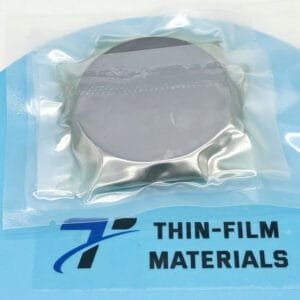
Our Iridium Manganese Sputtering Target (Ir/Mn) products are meticulously tagged and labeled externally to ensure efficient identification and maintain high standards of quality control. Each target is carefully packaged using vacuum-sealed bags, protective foam, and export-grade cartons or wooden crates to prevent contamination and mechanical damage during storage and transportation.
Conclusion
The Iridium Manganese Sputtering Target (Ir/Mn) is a critical material for magnetic thin film technologies and spintronic devices. Its excellent exchange bias characteristics, thermal stability, and magnetic reliability make it indispensable for applications such as MRAM, spin valves, and advanced magnetic sensors.
With customizable compositions, high-density alloy manufacturing, and stable sputtering performance, Ir/Mn sputtering targets provide a dependable solution for cutting-edge magnetic device fabrication.
For detailed specifications and a quotation, please contact us at sales@thinfilmmaterials.com.
Reviews
There are no reviews yet.