
 MSDS File
Introduction
Iron Aluminum (Fe/Al) Evaporation Materials are alloy-based deposition materials widely used in physical vapor deposition (PVD) processes to produce functional metallic and intermetallic thin films. By combining iron’s mechanical strength and magnetic properties with aluminum’s oxidation resistance and lightweight characteristics, Fe/Al evaporation materials are particularly valuable for protective coatings, functional layers, and advanced materials research.
Detailed Description
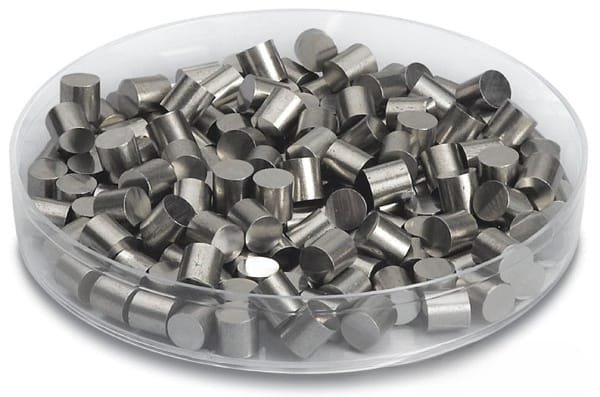
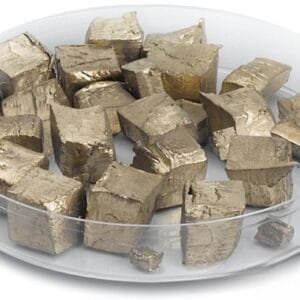
Iron Aluminum evaporation materials are typically supplied as alloy pellets, pieces, or custom-shaped charges engineered for thermal or electron-beam evaporation. The Fe/Al ratio can be precisely controlled to tailor film composition, phase formation, and functional performance.
Compared with single-element evaporation sources, Fe/Al alloy evaporation materials offer:
Improved compositional control, enabling formation of Fe–Al intermetallic or composite films
Enhanced oxidation and corrosion resistance, especially for Al-rich coatings
Good thermal stability, suitable for high-temperature deposition environments
High-purity raw metals and controlled alloying processes are used to ensure compositional uniformity and stable evaporation behavior. Material form, size, and density can be optimized to match specific crucibles, boats, or hearth liners.
Applications
Iron Aluminum evaporation materials are commonly used in:
Protective and corrosion-resistant coatings
Wear-resistant and diffusion barrier layers
Magnetic and functional metallic thin films
High-temperature oxidation-resistant coatings
Research and development of Fe–Al intermetallic compounds
Technical Parameters
| Parameter | Typical Value / Range | Importance |
|---|---|---|
| Material System | Iron / Aluminum (Fe–Al) | Defines mechanical & chemical performance |
| Composition Ratio | Customizable (wt% or at%) | Enables tailored film properties |
| Purity | 99.9% – 99.99% | Reduces contamination in thin films |
| Form | Pellets / Pieces / Custom | Compatible with different evaporation sources |
| Evaporation Method | Thermal / E-beam | Suitable for standard PVD systems |
Comparison with Related Evaporation Materials
| Material | Key Advantage | Typical Application |
|---|---|---|
| Fe/Al Alloy | Oxidation resistance, tunable composition | Protective & functional coatings |
| Pure Iron (Fe) | Magnetic properties | Magnetic thin films |
| Pure Aluminum (Al) | Lightweight, corrosion resistance | Reflective & protective coatings |
| Fe–Cr Alloy | Improved corrosion resistance | Industrial protective films |
FAQ
| Question | Answer |
|---|---|
| Can the Fe/Al ratio be customized? | Yes, alloy composition can be tailored to your specific requirements. |
| Which evaporation methods are suitable? | Both thermal and electron-beam evaporation are commonly used. |
| What material forms are available? | Pellets, chunks, or custom shapes can be supplied. |
| Is this material suitable for research use? | Yes, Fe/Al evaporation materials are widely used in R&D and pilot-scale production. |
Packaging
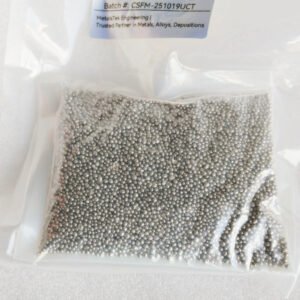
Our Iron Aluminum Evaporation Materials (Fe/Al) are carefully labeled for full traceability. Each batch is vacuum-sealed and packed with protective materials to prevent oxidation, contamination, or mechanical damage during storage and transportation.
Conclusion
Iron Aluminum Evaporation Materials (Fe/Al) provide a flexible and reliable solution for depositing functional and protective thin films. With customizable composition, high purity, and compatibility with standard PVD systems, they support both advanced research and specialized industrial coating applications.
For detailed specifications and a quotation, please contact us at sales@thinfilmmaterials.com.*

Reviews
There are no reviews yet.