Generic selectors
Exact matches only
Search in title
Search in content
Post Type Selectors

Iron Nickel Germanium Telluride Sputtering Target, (Fe₀.₆₄Ni₀.₃₆)₅GeTe₂

Iron Nickel Germanium Telluride ((Fe₀.₆₄Ni₀.₃₆)₅GeTe₂) Sputtering Target

Overview
(Fe₀.₆₄Ni₀.₃₆)₅GeTe₂ is a nickel-doped variant of Iron Germanium Telluride, designed to modify the magnetic anisotropy, Curie temperature, and electronic properties of the base Fe₅GeTe₂ compound. As a layered van der Waals (vdW) magnetic material, it offers tunable magnetic behavior and excellent potential in spintronic and magneto-optical device applications.


Key Properties

  • Chemical Formula: (Fe₀.₆₄Ni₀.₃₆)₅GeTe₂

  • Purity: ≥ 99.9% (3N)

  • Crystal Structure: Layered hexagonal (vdW structure)

  • Magnetic Properties: Tunable ferromagnetism via Fe–Ni ratio adjustment

  • Electronic Properties: Modified conductivity and spin polarization compared to pure Fe₅GeTe₂

  • Film Growth: Compatible with epitaxial and layered heterostructure fabrication


Typical Applications

  • Spintronic research – study of tunable ferromagnetism in 2D materials

  • Magneto-optical coatings – controlled magnetic properties for optical isolation

  • Heterostructures – integration with other 2D materials for multifunctional devices

  • Fundamental condensed matter studies – exploring the effect of Ni doping on Fe₅GeTe₂ properties


Example Specification

  • Material: (Fe₀.₆₄Ni₀.₃₆)₅GeTe₂

  • Purity: 99.9% (3N)

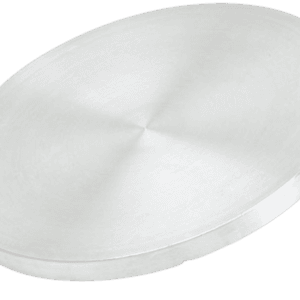
  • Size: Diameter 1″ × Thickness 3 mm

  • Bonding: Available unbonded or with copper backing plate

  • Deposition Method: RF or DC Magnetron Sputtering

Order Now

(Fe₀.₆₄Ni₀.₃₆)₅GeTe₂ Target 3N 1"*3mm

Reviews

There are no reviews yet.

Be the first to review “Iron Nickel Germanium Telluride Sputtering Target, (Fe₀.₆₄Ni₀.₃₆)₅GeTe₂”

Your email address will not be published. Required fields are marked *

Related Products

FAQ

It’s the source material (in solid form) used in sputter deposition to eject atoms or molecules that then form a thin film on a substrate.

Targets can be pure metals (e.g., gold, copper, aluminum), ceramics (e.g., Al₂O₃, SiO₂, TiO₂), alloys, or composites—chosen based on the film’s desired properties.


They are produced by processes such as melting/casting for metals or sintering (often with hot isostatic pressing) for ceramics and composite targets to ensure high density and purity.


In a vacuum chamber, a plasma (typically argon) bombards the target, ejecting atoms that travel and condense on a substrate, forming a thin film.


Key factors include the target’s purity, density, grain structure, and the sputtering yield (i.e. how many atoms are ejected per incident ion), as well as operating conditions like power density and gas pressure.


Operators monitor target erosion (often by measuring the depth of the eroded “race track”) or track total energy delivered (kilowatt-hours) until it reaches a threshold that can compromise film quality.


Fragile materials (such as many ceramics or certain oxides) and precious metals often require a backing plate to improve cooling, mechanical stability, and to allow thinner targets that reduce material costs.


DC sputtering is used for conductive targets, while RF sputtering is necessary for insulating targets (like many oxides) because it prevents charge buildup on the target’s surface.


In reactive sputtering, a reactive gas (e.g., oxygen or nitrogen) is introduced to form compound films on the substrate, but it may also “poison” the target surface if not carefully controlled.


Many manufacturers prefer to control raw material quality by sourcing their own powders; using external powders can risk impurities and inconsistent target properties.


Targets should be stored in clean, dry conditions (often in original packaging or re-wrapped in protective materials) and handled with gloves to avoid contamination, ensuring optimal performance during deposition.

Deposition rate depends on factors such as target material and composition, power density, working gas pressure, substrate distance, and the configuration of the sputtering system (e.g., magnetron design).

 
Shopping Cart
Scroll to Top