
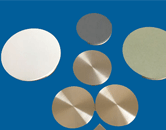
| Material Type | Iron Oxide |
| Symbol | Fe3O4 |
| Color/Appearance | Black |
| Melting Point (°C) | 1597 |
| Density | 5.17 g/cm3 |
| Molecular Weight | 231.63 |
| Sputter | |
| Exact Mass | 233.7 |
Introduction
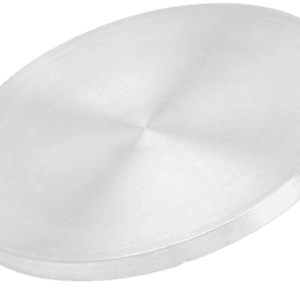
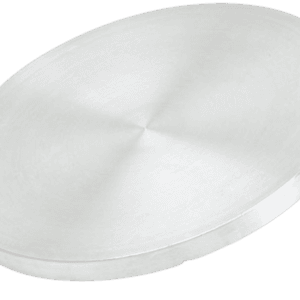
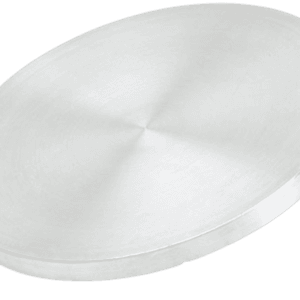
Iron Oxide Sputtering Targets are ceramic compound targets widely used in thin film deposition processes for producing magnetic, electronic, and optical oxide coatings. Iron oxides exist in several crystalline forms—including Fe₂O₃ (hematite), Fe₃O₄ (magnetite), and FeO—each offering distinct electrical, magnetic, and catalytic properties.
These targets are commonly employed in magnetron sputtering systems to deposit functional oxide thin films used in sensors, magnetic devices, photocatalytic coatings, and semiconductor research. Due to their tunable magnetic behavior and chemical stability, iron oxide thin films are important materials in both industrial applications and advanced materials science.
Detailed Description
Iron Oxide sputtering targets are manufactured from high-purity iron oxide powders using advanced ceramic processing methods such as vacuum sintering, hot pressing, or hot isostatic pressing (HIP). These processes produce dense targets with homogeneous microstructures and controlled stoichiometry, which are critical for stable sputtering performance and uniform thin film deposition.
Different iron oxide phases offer different material characteristics:
Fe₂O₃ (Hematite) – a stable oxide with semiconducting properties and strong chemical stability
Fe₃O₄ (Magnetite) – a ferrimagnetic oxide with high electrical conductivity compared to other oxides
FeO (Wüstite) – less commonly used but important in specialized oxide studies
Iron oxide thin films deposited from sputtering targets exhibit properties such as magnetic behavior, catalytic activity, optical absorption, and electrical conductivity, depending on the oxide phase and deposition conditions.
High-density sputtering targets help maintain stable sputtering rates and minimize particle generation. For high-power sputtering systems, iron oxide targets can be supplied as bonded targets with copper backing plates, typically using indium bonding to improve heat dissipation and mechanical stability during deposition.
Applications
Iron Oxide sputtering targets are used in many advanced technology fields:
Magnetic thin films used in spintronic devices and magnetic sensors
Gas sensing materials for environmental monitoring systems
Photocatalytic coatings used in environmental purification technologies
Semiconductor oxide research involving functional metal oxides
Electrochemical devices including battery and energy storage materials
Optical and decorative coatings requiring stable oxide layers
Technical Parameters
| Parameter | Typical Value / Range | Importance |
|---|---|---|
| Purity | 99.9% – 99.99% | Ensures stable thin film composition |
| Chemical Composition | Fe₂O₃ / Fe₃O₄ / FeO | Determines magnetic and electrical behavior |
| Diameter | 25 – 300 mm (custom) | Compatible with various sputtering systems |
| Thickness | 3 – 6 mm | Influences sputtering efficiency and target life |
| Density | ≥ 95% theoretical density | Ensures stable sputtering and uniform film deposition |
| Bonding | Copper backing plate / Indium bonded | Improves heat transfer during sputtering |
Comparison with Related Materials
| Material | Key Advantage | Typical Application |
|---|---|---|
| Iron Oxide (Fe₂O₃ / Fe₃O₄) | Magnetic and catalytic oxide properties | Sensors and magnetic thin films |
| Nickel Oxide (NiO) | Good electrochemical performance | Batteries and electrochromic devices |
| Cobalt Oxide (Co₃O₄) | Strong catalytic activity | Catalysis and energy storage |
FAQ
| Question | Answer |
|---|---|
| What types of iron oxide sputtering targets are available? | Common options include Fe₂O₃ (hematite), Fe₃O₄ (magnetite), and other customized iron oxide compositions. |
| What sputtering methods are suitable for iron oxide targets? | RF magnetron sputtering is typically used for ceramic oxide targets. |
| Can the target size be customized? | Yes. Diameter, thickness, and bonding configurations can be tailored to match specific sputtering systems. |
| Are bonded sputtering targets available? | Yes. Iron oxide targets can be bonded to copper backing plates using indium bonding for improved thermal management. |
| What substrates can iron oxide thin films be deposited on? | Films can be deposited on silicon wafers, glass, ceramics, and metallic substrates. |
Packaging
Our Iron Oxide Sputtering Targets are meticulously tagged and labeled externally to ensure efficient identification and maintain high standards of quality control. Each target is packaged in vacuum-sealed bags with protective foam materials and export-grade cartons or wooden crates to prevent contamination, oxidation, and mechanical damage during storage and transportation.
Conclusion
Iron Oxide Sputtering Targets provide a reliable material solution for depositing functional oxide thin films with magnetic, electronic, and catalytic properties. Their versatility makes them suitable for a wide range of applications, including sensors, magnetic devices, photocatalysis, and advanced oxide electronics.
With customizable compositions, high-density ceramic manufacturing, and stable sputtering performance, iron oxide sputtering targets support both industrial coating processes and cutting-edge materials research.
For detailed specifications and a quotation, please contact us at sales@thinfilmmaterials.com.
Reviews
There are no reviews yet.