
Introduction
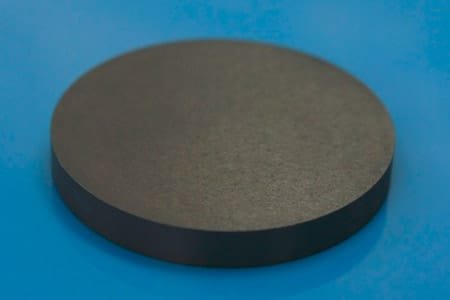
Lanthanum Calcium Manganate Sputtering Targets (La₀.₅Ca₀.₅MnO₃) are perovskite-structured oxide targets widely used in functional oxide thin-film research and advanced electronic applications. Known for their mixed ionic–electronic conductivity and strong correlation between electrical and magnetic properties, LCMO targets are essential materials for depositing high-quality films in spintronics, oxide electronics, and energy-related devices.
Detailed Description
Lanthanum Calcium Manganate (LCMO) is a doped manganite oxide where partial substitution of lanthanum with calcium precisely tunes the Mn³⁺/Mn⁴⁺ ratio. This compositional control directly influences electrical conductivity, magnetoresistance behavior, and phase stability of the deposited films.
Our La₀.₅Ca₀.₅MnO₃ sputtering targets are fabricated using high-purity precursor oxides, followed by controlled calcination, milling, and high-temperature sintering. This process ensures:
Single-phase perovskite structure, minimizing secondary phases
High density and uniform microstructure, supporting stable sputtering rates
Excellent stoichiometric transfer, critical for functional oxide thin films
Targets can be supplied as unbonded ceramic discs or bonded to metallic backing plates (such as copper or titanium) to enhance heat dissipation and mechanical stability during sputtering.
Applications
Lanthanum Calcium Manganate sputtering targets are widely used in:
Colossal magnetoresistance (CMR) thin films
Spintronic and magnetic oxide devices
Solid oxide fuel cell (SOFC) cathode research
Oxide electronics and resistive switching devices
Academic and industrial R&D on perovskite oxides
Technical Parameters
| Parameter | Typical Value / Range | Importance |
|---|---|---|
| Chemical Formula | La₀.₅Ca₀.₅MnO₃ | Defines electrical and magnetic behavior |
| Crystal Structure | Perovskite oxide | Ensures functional oxide properties |
| Purity | 99.9% – 99.99% | Reduces impurities affecting film performance |
| Diameter | 25 – 300 mm (custom) | Compatible with common sputtering systems |
| Thickness | 3 – 6 mm | Influences sputtering stability and lifetime |
| Density | ≥ 95% theoretical | Improves sputtering uniformity |
| Bonding | Optional Cu / Ti backing plate | Enhances thermal management |
Comparison with Related Manganate Materials
| Material | Key Advantage | Typical Application |
|---|---|---|
| La₀.₅Ca₀.₅MnO₃ | Balanced conductivity & magnetoresistance | Spintronics, oxide electronics |
| La₀.₇Sr₀.₃MnO₃ | Higher Curie temperature | Magnetic sensors |
| LaMnO₃ | Strong antiferromagnetic behavior | Fundamental research |
FAQ
| Question | Answer |
|---|---|
| Can the target composition be adjusted? | Yes, Ca/La ratios can be customized upon request. |
| Is RF or DC sputtering recommended? | RF sputtering is commonly used for oxide ceramic targets. |
| Can targets be bonded to backing plates? | Yes, copper or titanium backing plates are available. |
| Are these targets suitable for research use? | Yes, they are widely used in academic and industrial R&D. |
Packaging
Our Lanthanum Calcium Manganate Sputtering Targets are individually labeled for full traceability and quality control. Each target is vacuum-sealed and packed with protective materials to prevent contamination or mechanical damage during storage and international transportation.
Conclusion
Lanthanum Calcium Manganate Sputtering Targets (La₀.₅Ca₀.₅MnO₃) provide reliable performance for depositing high-quality functional oxide thin films. With controlled stoichiometry, high density, and customizable configurations, they are well suited for advanced research and specialized industrial applications.
For detailed specifications and a quotation, please contact us at sales@thinfilmmaterials.com.*
Reviews
There are no reviews yet.