
 MSDS File
Introduction
Lanthanum Nickel Oxide (LaNiO₃) evaporation materials are complex oxide sources used in advanced thin film deposition for oxide electronics, ferroelectric heterostructures, and functional perovskite-based devices. As a conductive perovskite oxide, LaNiO₃ is widely employed as a bottom electrode layer or buffer layer in oxide thin film stacks due to its metallic conductivity and structural compatibility with many ABO₃-type materials.
LaNiO₃ evaporation materials are particularly valuable in research environments focused on epitaxial oxide growth and next-generation electronic devices.
Detailed Description
LaNiO₃ belongs to the perovskite oxide family and exhibits metallic conductivity at room temperature, distinguishing it from many other oxide materials. Its pseudo-cubic lattice structure makes it highly compatible with substrates such as SrTiO₃, LaAlO₃, and other perovskite crystals, supporting high-quality epitaxial film growth.
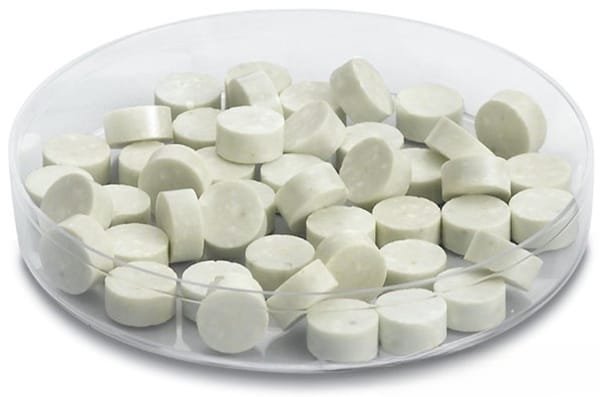
High-purity LaNiO₃ evaporation materials are typically prepared via solid-state synthesis followed by controlled sintering and crushing into suitable forms such as pellets, granules, or compact pieces. Strict process control ensures:
Accurate La:Ni stoichiometry (1:1 atomic ratio)
Controlled oxygen content
High phase purity
Uniform microstructure
These parameters are critical for maintaining the electrical conductivity and structural integrity of deposited films. Because LaNiO₃ is a complex oxide, evaporation is typically performed under carefully controlled vacuum and oxygen partial pressure conditions to preserve film stoichiometry.
LaNiO₃ evaporation materials are compatible with electron beam evaporation and, in some cases, high-temperature thermal evaporation systems.
Applications
Lanthanum Nickel Oxide evaporation materials are widely used in:
Oxide Electronics
Conductive electrode layers in perovskite thin film devices.Ferroelectric & Multiferroic Heterostructures
Bottom electrodes for materials such as PZT and related compounds.Epitaxial Thin Film Growth
Compatible with perovskite substrates for high-quality crystal alignment.Spintronic & Correlated Electron Systems
Research on strongly correlated oxide materials.Photonic & Functional Oxide Devices
Integrated oxide-based electronic components.University & National Laboratory R&D
Advanced thin film material studies.
Technical Parameters
| Parameter | Typical Value / Range | Importance |
|---|---|---|
| Chemical Formula | LaNiO₃ | Defines perovskite structure |
| Purity | 99.9% – 99.99% (3N–4N) | Minimizes secondary phases |
| Form | Pellet / Granule / Custom pieces | Compatible with evaporation sources |
| Particle Size | 1 – 5 mm typical (custom) | Influences evaporation behavior |
| Deposition Method | E-beam preferred | Suitable for complex oxides |
| Stoichiometry | La:Ni = 1:1 | Ensures film conductivity |
Comparison with Related Materials
| Material | Key Advantage | Typical Application |
|---|---|---|
| Lanthanum Nickel Oxide (LaNiO₃) | Metallic conductivity in perovskite structure | Oxide electrodes |
| Strontium Ruthenate (SrRuO₃) | Conductive oxide electrode | Ferroelectric devices |
| Nickel Oxide (NiO) | Insulating oxide | Resistive switching |
| Lanthanum Strontium Manganite (LSMO) | Ferromagnetic perovskite oxide | Spintronics |
LaNiO₃ is typically selected when conductive oxide behavior and lattice compatibility are both required.
FAQ
| Question | Answer |
|---|---|
| Can the material be customized in pellet size? | Yes, pellet and granule sizes can be tailored to your evaporation system. |
| Is oxygen control important during deposition? | Yes, maintaining appropriate oxygen partial pressure helps preserve film stoichiometry. |
| What purity level is recommended? | 4N purity is generally preferred for high-quality epitaxial films. |
| Which deposition method is suitable? | Electron beam evaporation is commonly used for complex oxide materials. |
| How is the product packaged? | Vacuum-sealed with moisture protection and export-safe packaging. |
Packaging
Our Lanthanum Nickel Oxide Evaporation Materials are meticulously tagged and labeled externally to ensure efficient identification and maintain high standards of quality control. We take great care to prevent any potential damage during storage and transportation, ensuring the materials arrive in perfect condition.
Conclusion
Lanthanum Nickel Oxide (LaNiO₃) evaporation materials provide a reliable source for depositing conductive perovskite oxide thin films used in advanced electronic and functional oxide devices. With precise stoichiometry control, high purity, and customizable forms, LaNiO₃ supports stable deposition and consistent film performance.
For detailed specifications and a quotation, please contact us at sales@thinfilmmaterials.com.
Reviews
There are no reviews yet.