
Introduction
Lithium Fluoride (LiF) sputtering targets are widely used in optical coatings, vacuum deposition, and advanced electronics due to their exceptional transparency in the ultraviolet (UV) and vacuum ultraviolet (VUV) regions. As a highly stable ionic compound with low refractive index and excellent radiation resistance, LiF is a key material for precision optical systems and thin film technologies. High-quality sputtering targets are essential to ensure uniform film deposition and reliable optical performance.
Detailed Description
Lithium Fluoride is a crystalline alkali halide compound with a wide bandgap (~14 eV), making it one of the most transparent materials across deep UV to infrared wavelengths. This property makes LiF particularly valuable for optical coatings where minimal absorption and high transmission are required.
LiF sputtering targets are typically manufactured using high-purity raw materials through controlled pressing and sintering processes. Due to its brittle nature and sensitivity to moisture, careful handling and processing are required to maintain structural integrity and surface quality. Even trace contamination or hydration can affect optical performance, especially in UV-sensitive applications.
The density and microstructure of the target significantly influence sputtering behavior. High-density LiF targets reduce particle generation and provide stable deposition rates. Because LiF is an insulating material, RF magnetron sputtering is generally preferred to maintain plasma stability. Optional bonding to copper backing plates improves thermal conductivity and helps prevent cracking under thermal stress during deposition.
Applications
Lithium Fluoride Sputtering Targets are widely used in:
- Optical Coatings: Anti-reflective and high-transmission coatings in UV/VUV optics
- Space and Radiation Optics: Components exposed to high-energy radiation environments
- Semiconductor and Display Technologies: Functional thin films in advanced devices
- Surface Protection Layers: Low refractive index coatings for optical stacks
- Scientific Research: Thin film studies in photonics and materials science
Technical Parameters
| Parameter | Typical Value / Range | Importance |
|---|---|---|
| Chemical Formula | LiF | Defines compound composition |
| Purity | ≥ 99.9% (3N) | Ensures optical clarity and film consistency |
| Density | ≥ 95% theoretical density | Improves sputtering stability |
| Diameter | 25 – 150 mm (custom) | Compatible with sputtering systems |
| Thickness | 3 – 6 mm | Influences deposition rate |
| Bonding | Unbonded / Cu-backed | Enhances heat dissipation |
| Sputtering Method | RF Magnetron | Suitable for insulating materials |
Comparison with Related Materials
| Material | Key Advantage | Typical Application |
|---|---|---|
| LiF | Excellent UV/VUV transparency, low index | Optical coatings, space optics |
| MgF₂ | Durable, widely used optical coating | Anti-reflective coatings |
| CaF₂ | Broad spectral transmission | Infrared optics |
| NaF | Similar structure, lower stability | Specialized optical uses |
FAQ
| Question | Answer |
|---|---|
| Why is LiF preferred for UV optics? | Due to its extremely high transparency in the deep UV and VUV regions. |
| Is LiF suitable for DC sputtering? | No, LiF is an insulator and typically requires RF sputtering. |
| Can the target be customized? | Yes, size, purity, and bonding options can be tailored. |
| How should LiF targets be stored? | In a dry, moisture-controlled environment to prevent degradation. |
| What industries use LiF sputtering targets? | Optics, aerospace, semiconductor, and research institutions. |
Packaging
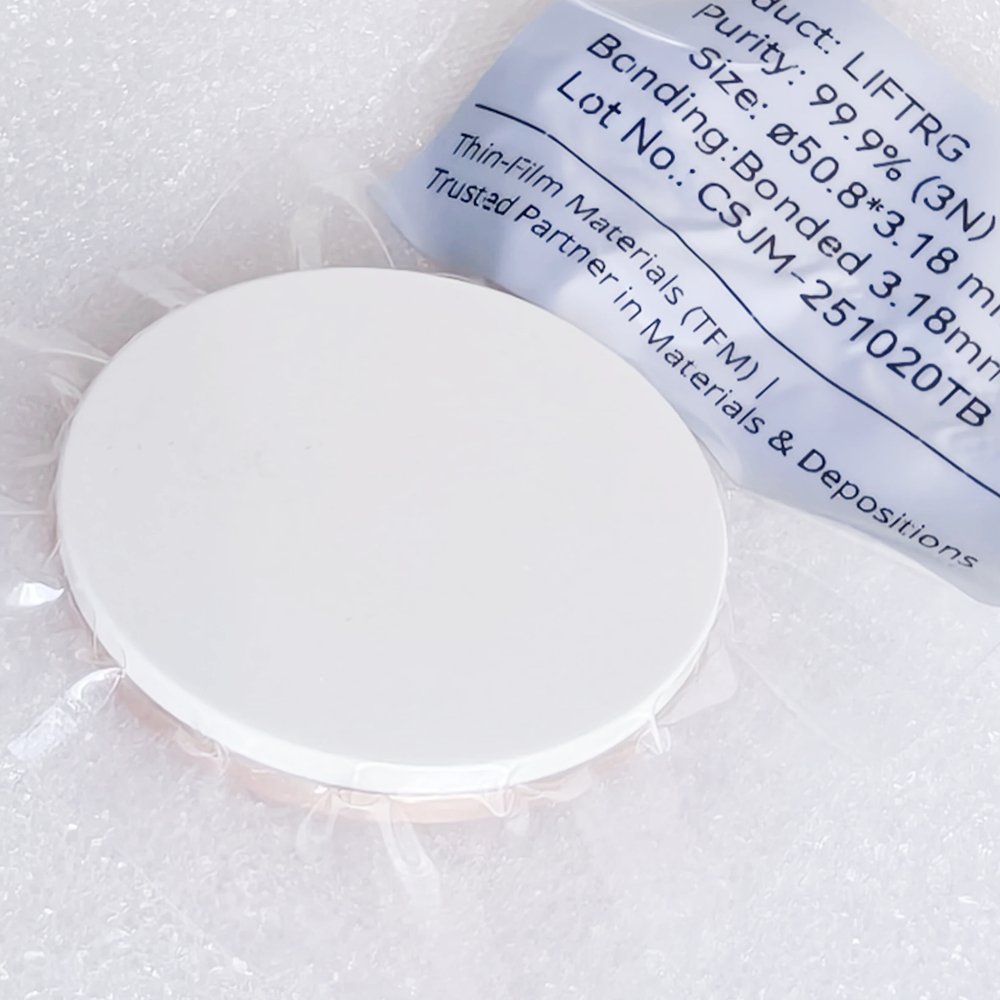
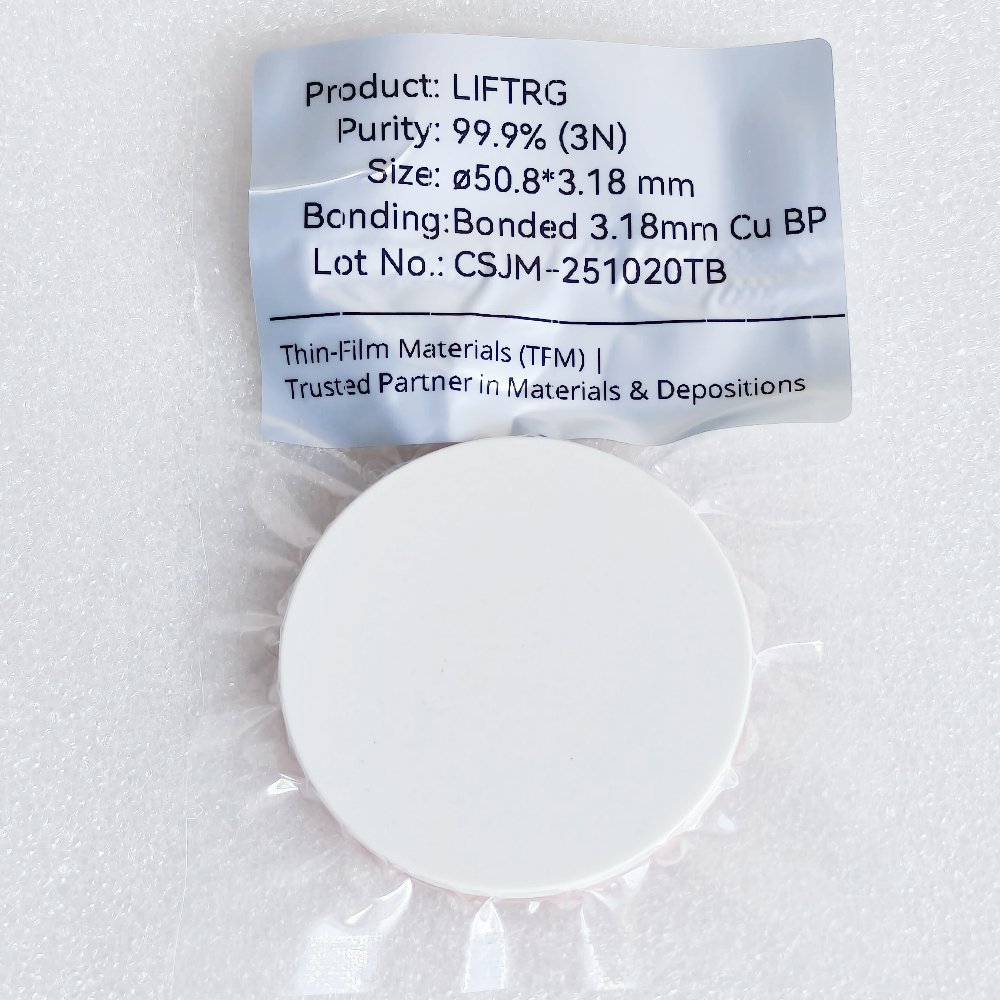
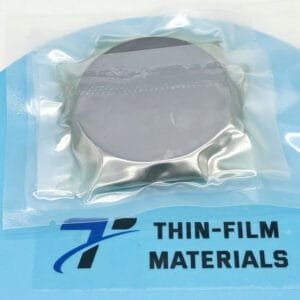
Our Lithium Fluoride Sputtering Target, LiF, is meticulously tagged and labeled externally to ensure efficient identification and maintain high standards of quality control. We take great care to prevent any potential damage during storage and transportation, ensuring the target arrives in optimal condition.
Conclusion
Lithium Fluoride Sputtering Targets provide an ideal solution for producing high-performance optical thin films, especially in UV and VUV applications. With high purity, excellent transparency, and customizable configurations, LiF targets are well-suited for both industrial and research environments.
For detailed specifications and a quotation, please contact us at sales@thinfilmmaterials.com.
Reviews
There are no reviews yet.