
Introduction
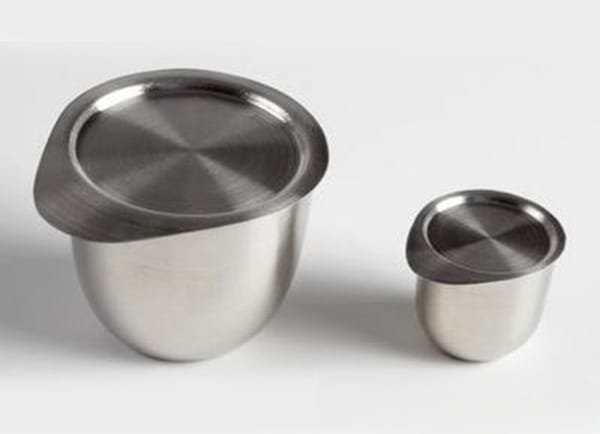
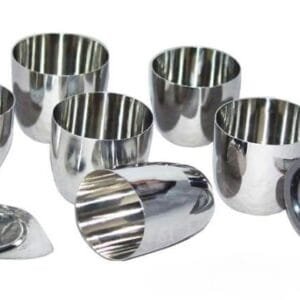
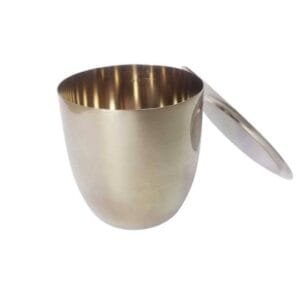
The Low and Wide Base Platinum Crucible is a specialized laboratory vessel designed for high-temperature chemical processing, analytical testing, and materials research. Platinum crucibles are widely recognized for their exceptional chemical inertness, high melting point, and excellent thermal stability, making them indispensable in laboratories and industrial environments where extreme conditions are required.
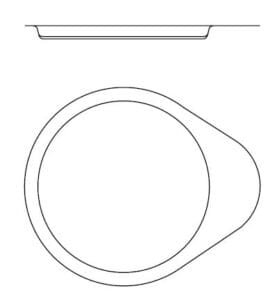
The low and wide base design provides improved thermal distribution and stability during heating, making this type of platinum crucible particularly suitable for gravimetric analysis, fusion processes, and high-temperature sample preparation. Its geometry allows for easier handling of samples and promotes uniform heating across the material being processed.
Detailed Description
Low and Wide Base Platinum Crucibles are manufactured from high-purity platinum, typically 99.95% Pt or higher, ensuring superior resistance to corrosion and chemical reactions. Platinum’s melting point of approximately 1768 °C allows these crucibles to operate reliably in furnaces and high-temperature analytical equipment without deformation or contamination.
The low-profile design with a wider base increases the contact area with heating surfaces, improving heat transfer efficiency and temperature uniformity. This geometry is especially beneficial for fusion reactions and analytical procedures where consistent heating is critical for achieving accurate results.
In addition to pure platinum, these crucibles may also be manufactured using platinum alloys such as Pt-Rh (Platinum-Rhodium) to enhance mechanical strength and durability at elevated temperatures. Precision forming and polishing processes ensure smooth surfaces and uniform wall thickness, reducing contamination risks and improving chemical resistance.
The wide base structure also enhances stability during heating operations, reducing the risk of tipping in laboratory furnaces or hot plates. This makes the crucible ideal for routine analytical procedures where safety and reproducibility are essential.
Applications
Low and Wide Base Platinum Crucibles are commonly used in a variety of laboratory and industrial processes, including:
Gravimetric chemical analysis in analytical laboratories
Fusion sample preparation for geological and mineral analysis
High-temperature reactions in materials research
Glass and ceramic sample melting
Chemical synthesis requiring inert containers
Quality control testing in industrial laboratories
Technical Parameters
| Parameter | Typical Value / Range | Importance |
|---|---|---|
| Material | Platinum (Pt) or Pt-Rh alloy | Provides excellent chemical resistance |
| Purity | ≥ 99.95% Pt | Ensures minimal contamination |
| Melting Point | ~1768 °C | Suitable for high-temperature applications |
| Shape | Low profile with wide base | Improves thermal distribution and stability |
| Capacity | Custom sizes available | Matches specific laboratory needs |
| Surface Finish | Polished interior and exterior | Reduces contamination and facilitates cleaning |
Comparison with Related Crucibles
| Material | Key Advantage | Typical Application |
|---|---|---|
| Platinum Crucible | Excellent chemical inertness and high-temperature stability | Analytical chemistry and fusion processes |
| Platinum-Rhodium Crucible | Higher mechanical strength at elevated temperatures | Intensive high-temperature laboratory work |
| Alumina Crucible | High temperature capability with lower cost | General laboratory heating applications |
FAQ
| Question | Answer |
|---|---|
| Why choose a low and wide base crucible design? | The wide base improves thermal contact and heating uniformity while providing better stability during high-temperature operations. |
| What purity of platinum is typically used? | Most crucibles are manufactured from platinum with purity of 99.95% or higher. |
| Can the crucible size be customized? | Yes. Capacity, dimensions, and wall thickness can be customized according to laboratory requirements. |
| Are platinum alloys available for increased durability? | Yes. Platinum-rhodium alloys are often used to enhance mechanical strength and extend service life. |
| How should platinum crucibles be cleaned? | They can typically be cleaned using appropriate acid solutions or high-temperature treatments depending on the contamination type. |
Packaging
Our Low and Wide Base Platinum Crucibles are meticulously tagged and labeled externally to ensure efficient identification and maintain high standards of quality control. Each crucible is carefully packed in protective containers with foam cushioning and sealed packaging to prevent mechanical damage during storage and transportation.
Conclusion
The Low and Wide Base Platinum Crucible is an essential tool for high-temperature laboratory processes requiring chemical inertness, stability, and precise thermal performance. Its unique geometry improves heat distribution and operational stability, making it ideal for analytical chemistry, materials research, and industrial testing.
With high-purity platinum construction, precision manufacturing, and customizable dimensions, these crucibles provide reliable performance for demanding laboratory applications.
For detailed specifications and a quotation, please contact us at sales@thinfilmmaterials.com.
Low and Wide Base Platinum Crucible Specification
Size: 5ml – 125ml or customized
Material: Platinum (Pt), PtAu5 (95% Pt and 5% Au), PtIr5 (95% Pt and 5% Ir), PtRh5 (95% Pt and 5% Rh)
Purity: Pt ≥ 99.95%, Ir ≥ 99.99%, Rh ≥ 99.99%, Au ≥ 99.99%
Below is our product list, we can also provide customized low and wide base crucibles.
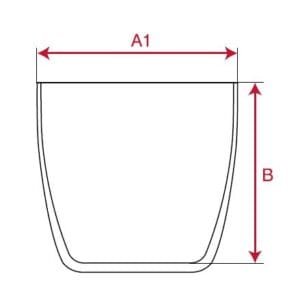
All weights are in grams and all dimensions are in millimeters.
Code | Description | Capacity(ml) | B | A1 | Standard Weight | Reinforced base and rim Weight range | Lid Weight |
PT9501 | Low and wide crucible, 5ml | 5 | 20 | 26 | 4 | 6 | 3 |
PT9502 | Low and wide crucible, 8ml | 8 | 21 | 25 | 6 | 8 | 3 |
PT9503 | Low and wide crucible, 10ml | 10 | 23 | 27 | 7 | 9 | 3 |
PT9504 | Low and wide crucible, 10ml | 10 | 24 | 29 | 8 | 13 | 3 |
PT9505 | Low and wide crucible, 12ml | 12 | 25 | 30 | 10 | 13 | 3 |
PT9506 | Low and wide crucible, 15ml | 15 | 27 | 30 | 11 | 14 | 3 |
PT9507 | Low and wide crucible, 15ml | 15 | 27 | 32 | 13 | 19 | 3 |
PT9508 | Low and wide crucible, 20ml | 20 | 28 | 33 | 15 | 18 | 4 |
PT9509 | Low and wide crucible, 20ml | 20 | 31 | 37 | 18 | 26 | 4 |
PT9510 | Low and wide crucible, 25ml | 25 | 30 | 36 | 19 | 23 | 4 |
PT9511 | Low and wide crucible, 25ml | 25 | 34 | 41 | 25 | 35 | 4 |
PT9512 | Low and wide crucible, 30ml | 30 | 32 | 40 | 22 | 27 | 6 |
PT9513 | Low and wide crucible, 30ml | 30 | 34 | 38 | 25 | 31 | 6 |
PT9514 | Low and wide crucible, 35ml | 35 | 33 | 42 | 25 | 32 | 6 |
PT9515 | Low and wide crucible, 35ml | 35 | 36 | 44 | 26 | 38 | 6 |
PT9516 | Low and wide crucible, 40ml | 40 | 34 | 43 | 30 | 36 | 7 |
PT9517 | Low and wide crucible, 40ml | 40 | 40 | 45 | 30 | 41 | 7 |
PT9518 | Low and wide crucible, 50ml | 50 | 42 | 50 | 36 | 51 | 8 |
PT9519 | Low and wide crucible, 50ml | 50 | 41 | 50 | 39 | 58 | 8 |
PT9520 | Low and wide crucible, 60ml | 60 | 39 | 48 | 46 | 54 | 9 |
PT9521 | Low and wide crucible, 70ml | 70 | 41 | 52 | 50 | 63 | 12 |
PT9522 | Low and wide crucible, 70ml | 70 | 45 | 55 | 53 | 75 | 12 |
PT9523 | Low and wide crucible, 80ml | 80 | 47 | 52 | 51 | 72 | 14 |
PT9524 | Low and wide crucible, 90ml | 90 | 48 | 57 | 52 | 81 | 15 |
PT9525 | Low and wide crucible, 100ml | 100 | 48 | 62 | 70 | 91 | 17 |
PT9526 | Low and wide crucible, 120ml | 120 | 57 | 57 | 84 | 98 | 22 |
PT9527 | Low and wide crucible, 125ml | 125 | 59 | 59 | 97 | 114 | 25 |
Low and Wide Base Platinum Crucible Packaging
Our Low and Wide Base Platinum Crucibles are meticulously tagged and labeled on the exterior to facilitate easy identification and ensure rigorous quality control. We prioritize safeguarding these crucibles from potential damage during both storage and transportation.
For additional support, please refer to our Platinum Maintenance Guide to help you keep your crucibles in optimal condition.
Explore related products in the evaporation crucibles collection.
Reviews
There are no reviews yet.