
 MSDS File
Introduction
Molybdenum Chromium Evaporation Materials (Mo/Cr) are widely used in physical vapor deposition (PVD) processes to produce high-performance thin films with excellent thermal stability, corrosion resistance, and adhesion properties. By combining molybdenum and chromium, these materials offer a balanced solution for demanding applications in electronics, optics, and advanced coatings, where both durability and film integrity are critical.
Detailed Description
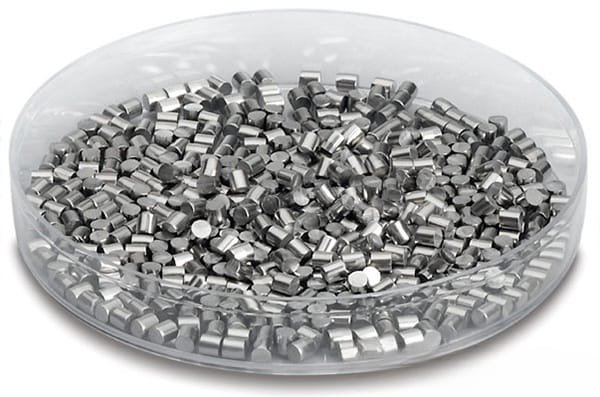
Mo/Cr evaporation materials are typically prepared as alloyed pellets, granules, or custom-shaped pieces designed for thermal evaporation or electron beam evaporation systems. The ratio of molybdenum to chromium can be precisely controlled (e.g., Mo:Cr = 50:50 wt%, or tailored compositions), enabling fine-tuning of film properties such as hardness, electrical conductivity, and oxidation resistance.
Molybdenum contributes:
High melting point (2623°C) and excellent thermal stability
Low vapor pressure, ensuring stable evaporation behavior
Good electrical conductivity, suitable for electronic films
Chromium adds:
Strong adhesion to substrates, especially glass and metals
Excellent corrosion and oxidation resistance
Hardness and wear resistance, improving film durability
The combination of Mo and Cr results in coatings that maintain structural integrity under high temperatures and harsh environments. These materials are manufactured with high purity levels to minimize contamination during deposition, ensuring consistent film performance. They are compatible with a wide range of evaporation sources, including tungsten boats, molybdenum boats, and electron beam crucibles.
Applications
Mo/Cr evaporation materials are used in a variety of advanced coating and thin film technologies:
Semiconductor Manufacturing: Barrier layers, adhesion layers, and conductive films
Optical Coatings: Durable reflective and protective coatings for lenses and mirrors
Decorative Coatings: Wear-resistant metallic finishes with enhanced corrosion resistance
Energy Devices: Thin films in solar cells and energy storage systems
Microelectronics: Interconnects and diffusion barrier layers
Glass Coating Industry: Functional coatings for architectural and automotive glass
Technical Parameters
| Parameter | Typical Value / Range | Importance |
|---|---|---|
| Composition | Mo/Cr (30/70 – 70/30 wt%) | Controls film properties and performance |
| Purity | 99.9% – 99.99% | Reduces contamination in thin films |
| Form | Pellets, granules, pieces | Compatible with different evaporation systems |
| Size | 1 – 6 mm (typical) | Ensures uniform evaporation behavior |
| Density | ≥ 99% theoretical | Improves film consistency |
| Evaporation Method | Thermal / E-beam evaporation | Determines process compatibility |
Comparison with Related Materials
| Material | Key Advantage | Typical Application |
|---|---|---|
| Mo/Cr Evaporation Materials | Balanced thermal stability & adhesion | Semiconductor & optics |
| Pure Molybdenum (Mo) | High temperature resistance | High-temp coatings |
| Pure Chromium (Cr) | Excellent adhesion and corrosion resistance | Adhesion layers |
| Titanium (Ti) | Strong adhesion, reactive | Adhesion & barrier layers |
FAQ
| Question | Answer |
|---|---|
| Can the composition ratio be customized? | Yes, Mo/Cr ratios can be tailored to meet specific film requirements. |
| What evaporation methods are supported? | Suitable for both thermal evaporation and electron beam evaporation. |
| Are these materials compatible with standard boats and crucibles? | Yes, they can be used with tungsten, molybdenum boats, or ceramic crucibles. |
| How are the materials packaged? | Vacuum-sealed packaging with protective cushioning to prevent contamination. |
| Which industries commonly use Mo/Cr materials? | Semiconductor, optics, energy, and advanced coating industries. |
Packaging
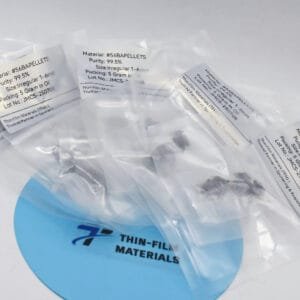
Our Molybdenum Chromium Evaporation Materials are meticulously tagged and labeled externally to ensure efficient identification and maintain high standards of quality control. We take great care to prevent any potential damage during storage and transportation, ensuring the materials arrive in perfect condition.
Conclusion
Molybdenum Chromium Evaporation Materials (Mo/Cr) provide an optimal combination of thermal stability, adhesion, and corrosion resistance for advanced thin film applications. With flexible compositions, high purity, and compatibility with multiple evaporation systems, they are a reliable choice for both research and industrial-scale deposition processes.
For detailed specifications and a quotation, please contact us at sales@thinfilmmaterials.com.
Reviews
There are no reviews yet.