
Introduction
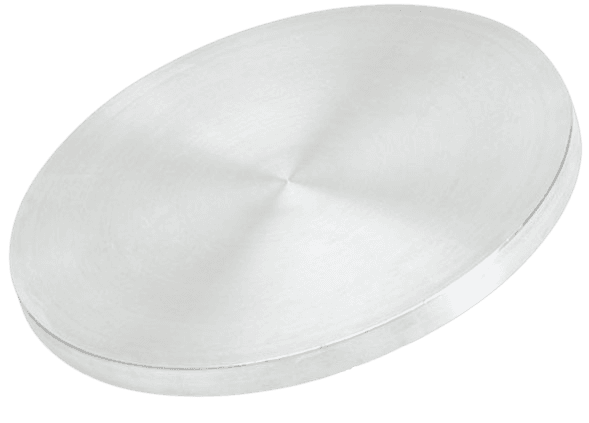
Molybdenum Tungsten Sputtering Target, also commonly referred to as a MoW Target, is a refractory metal alloy target designed for high-performance thin film deposition. By combining molybdenum (Mo) and tungsten (W), MoW sputtering targets deliver a balanced combination of high-temperature stability, mechanical strength, and controlled electrical properties, making them widely used in semiconductor manufacturing, microelectronics, and advanced PVD research.
Detailed Description
MoW sputtering targets are fabricated from high-purity molybdenum and tungsten using advanced alloying and densification technologies such as powder metallurgy or vacuum melting. Strict control of the Mo/W ratio ensures uniform elemental distribution and stable microstructure, which are critical for consistent sputtering rates, uniform erosion, and reliable film composition.
Compared with pure molybdenum targets, Molybdenum Tungsten sputtering targets offer improved high-temperature strength and resistance to deformation. Compared with pure tungsten, MoW targets provide better machinability and reduced internal stress, contributing to improved target integrity and film adhesion during deposition.
Targets are available in unbonded form for smaller sizes or lower power applications, as well as bonded MoW targets with copper backing plates for enhanced heat dissipation and mechanical stability in high-power magnetron sputtering systems. Composition, size, and bonding configuration can all be tailored to specific process requirements.
Applications
Semiconductor metallization and interconnect layers
Diffusion barriers and contact materials
Thin film resistors and conductive coatings
Display panels and microelectronic devices
Research and development of advanced PVD processes
Technical Parameters
| Parameter | Typical Value / Range | Importance |
|---|---|---|
| Material | Molybdenum Tungsten (MoW) | Refractory alloy for PVD |
| Composition | Custom Mo/W ratio (wt.% or at.%) | Tunes electrical & thermal properties |
| Purity | 99.9% – 99.99% (total) | Ensures film reliability |
| Form | Disc / Plate (bonded or unbonded) | Magnetron compatibility |
| Diameter | 25 – 300 mm (custom) | Fits standard sputtering cathodes |
| Thickness | 3 – 6 mm (typical) | Influences target lifetime |
| Backing Plate | Copper (optional) | Improves thermal management |
Comparison with Related Targets
| Target Material | Key Advantage | Typical Application |
|---|---|---|
| Molybdenum Tungsten (MoW) Target | Balanced strength & conductivity | Semiconductor coatings |
| Pure Molybdenum Target | Lower resistivity | Display & IC layers |
| Pure Tungsten Target | Extreme thermal stability | High-temperature films |
FAQ
| Question | Answer |
|---|---|
| Is “MoW Target” the same as Molybdenum Tungsten Sputtering Target? | Yes, MoW Target is the commonly used abbreviation. |
| Can the Mo/W ratio be customized? | Yes, alloy composition can be tailored to your application. |
| Are bonded MoW targets available? | Yes, copper-backed MoW targets are recommended for high-power sputtering. |
| Is DC sputtering suitable for MoW targets? | Yes, MoW targets are widely used in DC magnetron sputtering systems. |
| Is a Certificate of Analysis provided? | Yes, a CoA is available upon request. |
Packaging
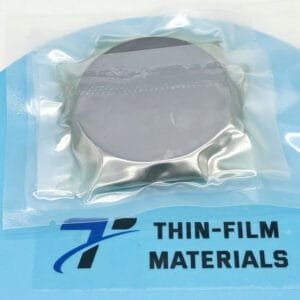
Our Molybdenum Tungsten Sputtering Targets (MoW Targets) are cleaned for vacuum service, individually labeled, and vacuum-sealed to prevent oxidation and contamination. Protective cushioning and export-grade cartons or wooden crates ensure safe transportation and storage.
Conclusion
Molybdenum Tungsten Sputtering Target / MoW Target solutions offer excellent alloy uniformity, stable sputtering performance, and flexible customization for demanding thin film deposition environments. Their balanced refractory properties make them a reliable choice for semiconductor, microelectronic, and advanced materials research applications.
For detailed specifications and a quotation, please contact us at sales@thinfilmmaterials.com.

Reviews
There are no reviews yet.