

 MSDS File
Introduction
Neodymium(III) Oxide Evaporation Materials (Nd₂O₃) are high-performance rare earth oxide sources widely used in optical coatings, electronic ceramics, and advanced thin film research. As a key compound in the rare earth family, Nd₂O₃ plays a significant role in tailoring optical absorption, refractive index, and dielectric properties in deposited films.
In physical vapor deposition (PVD) processes such as thermal evaporation and electron beam evaporation, material purity and phase stability are critical. Nd₂O₃ evaporation materials are carefully refined and processed to ensure stable evaporation behavior, minimal contamination, and consistent film composition across R&D and production environments.
Detailed Description
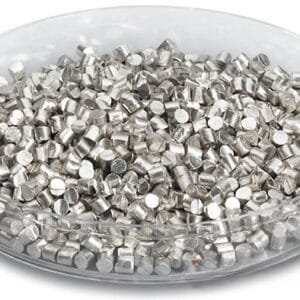
Neodymium(III) Oxide (Nd₂O₃) is a light violet to pale powder with high thermal stability and a melting point above 2200°C. For vacuum deposition applications, it is supplied in forms such as powder, granules, pellets, or tablets to match different evaporation sources and crucible configurations.
Key features include:
Controlled Chemical Purity (3N–5N typical) – Reduces trace metallic impurities that may alter optical transmission or dielectric performance.
Stoichiometric Nd₂O₃ Composition – Ensures predictable film chemistry and stable rare earth incorporation.
Optimized Particle Size Distribution – Promotes uniform melting and reduces spitting during evaporation.
Low Moisture Content – Critical for preventing vacuum contamination and ensuring film consistency.
Because Nd₂O₃ is hygroscopic to some extent, proper storage and pre-bake procedures are recommended before loading into evaporation systems. In e-beam evaporation, gradual power ramping helps prevent cracking or material ejection due to thermal shock.
Nd₂O₃ films deposited by evaporation can exhibit high refractive indices and distinct optical absorption bands associated with neodymium ions (Nd³⁺), making them valuable in optical filter design and photonic devices.
Applications
Neodymium(III) Oxide Evaporation Materials are used in:
Optical Coatings
High-index layers in multilayer interference filters and specialty optical components.Laser & Photonic Materials Research
Nd-containing thin films for active optical devices and experimental photonic structures.Electronic & Dielectric Films
Rare earth oxide layers in capacitors, gate dielectrics, and advanced oxide electronics.Display & Functional Coatings
Thin films with tailored optical absorption and color properties.Thin Film R&D
Investigation of rare earth-doped oxide systems and advanced material platforms.
Technical Parameters
| Parameter | Typical Value / Range | Importance |
|---|---|---|
| Purity | 99.9% – 99.999% (3N–5N) | Minimizes contamination in optical/electronic films |
| Form | Powder / Granules / Pellets | Matches evaporation source requirements |
| Particle Size | 1–5 mm (granules) or custom | Influences melting uniformity |
| Melting Point | ~2233°C | Suitable for high-temperature e-beam evaporation |
| Moisture Content | Low (controlled) | Prevents vacuum instability |
| Packaging | Vacuum-sealed, inert-packed | Maintains material integrity |
Comparison with Related Rare Earth Oxides
| Material | Key Advantage | Typical Application |
|---|---|---|
| Neodymium(III) Oxide (Nd₂O₃) | Strong optical absorption bands, high index | Optical & photonic films |
| Yttrium Oxide (Y₂O₃) | Excellent thermal stability, transparent films | Dielectric & optical layers |
| Cerium Oxide (CeO₂) | Oxygen storage & redox capability | Catalytic & functional coatings |
| Lanthanum Oxide (La₂O₃) | High dielectric constant | Electronic thin films |
Compared with other rare earth oxides, Nd₂O₃ offers unique optical transitions due to Nd³⁺ ions, making it particularly suitable for functional photonic and optical layer design.
FAQ
| Question | Answer |
|---|---|
| Can Nd₂O₃ purity be customized? | Yes, purity levels from 3N to 5N are available depending on application requirements. |
| Is Nd₂O₃ suitable for thermal evaporation? | It can be used in thermal systems, but e-beam evaporation is generally preferred due to its high melting point. |
| Does the material absorb moisture? | Nd₂O₃ is mildly hygroscopic; vacuum storage and pre-baking are recommended. |
| Can particle size be tailored? | Yes, powder, granule, pellet, and tablet forms can be supplied according to equipment needs. |
| Which industries use Nd₂O₃ films most? | Optics, photonics, electronics, advanced materials research, and display technologies. |
Packaging
Our Neodymium(III) Oxide Evaporation Materials are meticulously tagged and labeled externally to ensure efficient identification and maintain high standards of quality control. We take great care to prevent any potential damage during storage and transportation, ensuring the materials arrive in perfect condition.
Conclusion
Neodymium(III) Oxide Evaporation Materials (Nd₂O₃) provide a reliable and versatile solution for high-performance rare earth oxide thin film deposition. With controlled purity, optimized particle morphology, and flexible supply formats, Nd₂O₃ supports both precision laboratory research and scalable industrial coating processes.
For detailed specifications and a quotation, please contact us at sales@thinfilmmaterials.com.

Reviews
There are no reviews yet.