
Introduction
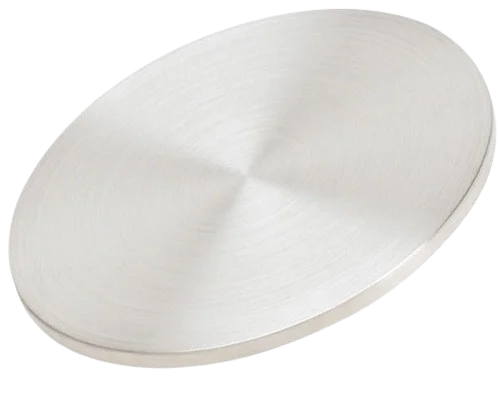
Nickel Manganese Sputtering Target (Ni/Mn) is a versatile alloy target widely used in thin film deposition processes such as magnetron sputtering and other physical vapor deposition (PVD) techniques. Combining nickel’s excellent electrical conductivity and corrosion resistance with manganese’s magnetic and structural properties, Ni/Mn alloy targets enable the deposition of functional thin films with tunable electrical, magnetic, and mechanical characteristics.
Nickel Manganese sputtering targets are commonly utilized in semiconductor manufacturing, magnetic storage devices, functional coatings, and advanced research applications. Their ability to produce uniform alloy films makes them valuable for developing next-generation electronic and energy materials.
Detailed Description
Nickel Manganese (Ni/Mn) sputtering targets are produced from carefully controlled alloy compositions to ensure stable sputtering performance and uniform film deposition. The combination of nickel and manganese provides a balance between electrical conductivity, magnetic behavior, and corrosion resistance, allowing deposited films to serve multiple functional roles in electronic and structural coatings.
The manufacturing process generally includes vacuum melting, powder metallurgy, hot pressing, or hot isostatic pressing (HIP) to achieve high density and homogeneous microstructure. A dense, fine-grained target structure is essential to maintain consistent sputtering rates and avoid particle generation during deposition.
The alloy composition of Ni/Mn targets can be adjusted according to application requirements. Variations in manganese content allow researchers and manufacturers to tailor magnetic properties, resistivity, and film stability. This compositional flexibility makes Ni/Mn sputtering targets suitable for both industrial coating systems and experimental materials development.
In high-power sputtering environments, targets may be bonded to copper backing plates using indium bonding, diffusion bonding, or elastomer bonding techniques. These bonding structures enhance heat transfer and mechanical stability, allowing the target to withstand thermal stress during long deposition runs.
High purity Ni/Mn targets also help minimize contamination in deposited films, which is particularly critical for semiconductor processes and precision thin film devices.
Applications
Nickel Manganese Sputtering Targets are widely used in a variety of advanced thin film technologies, including:
Magnetic thin films used in sensors, spintronic devices, and magnetic storage systems
Semiconductor devices requiring conductive or functional alloy coatings
Electrochemical and energy devices such as battery components and catalytic coatings
Protective coatings that enhance corrosion resistance and durability
Thin film resistors and electronic components
Materials research and development involving alloy thin films and magnetic materials
The adjustable composition of Ni/Mn alloys allows thin film engineers to optimize film performance for specific electrical or magnetic applications.
Technical Parameters
| Parameter | Typical Value / Range | Importance |
|---|---|---|
| Purity | 99.9% – 99.99% | Higher purity improves film quality and reduces contamination |
| Composition Ratio | Ni/Mn customizable (e.g., 90/10, 80/20, 50/50) | Determines electrical and magnetic properties |
| Density | ≥ 99% theoretical density | Ensures stable sputtering rate |
| Diameter | 25 – 300 mm (custom) | Compatible with various sputtering systems |
| Thickness | 3 – 6 mm | Affects sputtering lifetime and thermal stability |
| Bonding | Copper backing plate optional | Improves heat dissipation and target durability |
Comparison with Related Materials
| Material | Key Advantage | Typical Application |
|---|---|---|
| Nickel Manganese (Ni/Mn) | Tunable magnetic and electrical properties | Magnetic films, sensors |
| Nickel Chromium (Ni/Cr) | Excellent corrosion resistance and stability | Thin film resistors |
| Cobalt Manganese (Co/Mn) | Strong magnetic characteristics | Magnetic storage and spintronic devices |
| Nickel Iron (Ni/Fe) | High magnetic permeability | Magnetic shielding and sensors |
FAQ
| Question | Answer |
|---|---|
| Can the Nickel Manganese Sputtering Target be customized? | Yes, composition ratios, dimensions, purity levels, and bonding structures can be customized according to customer specifications. |
| Is a backing plate required? | For high-power sputtering systems, a copper backing plate is recommended to improve thermal conductivity and prevent thermal cracking. |
| Which sputtering methods can use Ni/Mn targets? | RF magnetron sputtering, DC sputtering, and other physical vapor deposition methods are commonly used. |
| What industries commonly use Ni/Mn sputtering targets? | Semiconductor manufacturing, magnetic device production, thin film electronics, and research institutions. |
| What forms of targets are available? | Planar targets, rotatable targets, and bonded assemblies are available depending on the sputtering system design. |
Packaging
Our Nickel Manganese Sputtering Target are meticulously tagged and labeled externally to ensure efficient identification and maintain high standards of quality control. We take great care to prevent any potential damage during storage and transportation, ensuring the targets arrive in perfect condition.
Conclusion
Nickel Manganese Sputtering Targets provide an excellent source material for depositing alloy thin films with adjustable electrical, magnetic, and structural properties. Their versatility makes them valuable in semiconductor fabrication, magnetic technologies, and advanced materials research.
With customizable compositions, high purity options, and reliable bonding solutions, Ni/Mn sputtering targets can be tailored to meet the demands of modern vacuum coating systems.
For detailed specifications and a quotation, please contact us at sales@thinfilmmaterials.com.
Reviews
There are no reviews yet.