

Introduction
The Nickel Silicide Sputtering Target (NiSi₂) is a conductive metal silicide target widely used in semiconductor and microelectronic thin-film deposition. Owing to its excellent electrical conductivity, strong thermal stability, and superior compatibility with silicon substrates, NiSi₂ is a key material for contact layers, interconnects, and silicide-based device structures. It is especially valued in applications requiring low contact resistance and reliable high-temperature performance.
Detailed Description
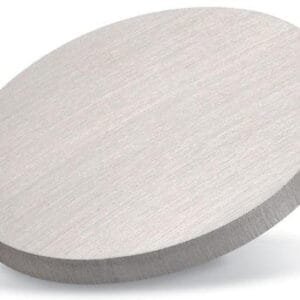
Nickel Silicide sputtering targets are produced from high-purity nickel and silicon through controlled reaction synthesis, alloying, and precision machining. This manufacturing approach ensures uniform stoichiometry, high density, and a stable crystalline structure, all of which are essential for consistent sputtering behavior and reproducible film properties.
Compared with pure nickel or silicon targets, NiSi₂ offers lower resistivity and improved interfacial stability with silicon, reducing diffusion-related issues during thermal processing. During magnetron sputtering, NiSi₂ targets provide predictable erosion profiles and stable plasma characteristics, enabling accurate control of film thickness and composition.
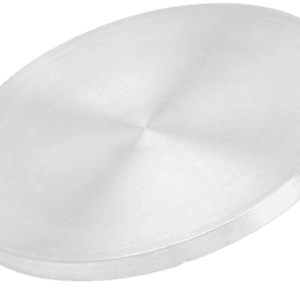
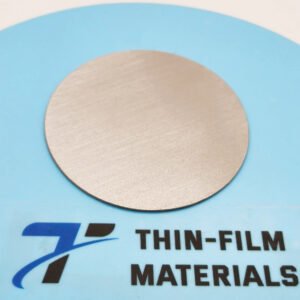
Targets are available as monolithic silicide discs or bonded to copper or titanium backing plates to enhance heat dissipation and mechanical integrity under higher sputtering power conditions.
Applications
Nickel Silicide sputtering targets are commonly used in:
Semiconductor contacts and interconnect layers
CMOS and silicon-based device research
Low-resistance ohmic contacts
Diffusion barrier and adhesion layers
High-temperature electronic thin films
Academic and industrial thin-film R&D
Technical Parameters
| Parameter | Typical Value / Range | Importance |
|---|---|---|
| Chemical Formula | NiSi₂ | Defines silicide electrical behavior |
| Purity | 99.9% – 99.99% | Ensures film consistency |
| Target Diameter | 25 – 300 mm (custom) | Fits standard sputtering guns |
| Thickness | 3 – 6 mm (custom available) | Influences sputtering stability |
| Density | ≥ 99% of theoretical | Promotes uniform erosion |
| Backing Plate | Optional (Cu / Ti) | Improves thermal management |
| Deposition Method | DC / RF Magnetron Sputtering | Process flexibility |
Comparison with Related Silicide Targets
| Material | Key Advantage | Typical Application |
|---|---|---|
| Nickel Silicide (NiSi₂) | Low resistivity, Si compatibility | Semiconductor contacts |
| Titanium Silicide (TiSi₂) | Mature CMOS use | Interconnects |
| Cobalt Silicide (CoSi₂) | Thermal stability | Integrated circuits |
| Hafnium Silicide (HfSi₂) | High-temperature stability | Advanced electronics |
FAQ
| Question | Answer |
|---|---|
| Is NiSi₂ suitable for silicon devices? | Yes, it offers excellent compatibility and low contact resistance with silicon. |
| Can DC sputtering be used? | Yes, DC sputtering is commonly used due to its good electrical conductivity. |
| Is bonding recommended? | Bonded targets are recommended for larger diameters or higher power densities. |
| Are small R&D targets available? | Yes, laboratory-scale sizes are supported. |
| How is the target packaged? | Vacuum-sealed with protective cushioning to prevent oxidation or damage. |
Packaging
Our Nickel Silicide Sputtering Targets (NiSi₂) are meticulously vacuum-sealed and externally labeled to ensure accurate identification and strict quality control. Shock-absorbing and moisture-resistant packaging is used to protect the target during storage and international transportation.
Conclusion
The Nickel Silicide Sputtering Target (NiSi₂) is a reliable material solution for depositing low-resistivity, thermally stable silicide thin films in semiconductor and microelectronic applications. With customizable dimensions, stable sputtering performance, and consistent material quality, NiSi₂ targets are well suited for both advanced research and emerging production environments.
For detailed specifications and a quotation, please contact us at sales@thinfilmmaterials.com.
Reviews
There are no reviews yet.