
Product Overview
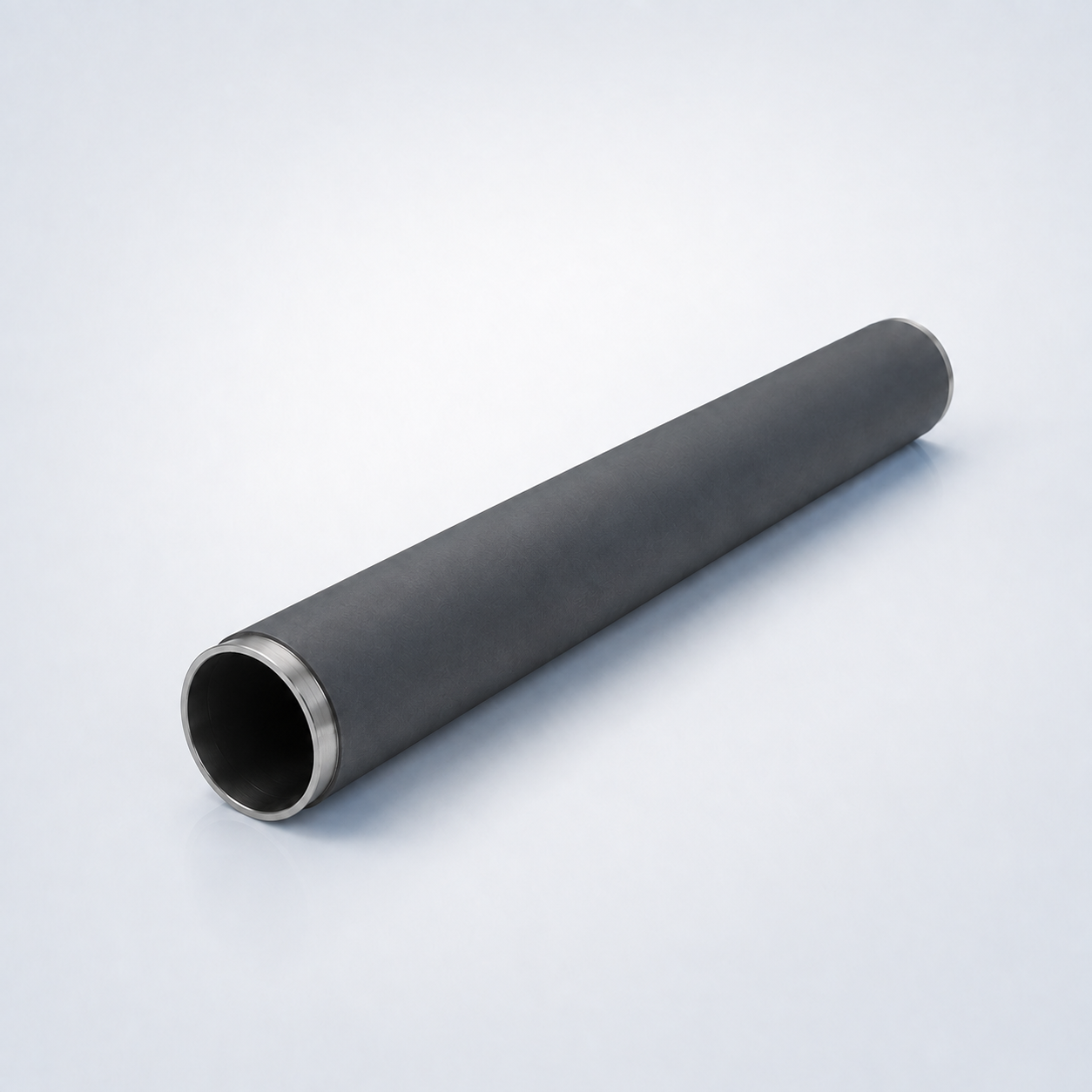
Niobium Oxide (Nb2Ox) Rotary Sputtering Target (Nb2Ox) in rotary format is designed for cylindrical cathodes used in large-area or continuous magnetron sputtering systems. Compared with a conventional planar target, a rotary design can improve material utilization and support longer coating runs, provided that the target dimensions, wall thickness, bonding or backing-tube design, and cathode compatibility are correctly specified.
Material and Deposition Characteristics
Rotary target performance depends not only on material chemistry but also on cylindrical geometry, target wall thickness, target-to-backing interface, end machining, and cooling design. For metallic rotary assemblies, DC magnetron sputtering is commonly used, while process parameters should still be qualified against the specific cathode and the required film properties. A correct mechanical fit is critical because small dimensional deviations can affect installation, rotation stability, and coating uniformity.
Technical Data
| Materials | Niobium Oxide Rotary Sputtering Target |
|---|---|
| Symbol | Nb₂Ox (4.3 < x < 4.9) |
| Purity | ≥99.95% |
| Melting Point (°C) | N/A |
| Production Method | Spraying Type / Bonded Type (Cold isostatic pressing + high-temperature sintering) |
| Backing Tube | Titanium, Stainless Steel |
| Bonding Material | Indium or Elastomer |
| Size | As per customer’s drawings |
| Relative Density | ≥95% (≥4.3 g/cm³) |
| Resistivity (Ω·cm) | ≤0.1 |
| Annual Capacity | 1,000 tons |
Typical Thin-Film Applications
- Large-area inline or continuous magnetron coating lines
- Architectural glass, display, solar, and industrial web-coating processes that use cylindrical cathodes
- Production environments where long runs, high target utilization, and coating uniformity are important
Target Configuration and Ordering Considerations
For a rotary target quotation, provide overall length, outer diameter, inner diameter or wall thickness, backing-tube material and dimensions, end features, purity or composition, quantity, and the cathode model or drawing if available. If a replacement target is being sourced, photos or a dimensioned sketch of the old assembly can help confirm compatibility.
Frequently Asked Questions
When is a rotary Niobium Oxide (Nb2Ox) Rotary target preferred over a planar target?
A rotary target is mainly selected for cylindrical cathodes and longer production runs where higher target utilization, stable erosion, and reduced target-change frequency are priorities. The benefit depends on the coating line and cathode design.
What dimensions are required to quote a rotary Niobium Oxide (Nb2Ox) Rotary target?
Key dimensions include target length, outer diameter, inner diameter or wall thickness, end geometry, backing-tube details, purity or composition, and quantity. A drawing or old-target sample is helpful for confirming compatibility.
Does a rotary Niobium Oxide (Nb2Ox) Rotary target require bonding or a backing tube?
Many rotary assemblies use a backing tube, bonded interface, or sprayed/coated construction. The correct design depends on target material, cathode cooling, operating power, and the specific cathode hardware.
Can Niobium Oxide (Nb2Ox) Rotary be sputtered with DC power?
If the target material is electrically conductive, DC magnetron sputtering is commonly used. The final operating mode and power density should still be confirmed against the actual cathode and film requirements.
Why is fit-up important for a rotary target assembly?
Small dimensional deviations can affect rotation, cooling, mechanical stability, installation, and film uniformity. Rotary targets therefore require closer coordination between target dimensions and cathode specifications.
What should be included in a rotary target RFQ?
Include target dimensions, material purity or composition, cathode or backing-tube details, end features, quantity, and any inspection, tolerance, or documentation requirements.

Reviews
There are no reviews yet.