
Introduction
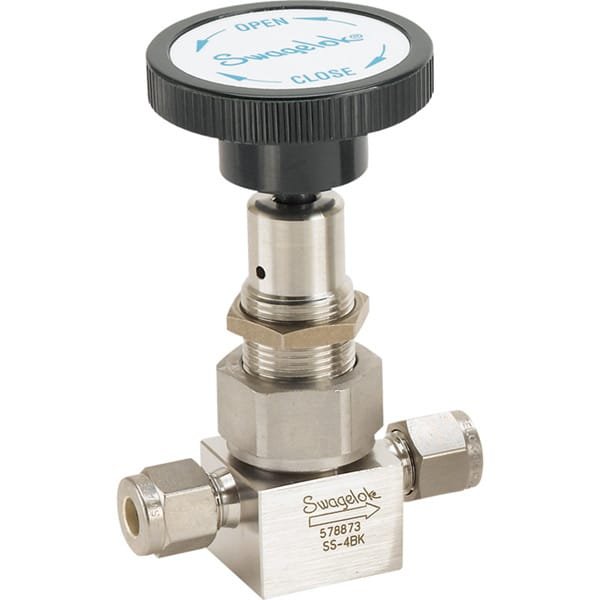
Nupro gas shut-off valves are precision-engineered components designed for reliable control and isolation of gas flow in high-purity and high-performance systems. Widely recognized in analytical instrumentation, semiconductor processing, and laboratory environments, these valves are valued for their leak-tight sealing, durability, and compatibility with demanding gas handling applications.
Detailed Description
Nupro gas shut-off valves are typically constructed from high-grade stainless steel (such as 316/316L), ensuring excellent corrosion resistance and mechanical strength under varying pressure and temperature conditions. Designed for precise on/off control, these valves utilize robust sealing mechanisms—often incorporating metal-to-metal or polymer-based seals—to maintain integrity in high-purity gas systems.
The valve design emphasizes minimal dead volume and smooth internal flow paths, reducing the risk of contamination and ensuring consistent gas delivery. Many configurations are available, including manual and pneumatic actuation, as well as various end connections such as compression fittings, VCR, and NPT threads, allowing seamless integration into existing systems.
These valves are commonly used in applications where gas purity, system safety, and long-term reliability are critical. Their compact design and ease of operation make them suitable for both laboratory setups and industrial-scale systems.
Key features include:
High-quality stainless steel construction (316/316L)
Leak-tight sealing for high-purity gas control
Low dead volume design to minimize contamination
Multiple connection types (VCR, compression, NPT)
Available in manual and automated configurations
Excellent resistance to corrosion and pressure cycling
Applications
Nupro gas shut-off valves are widely used in:
Semiconductor manufacturing and gas delivery systems
Analytical instruments (GC, MS, ICP systems)
High-purity gas handling and distribution
Vacuum and process control systems
Laboratory and research gas lines
Aerospace and specialty gas applications
Technical Parameters
| Parameter | Typical Value / Range | Importance |
|---|---|---|
| Material | SS316 / SS316L | Corrosion resistance & purity |
| Pressure Rating | Up to 3000–6000 psi (typical) | Ensures safe operation |
| Temperature Range | -20°C to 200°C (depends on seal) | Suitable for various environments |
| Connection Type | VCR / Compression / NPT | System compatibility |
| Valve Type | Shut-off (on/off) | Flow control function |
| Leakage Rate | ≤ 1×10⁻⁹ mbar·L/s (typical) | High sealing performance |
Comparison with Related Materials
| Material/System | Key Advantage | Typical Application |
|---|---|---|
| Nupro Valves | High precision & reliability | High-purity gas systems |
| Standard Ball Valves | Cost-effective, general use | Industrial pipelines |
| Needle Valves | Fine flow control | Analytical systems |
| Diaphragm Valves | Ultra-clean gas handling | Semiconductor processes |
FAQ
| Question | Answer |
|---|---|
| Are these valves suitable for high-purity gas systems? | Yes, they are specifically designed for high-purity and analytical applications. |
| What connection types are available? | Common options include VCR, compression fittings, and NPT threads. |
| Can these valves handle high pressure? | Yes, depending on the model, they can handle pressures up to several thousand psi. |
| Are automated versions available? | Yes, pneumatic or actuator-driven configurations can be supplied. |
| Which industries use Nupro valves most? | Semiconductor, analytical instrumentation, and specialty gas industries. |
Packaging
Our Nupro Gas Shut-Off Valves are meticulously tagged and labeled externally to ensure efficient identification and maintain high standards of quality control. We take great care to prevent any potential damage during storage and transportation, ensuring the products arrive in perfect condition.
Conclusion
Nupro gas shut-off valves provide dependable and precise control for high-purity gas systems, combining robust construction with excellent sealing performance. Their versatility, reliability, and compatibility with a wide range of configurations make them an ideal choice for demanding laboratory and industrial environments.
For detailed specifications and a quotation, please contact us at sales@thinfilmmaterials.com.
Ordering Table
| Drawing | Thread | Flow Coefficient (Cv) | Turns to Open | Part Number |

| 10-32 UNF | 0.39 | 2.5 | SS-4BG |

| 10-32 UNF | 0.39 | 2.5 | SS-4BG-TW |
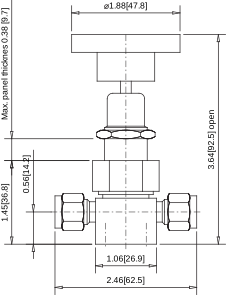
| 10-32 UNF | 0.39 | 2.5 | SS-4BK |
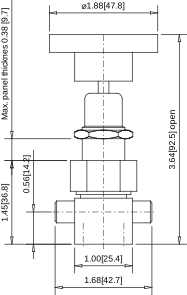
| 10-32 UNF | 0.39 | 2.5 | SS-4BK-TW |
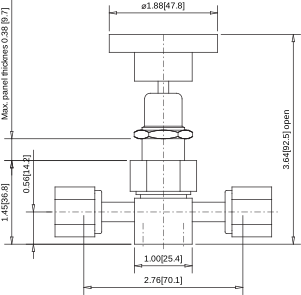
| 10-32 UNF | 0.39 | 2.5 | SS-4BK-V51 |
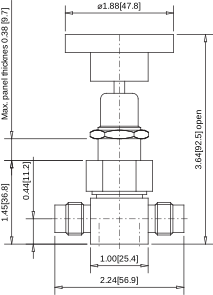
| 10-32 UNF | 0.39 | 2.5 | SS-4BK-VCR |
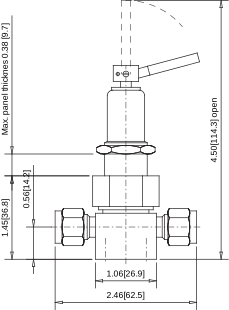
| 10-32 UNF | 0.36 | N/A | SS-4BKT |

| 10-32 UNF | 0.28 | 1 | SS-4H |
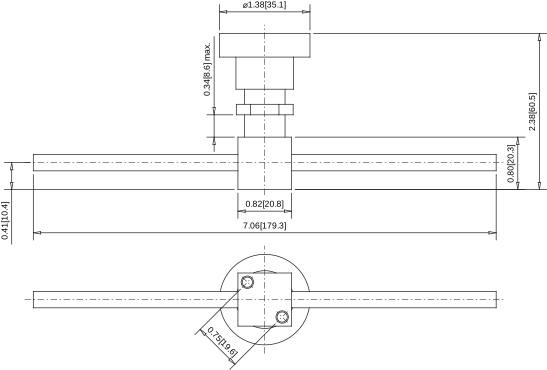
| 10-32 UNF | 0.28 | 1 | SS-4H-TH3 |
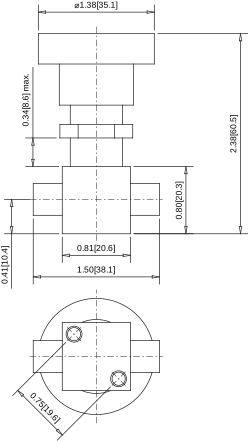
| 10-32 UNF | 0.28 | 1 | SS-4H-TW |

| 10-32 UNF | 0.28 | 1 | SS-4H2 |

| 10-32 UNF | 0.28 | 1 | SS-4H4 |

Reviews
There are no reviews yet.