
Introduction
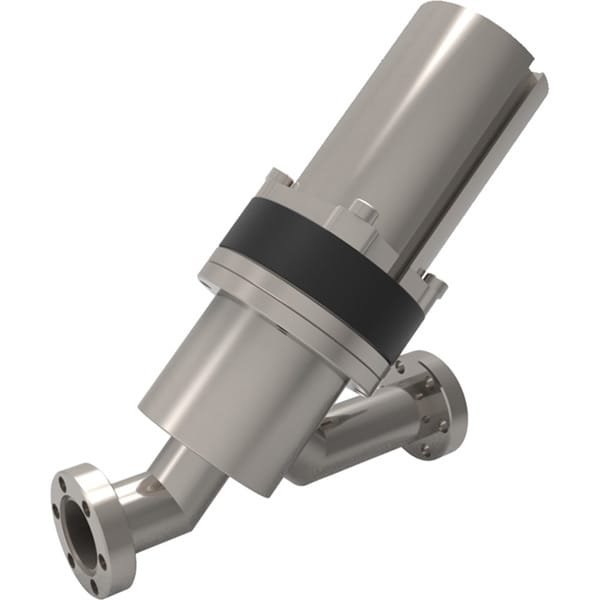
Pneumatic SS Y Inline Valves (CF Flanged; Viton Bonnet) are high-performance vacuum valves designed for ultra-high vacuum (UHV) systems that require reliable flow control, rapid actuation, and excellent leak-tight sealing. These valves combine a Y-shaped flow path with pneumatic operation, making them ideal for automated vacuum systems where precise control and minimal pressure loss are essential.
The integration of ConFlat® (CF) flanges ensures compatibility with UHV environments, while the Viton bonnet seal provides reliable sealing performance for high-vacuum applications. These valves are commonly used in semiconductor processing equipment, vacuum deposition systems, analytical instruments, and scientific research facilities.
Detailed Description
Pneumatic SS Y Inline Valves are constructed from high-quality stainless steel (typically 304 or 316L) to provide excellent corrosion resistance, mechanical strength, and low outgassing characteristics required for vacuum applications. The Y-shaped design allows the valve seat to align with the flow direction, minimizing turbulence and conductance losses compared to traditional right-angle valves.
The pneumatic actuator enables fast and reliable valve operation, which is particularly useful in automated vacuum systems. Compressed air or inert gas drives the actuator to open or close the valve, allowing integration with process control systems and programmable vacuum automation.
The CF flanged connection uses a knife-edge metal sealing system with copper gaskets, which ensures leak-tight connections suitable for ultra-high vacuum conditions. This type of flange is widely used in UHV systems where vacuum integrity is critical.
The Viton bonnet seal provides a flexible and chemically resistant sealing solution for the valve stem assembly. Viton elastomers offer good resistance to heat, chemicals, and vacuum cycling, making them suitable for many high-vacuum environments.
The combination of precision-machined components and high-quality sealing materials ensures smooth valve motion, long service life, and stable vacuum performance.
Applications
Pneumatic SS Y Inline Valves are widely used in vacuum technology and high-precision industrial systems:
Ultra-high vacuum (UHV) systems in research laboratories
Thin film deposition equipment including sputtering and evaporation systems
Semiconductor manufacturing equipment
Particle accelerators and scientific instruments
Mass spectrometry and analytical vacuum systems
Automated vacuum processing lines
Technical Parameters
| Parameter | Typical Value / Range | Importance |
|---|---|---|
| Valve Type | Pneumatic Y Inline Valve | Enables automated vacuum flow control |
| Material | Stainless Steel 304 / 316L | Provides corrosion resistance and low outgassing |
| Flange Type | CF (ConFlat®) Flange | Ensures UHV leak-tight metal sealing |
| Bonnet Seal | Viton | Provides reliable sealing and chemical resistance |
| Actuation | Pneumatic | Enables fast automated operation |
| Operating Pressure | Atmosphere to ~10⁻¹⁰ mbar (system dependent) | Suitable for UHV environments |
Comparison with Related Vacuum Valves
| Valve Type | Key Advantage | Typical Application |
|---|---|---|
| Pneumatic SS Y Inline Valve (CF) | Low conductance loss with automated operation | UHV systems and deposition equipment |
| Manual CF Valve | Simple manual control | Laboratory vacuum systems |
| Angle Valve | Compact design for directional flow | Vacuum pipelines and chambers |
FAQ
| Question | Answer |
|---|---|
| Why use a Y inline valve instead of an angle valve? | The Y-shaped flow path reduces turbulence and conductance loss, improving vacuum system efficiency. |
| What is the benefit of pneumatic actuation? | Pneumatic actuation allows fast, repeatable operation and easy integration with automated vacuum control systems. |
| Are CF flanges suitable for ultra-high vacuum systems? | Yes. CF flanges use metal gasket sealing and are widely used in UHV systems reaching pressures below 10⁻⁹ mbar. |
| What temperature range can Viton seals handle? | Viton seals typically operate effectively between approximately −20 °C and 200 °C depending on system conditions. |
| Can valve sizes be customized? | Yes. Different CF flange sizes and valve configurations can be manufactured to match specific vacuum systems. |
Packaging
Our Pneumatic SS Y Inline Valves (CF Flanged; Viton Bonnet) are meticulously tagged and labeled externally to ensure efficient identification and maintain strict quality control standards. Each valve is carefully cleaned for vacuum compatibility and packaged using protective covers, sealed bags, and export-grade cartons or wooden crates to prevent contamination and mechanical damage during transportation.
Conclusion
Pneumatic SS Y Inline Valves (CF Flanged; Viton Bonnet) provide reliable and efficient flow control for high and ultra-high vacuum systems. Their stainless steel construction, CF flange compatibility, and pneumatic actuation make them ideal for demanding applications in semiconductor processing, thin film deposition, and scientific research.
With precision engineering, durable sealing materials, and compatibility with automated vacuum systems, these valves offer dependable performance for modern vacuum technology.
For detailed specifications and a quotation, please contact us at sales@thinfilmmaterials.com.
Ordering Table


Reviews
There are no reviews yet.