
Introduction
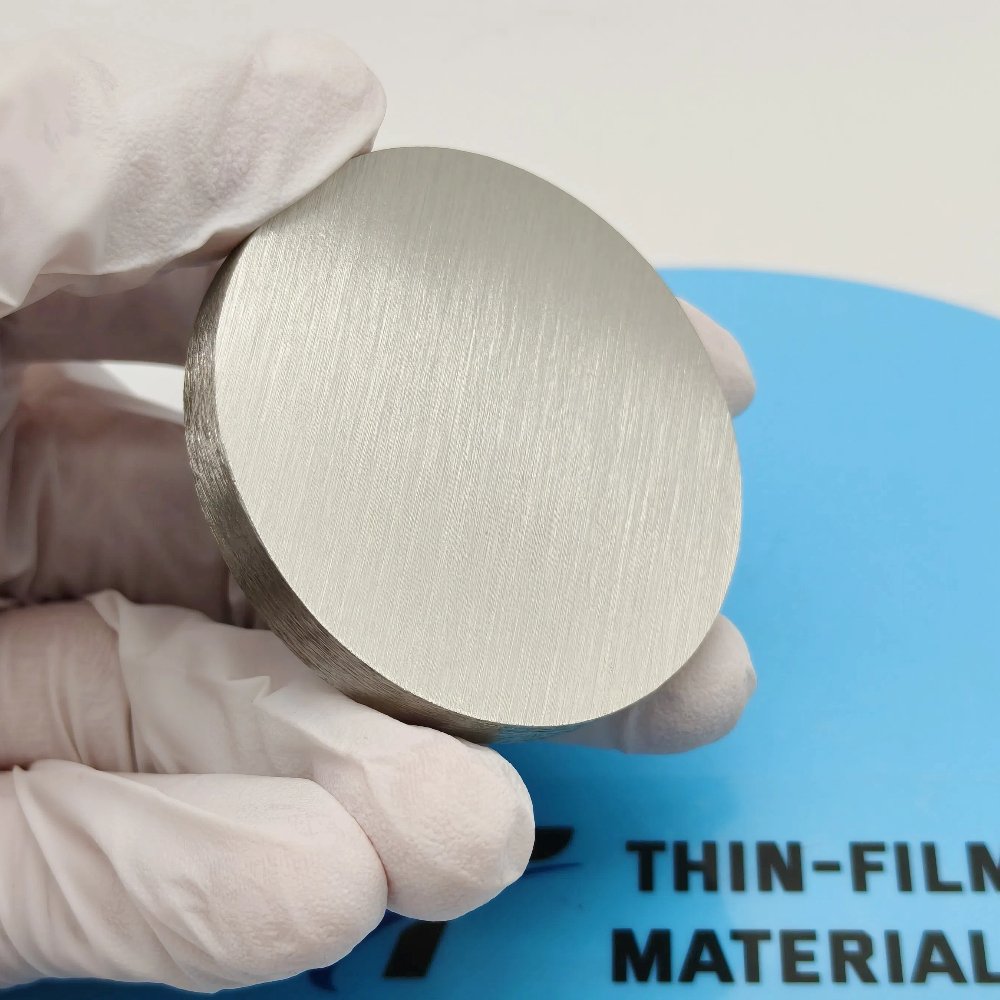
The Scandium Aluminum (Sc/Al) Sputtering Target is a high-performance alloy deposition material widely used in advanced thin film technologies. By combining aluminum with scandium, this alloy exhibits improved mechanical strength, thermal stability, and unique electronic characteristics, making it particularly valuable for semiconductor, microelectronics, and functional coating applications.
In Physical Vapor Deposition (PVD) processes such as magnetron sputtering, Sc/Al targets enable the formation of uniform scandium–aluminum thin films or serve as precursor materials for advanced compounds such as scandium-doped aluminum films. These materials are increasingly important in modern electronic devices, piezoelectric materials, and next-generation semiconductor technologies.
Detailed Description
Scandium Aluminum Sputtering Targets are manufactured using high-purity scandium and aluminum metals through controlled alloying processes such as vacuum induction melting, powder metallurgy, or hot isostatic pressing (HIP). These processes ensure homogeneous alloy composition, high density, and stable microstructure—essential factors for consistent sputtering performance.
The addition of scandium significantly enhances the structural and functional properties of aluminum-based thin films. Scandium atoms refine the grain structure of aluminum alloys, improving mechanical strength, thermal stability, and resistance to electromigration. In thin film deposition systems, these properties contribute to improved film reliability and durability.
One of the most important applications of Sc/Al alloy targets is the deposition of scandium-doped aluminum nitride (AlScN) thin films. When used in reactive sputtering processes with nitrogen gas, Sc/Al targets can produce AlScN films that exhibit enhanced piezoelectric properties compared to conventional aluminum nitride films. These materials are widely studied for high-performance sensors, RF devices, and microelectromechanical systems (MEMS).
Sc/Al sputtering targets can be used in DC magnetron sputtering systems, as the alloy remains electrically conductive. High-density targets minimize particle formation and ensure stable deposition rates, which is essential for semiconductor manufacturing and precision thin film applications.
Targets are available in standard circular or rectangular geometries and can also be manufactured according to customer specifications. For larger diameters or high-power sputtering systems, the targets may be bonded to copper backing plates using indium bonding or elastomer bonding to enhance heat dissipation and mechanical stability.
Applications
Thin films deposited from Scandium Aluminum Sputtering Targets are used in a variety of advanced technologies:
Piezoelectric thin films – deposition of scandium-doped aluminum nitride (AlScN) for high-performance piezoelectric devices.
MEMS and RF devices – improved piezoelectric properties for resonators, filters, and sensors.
Semiconductor thin films – conductive or functional layers in microelectronic devices.
Aerospace and advanced coatings research – Sc–Al alloy films with enhanced mechanical properties.
Microelectronics – alloy thin films used for structural and functional layers in integrated circuits.
Materials science research – investigation of scandium-alloy thin films and advanced functional materials.
Technical Parameters
| Parameter | Typical Value / Range | Importance |
|---|---|---|
| Purity | 99.9% – 99.99% metals | Higher purity improves film quality and electrical performance |
| Composition | Custom Sc/Al ratios | Enables tuning of mechanical and piezoelectric properties |
| Density | ≥99% theoretical | Ensures stable sputtering and reduced particle generation |
| Diameter | 25 – 300 mm (custom) | Compatible with various sputtering cathodes |
| Thickness | 3 – 6 mm | Influences sputtering rate and target lifetime |
| Bonding | Copper backing plate (optional) | Improves heat transfer and mechanical stability |
Comparison with Related Materials
| Material | Key Advantage | Typical Application |
|---|---|---|
| Scandium Aluminum (Sc/Al) | Enables high-performance AlScN piezoelectric films | MEMS, RF filters, sensors |
| Aluminum (Al) | High conductivity and low cost | General thin film deposition |
| Aluminum Nitride (AlN) | Good piezoelectric properties | RF devices and acoustic resonators |
FAQ
| Question | Answer |
|---|---|
| Can the Sc/Al sputtering target composition be customized? | Yes, the scandium-to-aluminum ratio can be tailored to meet specific thin film performance requirements. |
| Which sputtering method is recommended for Sc/Al targets? | DC magnetron sputtering is typically used due to the alloy’s electrical conductivity. |
| Are bonded targets available? | Yes, Sc/Al targets can be indium-bonded or elastomer-bonded to copper backing plates for improved thermal management. |
| What substrates are compatible with Sc/Al thin films? | Silicon wafers, sapphire, glass, and various semiconductor substrates are commonly used. |
| Which industries commonly use Sc/Al sputtering targets? | Semiconductor manufacturing, MEMS device fabrication, RF filter production, and advanced materials research laboratories. |
Packaging
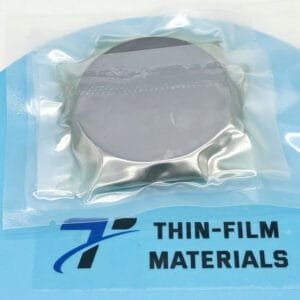
Our Scandium Aluminum Sputtering Targets are meticulously tagged and labeled externally to ensure efficient identification and maintain high standards of quality control. We take great care to prevent any potential damage during storage and transportation, ensuring the targets arrive in perfect condition.
Conclusion
The Scandium Aluminum (Sc/Al) Sputtering Target is a high-value alloy deposition material used for producing advanced thin films with improved mechanical strength, thermal stability, and enhanced piezoelectric performance. Its role in the deposition of scandium-doped aluminum nitride and other advanced alloy thin films makes it increasingly important in modern semiconductor and MEMS technologies.
With customizable compositions, precise manufacturing processes, and reliable bonding options, Sc/Al sputtering targets provide consistent performance for both research and industrial thin film deposition systems.
For detailed specifications and a quotation, please contact us at sales@thinfilmmaterials.com.

Reviews
There are no reviews yet.