
Introduction
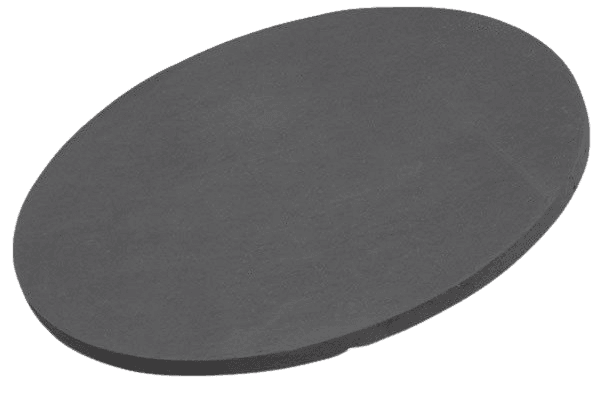
Strontium Iron Oxide (SrFe₁₂O₁₉) Sputtering Targets are advanced ceramic targets used for the deposition of magnetic oxide thin films in electronics, spintronic devices, and microwave technologies. SrFe₁₂O₁₉, commonly known as Strontium Hexaferrite, is a ferrimagnetic material with excellent magnetic anisotropy, high coercivity, and strong chemical stability.
Because of these properties, SrFe₁₂O₁₉ sputtering targets are widely used in magnetron sputtering systems to produce thin films for magnetic storage, microwave devices, magnetic sensors, and research in advanced oxide electronics.
Detailed Description
Strontium Iron Oxide (SrFe₁₂O₁₉) is a ferrite compound belonging to the hexagonal magnetoplumbite crystal structure family. This structure provides strong magnetic anisotropy and high coercive force, making the material highly suitable for permanent magnet and magnetic thin film applications.
When used as a sputtering target, SrFe₁₂O₁₉ enables the deposition of magnetic oxide thin films with controlled composition and magnetic properties. The thin films produced from this target can exhibit strong perpendicular magnetic anisotropy, which is particularly useful for magnetic recording and microwave device applications.
SrFe₁₂O₁₉ sputtering targets are typically produced through advanced ceramic processing methods. High-purity precursor powders are carefully mixed and reacted through solid-state synthesis, followed by pressing and high-temperature sintering to form dense ceramic targets. The resulting targets exhibit high density, uniform microstructure, and stable sputtering behavior.
Maintaining high density is essential for sputtering targets because it ensures stable erosion during deposition and minimizes particle generation. Uniform composition is also critical for producing thin films with consistent magnetic properties.
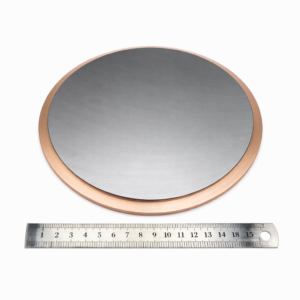
Depending on deposition requirements, SrFe₁₂O₁₉ sputtering targets may be used in RF magnetron sputtering systems, which are commonly employed for oxide ceramic materials. Optional backing plates—such as copper backing plates—can be bonded to the target to improve heat dissipation and mechanical stability during high-power sputtering operations.
The deposited SrFe₁₂O₁₉ thin films are valued for their strong magnetic performance, thermal stability, and resistance to corrosion, making them suitable for demanding electronic and magnetic device applications.
Applications
Strontium Iron Oxide sputtering targets are widely used in advanced magnetic and electronic applications, including:
Magnetic thin films for microwave and RF devices
Magnetic recording media research
Spintronic devices and magnetic sensors
Ferrite-based microwave components
Magneto-optical materials and devices
Advanced oxide electronics research
These applications make SrFe₁₂O₁₉ an important material in modern magnetic thin film technologies.
Technical Parameters
| Parameter | Typical Value / Range | Importance |
|---|---|---|
| Purity | 99.9% – 99.99% | Ensures consistent magnetic and structural properties |
| Composition | SrFe₁₂O₁₉ (Strontium Hexaferrite) | Maintains correct magnetic phase |
| Density | ≥ 95% theoretical density | Ensures stable sputtering performance |
| Diameter | 25 – 200 mm (custom available) | Compatible with sputtering systems |
| Thickness | 3 – 6 mm | Influences sputtering lifetime |
| Bonding | Copper backing plate optional | Improves heat dissipation during sputtering |
Comparison with Related Materials
| Material | Key Advantage | Typical Application |
|---|---|---|
| Strontium Iron Oxide (SrFe₁₂O₁₉) | High coercivity and magnetic anisotropy | Magnetic thin films and microwave devices |
| Barium Ferrite (BaFe₁₂O₁₉) | Strong magnetic properties | Magnetic storage media |
| Iron Oxide (Fe₃O₄) | Good magnetic conductivity | Magnetic sensors |
| Yttrium Iron Garnet (YIG) | Excellent microwave magnetic properties | Microwave and spintronic devices |
FAQ
| Question | Answer |
|---|---|
| What sputtering method is suitable for SrFe₁₂O₁₉ targets? | RF magnetron sputtering is typically used because SrFe₁₂O₁₉ is a ceramic oxide material. |
| Can SrFe₁₂O₁₉ sputtering targets be customized? | Yes, target diameter, thickness, density, and bonding options can be customized. |
| What substrates are commonly used for SrFe₁₂O₁₉ thin films? | Common substrates include sapphire, MgO, SrTiO₃, and silicon wafers. |
| What makes SrFe₁₂O₁₉ suitable for magnetic thin films? | Its hexagonal crystal structure provides high coercivity and strong magnetic anisotropy. |
| Are bonded targets available? | Yes, targets can be bonded to copper backing plates for improved thermal management during sputtering. |
Packaging
Our Strontium Iron Oxide Sputtering Targets are meticulously tagged and labeled externally to ensure efficient identification and maintain high standards of quality control. We take great care to prevent any potential damage during storage and transportation, ensuring the targets arrive in perfect condition.
Conclusion
Strontium Iron Oxide (SrFe₁₂O₁₉) sputtering targets provide an effective material solution for producing magnetic oxide thin films with high coercivity, strong anisotropy, and excellent thermal stability. These properties make them highly valuable for microwave devices, magnetic sensors, and advanced spintronic research.
With customizable sizes, high-purity ceramic composition, and optional backing plate configurations, SrFe₁₂O₁₉ sputtering targets support both advanced research and industrial thin film deposition systems.
For detailed specifications and a quotation, please contact us at sales@thinfilmmaterials.com.
Reviews
There are no reviews yet.