
Introduction
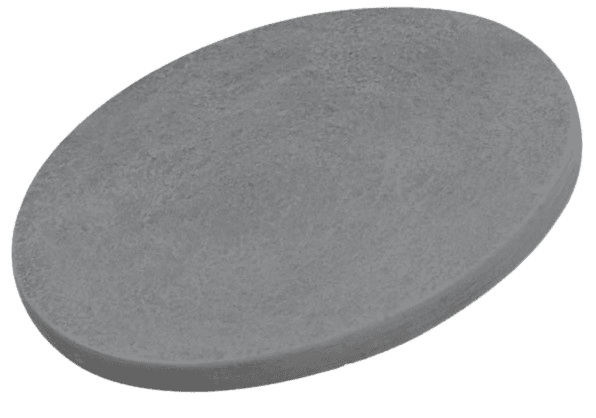
Tantalum Carbide Sputtering Targets are advanced ceramic targets designed for depositing ultra-hard, chemically stable, and high-temperature-resistant thin films. With an exceptionally high melting point and outstanding mechanical strength, tantalum carbide–based coatings are widely used in demanding environments where conventional metallic or nitride coatings may fail.
Detailed Description
Our Tantalum Carbide Sputtering Targets are produced from high-purity tantalum and carbon through controlled powder processing and high-temperature sintering. This manufacturing route ensures precise stoichiometry, high density, and a uniform microstructure—all of which are critical for stable sputtering performance and consistent film quality.
Compared with metallic tantalum targets, tantalum carbide offers significantly higher hardness, superior wear resistance, and improved stability under high thermal loads. These characteristics make it especially suitable for high-power sputtering and applications involving elevated substrate temperatures. The dense ceramic structure helps reduce particle generation, abnormal arcing, and non-uniform erosion during deposition.
Tantalum Carbide targets are typically used in RF magnetron sputtering systems due to their ceramic nature, and in some cases pulsed DC sputtering can also be applied depending on system configuration. Targets can be supplied as monolithic ceramics or bonded to copper backing plates to improve heat dissipation and mechanical support. Standard and fully customized sizes are available to match a wide range of sputtering cathodes.
Applications
Tantalum Carbide Sputtering Targets are commonly used in:
Hard and wear-resistant thin-film coatings
Cutting tools and mold surface protection
Semiconductor and microelectronic coatings
Diffusion barriers and protective layers
Aerospace, energy, and high-temperature applications
They are particularly suitable for applications requiring extreme hardness, thermal stability, and long service life.
Technical Parameters
| Parameter | Typical Value / Range | Importance |
|---|---|---|
| Material | Tantalum Carbide (TaC) | Provides extreme hardness and thermal stability |
| Purity | 99.5% – 99.9% | Minimizes impurities affecting film performance |
| Density | ≥ 95–99% theoretical | Ensures stable sputtering and uniform erosion |
| Shape | Round / Rectangular / Custom | Compatible with various sputtering systems |
| Sputtering Mode | RF / Pulsed DC (process-dependent) | Suitable for ceramic targets |
| Backing Plate | Copper (optional) | Improves heat transfer and target lifetime |
Comparison with Related Materials
| Material | Key Advantage | Typical Application |
|---|---|---|
| Tantalum Carbide | Extreme hardness, very high melting point | High-wear and high-temperature coatings |
| Tantalum Nitride | Good conductivity, barrier performance | Semiconductor diffusion barriers |
| Titanium Carbide | Lower density, good hardness | Tool and decorative coatings |
FAQ
| Question | Answer |
|---|---|
| Is tantalum carbide electrically conductive? | Tantalum carbide has limited conductivity; RF sputtering is generally recommended. |
| Can the target be bonded to a backing plate? | Yes, copper backing plates are available to enhance cooling and stability. |
| Are custom sizes and thicknesses available? | Yes, full customization is supported. |
| Is it suitable for high-temperature applications? | Yes, tantalum carbide performs exceptionally well at elevated temperatures. |
Packaging
Our Tantalum Carbide Sputtering Targets are carefully tagged and labeled for traceability. Each target is vacuum-sealed and packaged with protective materials to prevent contamination or mechanical damage during storage and transportation.
Conclusion
Tantalum Carbide Sputtering Targets provide a reliable solution for depositing ultra-hard, thermally stable ceramic coatings in demanding environments. With high purity, dense microstructure, and consistent sputtering behavior, they are well suited for both advanced research and industrial production.
For detailed specifications and a quotation, please contact us at sales@thinfilmmaterials.com.
Reviews
There are no reviews yet.