

 MSDS File
Thulium(III) Oxide Evaporation Materials
Introduction
Thulium(III) Oxide (Tm₂O₃) Evaporation Materials are high-purity rare-earth oxides designed for thin film deposition in optical, electronic, and photonic applications. Known for its unique optical properties in the near-infrared range, Tm₂O₃ is widely used to produce specialized coatings for lasers, optical communication devices, and advanced research applications. Its stable crystalline structure and low volatility make it an excellent choice for electron beam (e-beam) evaporation and thermal evaporation processes.
Detailed Description
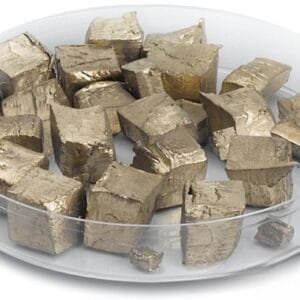
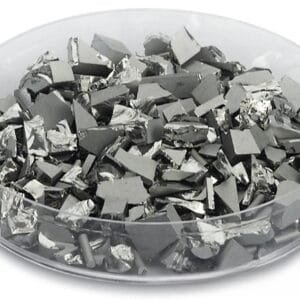
Thulium(III) Oxide is typically supplied in granular, pellet, or tablet form to suit different evaporation systems. Produced from refined high-purity raw materials, these evaporation materials exhibit minimal impurities, ensuring stable evaporation rates and reproducible thin film performance.
Chemical Formula: Tm₂O₃
Purity: 99.9% – 99.99% (3N–4N) to minimize film contamination.
Appearance: Pale green or white crystalline solid.
Forms: Pellets, tablets, or pieces for compatibility with various evaporation sources (boats, crucibles).
Stability: Excellent thermal stability and controlled evaporation behavior under vacuum conditions.
Applications
Thulium(III) Oxide evaporation materials are employed across diverse industries and R&D fields:
Optical Coatings – Infrared transmission coatings, filters, and beam splitters.
Laser Technology – Active medium coatings for solid-state and fiber lasers.
Telecommunications – Coatings for optical communication components.
Energy & Electronics – Functional layers in advanced devices and thin film research.
R&D – Material science studies, particularly for rare-earth-based functional oxides.
Technical Parameters
| Parameter | Typical Value / Range | Importance |
|---|---|---|
| Purity | 99.9% – 99.99% | High purity ensures minimal defect formation in thin films |
| Particle/Form Size | Pellets/Tablets (2–6 mm) | Provides uniform evaporation and stable rates |
| Evaporation Method | E-beam / Thermal | Compatible with multiple deposition systems |
| Appearance | Pale green/white solid | Rare-earth oxide characteristic |
Comparison with Related Materials
| Material | Key Advantage | Typical Application |
|---|---|---|
| Thulium(III) Oxide (Tm₂O₃) | Infrared optical properties | IR coatings, lasers |
| Erbium Oxide (Er₂O₃) | Strong absorption at 1.5 µm | Telecom coatings |
| Ytterbium Oxide (Yb₂O₃) | High NIR transmission | Optical windows, energy devices |
FAQ
| Question | Answer |
|---|---|
| What forms are available? | Pellets, tablets, granules, or custom sizes upon request. |
| What is the typical lead time? | Usually 1–2 weeks depending on order volume and customization. |
| Can it be used in e-beam evaporation? | Yes, Tm₂O₃ is stable and well-suited for e-beam systems. |
| How is it packaged? | Vacuum-sealed in clean containers, cushioned with protective foam, and shipped in export-safe cartons. |
| Which industries use it most? | Optics, lasers, telecommunications, and advanced R&D laboratories. |
Packaging
Thulium(III) Oxide Evaporation Materials are carefully packaged in vacuum-sealed containers to prevent contamination or moisture absorption. Each container is externally labeled for traceability, and the materials are shipped in foam-protected, export-compliant cartons to ensure safe delivery.
Conclusion
Thulium(III) Oxide (Tm₂O₃) Evaporation Materials provide high stability, excellent purity, and unique optical properties, making them essential for thin film coatings in infrared optics, laser systems, and communication technologies. With customizable forms and reliable deposition performance, they are a trusted choice for research and industry alike.
For detailed specifications and a quotation, please contact us at [sales@thinfilmmaterials.com].

Reviews
There are no reviews yet.