

Introduction
Tungsten Oxide Sputtering Targets are ceramic deposition materials widely used for producing functional oxide thin films with electrochromic, optical, and electronic properties. Tungsten oxide—most commonly in the form of WO₃—is valued for its tunable bandgap, high chemical stability, and reversible ion insertion behavior, making it a key material in smart windows, sensors, and energy-related thin film technologies.
Detailed Description
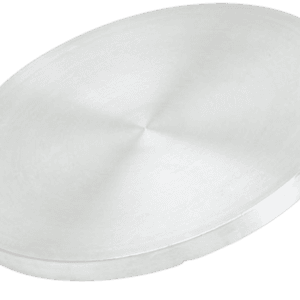
Tungsten oxide sputtering targets are manufactured from high-purity tungsten oxide powders through controlled powder processing, pressing, and high-temperature sintering. These processes ensure high target density, uniform microstructure, and stable stoichiometry, all of which are critical for consistent sputtering rates and reproducible film properties.
As an insulating ceramic material, tungsten oxide targets are typically used with RF magnetron sputtering systems. For applications requiring higher power densities or improved thermal management, targets can be supplied bonded to metallic backing plates (such as copper or titanium) to enhance heat dissipation and reduce the risk of cracking during deposition.
Careful control of phase composition (e.g., WO₃ or sub-stoichiometric WOₓ) allows tuning of electrical conductivity, optical absorption, and electrochromic response in the deposited films.
Applications
Electrochromic coatings for smart windows
Gas sensing and environmental monitoring films
Optical and antireflective coatings
Energy storage and battery-related thin films
Semiconductor and functional oxide research
Technical Parameters
| Parameter | Typical Value / Range | Importance |
|---|---|---|
| Material | Tungsten Oxide (WO₃ / WOₓ) | Functional oxide ceramic |
| Purity | 99.9% – 99.99% | Impacts optical & electrical performance |
| Target Form | Disc / Plate (bonded or unbonded) | Compatible with sputtering systems |
| Diameter | 25 – 300 mm (custom) | Fits standard magnetron cathodes |
| Thickness | 3 – 6 mm (typical) | Influences target lifetime |
| Sputtering Mode | RF magnetron sputtering | Required for insulating oxides |
| Backing Plate | Copper / Titanium (optional) | Improves thermal management |
Comparison with Related Oxide Targets
| Material | Key Advantage | Typical Application |
|---|---|---|
| Tungsten Oxide (WO₃) | Electrochromic & optical functionality | Smart windows & sensors |
| Molybdenum Oxide (MoO₃) | High work function | Electronics & optics |
| Vanadium Oxide (VO₂) | Thermochromic behavior | Smart coatings |
FAQ
| Question | Answer |
|---|---|
| Is RF sputtering required for tungsten oxide targets? | Yes, RF magnetron sputtering is typically used for WO₃ targets. |
| Can the stoichiometry be customized? | Yes, WO₃ or sub-stoichiometric WOₓ compositions can be supplied. |
| Are bonded targets available? | Yes, copper- or titanium-backed targets are available upon request. |
| Can large-area targets be produced? | Yes, targets up to 300 mm or larger can be manufactured. |
| Is a Certificate of Analysis provided? | Yes, CoA is available upon request. |
Packaging
Our Tungsten Oxide Sputtering Targets are carefully labeled and vacuum-sealed or inert-gas packed to prevent contamination and moisture uptake. Shock-absorbing materials and export-grade cartons or wooden crates ensure safe transportation and storage.
Conclusion
Tungsten Oxide Sputtering Targets deliver reliable composition control, stable sputtering performance, and excellent functional properties for advanced oxide thin film deposition. With flexible customization options and strict quality control, they are an ideal choice for electrochromic, optical, and energy-related PVD applications.
For detailed specifications and a quotation, please contact us at sales@thinfilmmaterials.com.

Reviews
There are no reviews yet.