
Introduction
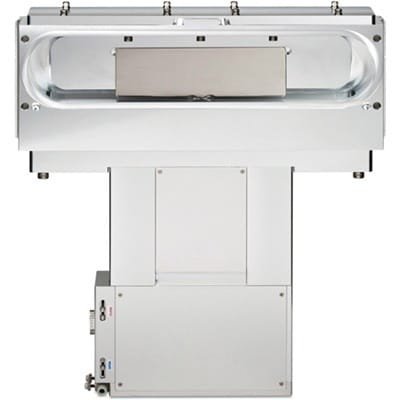
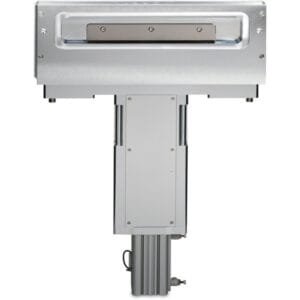
V70S Series Rectangular Gate Valves (Low Profile) are high-performance vacuum isolation valves specifically designed for applications where compact installation space, high conductance, and reliable sealing are critical. Their low-profile rectangular body makes them especially suitable for semiconductor process tools, thin film deposition systems, and advanced vacuum chambers where vertical clearance is limited.
Detailed Description
The V70S Series features a low-profile rectangular housing engineered to minimize system footprint while maintaining excellent flow conductance. The rectangular opening allows efficient isolation of large-area vacuum chambers, load-locks, and transfer modules, reducing pump-down time compared with round-port alternatives.
Manufactured from vacuum-grade stainless steel, the valve body offers outstanding mechanical strength, corrosion resistance, and low outgassing performance. The precision-machined gate mechanism ensures smooth, repeatable operation and uniform sealing pressure across the entire aperture. Elastomer sealing elements are optimized for high-vacuum operation, providing reliable isolation and long service life under frequent cycling.
The V70S Series can be configured for manual or pneumatic actuation, with position indicators and control options available to support automated vacuum systems. Its low-profile design simplifies integration into space-constrained equipment without compromising performance.
Applications
Semiconductor processing and load-lock chambers
Thin film deposition systems (PVD, sputtering, evaporation)
Flat panel display and photovoltaic equipment
Vacuum transfer modules and cluster tools
Research and industrial high-vacuum systems
Technical Parameters
| Parameter | Typical Value / Range | Importance |
|---|---|---|
| Valve Type | Rectangular Gate Valve | High conductance isolation |
| Series | V70S (Low Profile) | Compact system integration |
| Body Material | Stainless Steel | Low outgassing, corrosion resistance |
| Actuation | Manual / Pneumatic | Flexible system control |
| Sealing Method | Elastomer gate seal | Reliable HV isolation |
| Mounting | Rectangular flange interfaces | Direct chamber integration |
| Vacuum Range | High Vacuum (HV) | Suitable for process isolation |
Comparison with Related Gate Valves
| Valve Type | Key Advantage | Typical Application |
|---|---|---|
| V70S Rectangular Gate Valve (Low Profile) | Compact height, high conductance | Semiconductor & PVD tools |
| Standard Rectangular Gate Valve | Larger opening | General vacuum chambers |
| Circular Gate Valve | Simple geometry | Round vacuum lines |
FAQ
| Question | Answer |
|---|---|
| What is the main advantage of the low-profile design? | It reduces installation height while maintaining high conductance. |
| Can the valve be automated? | Yes, pneumatic actuation and position feedback are available. |
| Is it suitable for UHV systems? | Primarily designed for HV; UHV compatibility depends on seal configuration. |
| Can custom sizes be supplied? | Yes, custom apertures and mounting options can be discussed. |
| How is cleanliness ensured? | Valves are cleaned and packed for vacuum service before shipment. |
Packaging
Our V70S Series Rectangular Gate Valves (Low Profile) are carefully cleaned, sealed, and packed with protective materials. Export-grade cartons or wooden crates are used to ensure safe transportation and prevent contamination or mechanical damage.
Conclusion
V70S Series Rectangular Gate Valves (Low Profile) provide an optimal balance of compact design, high conductance, and dependable vacuum isolation. Their robust construction and flexible configuration options make them an excellent choice for space-constrained semiconductor, coating, and high-vacuum process systems.
For detailed specifications and a quotation, please contact us at sales@thinfilmmaterials.com.

Reviews
There are no reviews yet.