

Yttrium Aluminum Oxide Sputtering Target (Y₃Al₅O₁₂, YAG)
Introduction
Yttrium Aluminum Oxide (Y₃Al₅O₁₂), commonly known as YAG (Yttrium Aluminum Garnet), is a highly stable oxide material widely used in optical, electronic, and high-temperature applications. As a sputtering target, YAG enables the deposition of durable, optically transparent, and chemically stable thin films. Its excellent mechanical strength and thermal resistance make it particularly attractive for advanced optical coatings and functional oxide layers in demanding environments.
Detailed Description
Our Yttrium Aluminum Oxide Sputtering Targets are manufactured from high-purity Y₃Al₅O₁₂ ceramic powders with carefully controlled stoichiometry. Maintaining the precise Y:Al ratio is critical to preserving the garnet crystal structure, which directly affects optical transparency, refractive index stability, and dielectric performance.
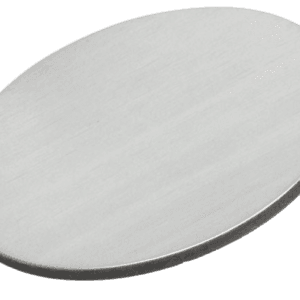
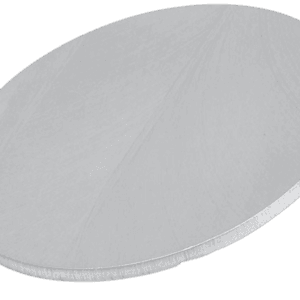
The targets are consolidated through optimized calcination and high-temperature sintering processes to achieve high density and structural uniformity. A dense microstructure minimizes particle generation and improves plasma stability during RF sputtering, resulting in smooth, uniform thin films with consistent optical and electrical properties. YAG targets are typically supplied in round or rectangular formats and can be provided unbonded or bonded to metallic backing plates for enhanced thermal management in higher-power sputtering systems.
Applications
Yttrium Aluminum Oxide (YAG) Sputtering Targets are widely used in:
Optical and laser-related thin film coatings
Protective and dielectric coatings in harsh environments
Transparent insulating layers in electronics
Buffer and functional layers in oxide heterostructures
High-temperature and wear-resistant coatings
Academic and industrial R&D in advanced oxide materials
Technical Parameters
| Parameter | Typical Value / Range | Importance |
|---|---|---|
| Chemical Composition | Y₃Al₅O₁₂ (YAG) | Determines optical and dielectric properties |
| Purity | 99.9% – 99.99% | Reduces impurity-related optical absorption |
| Diameter | 25 – 200 mm (custom available) | Compatible with standard sputtering systems |
| Thickness | 3 – 6 mm | Influences sputtering lifetime |
| Density | ≥ 95% theoretical | Improves plasma stability |
| Sputtering Mode | RF sputtering | Required for ceramic oxides |
| Bonding | Unbonded / Cu or Ti backing (optional) | Enhances heat dissipation |
Comparison with Related Materials
| Material | Key Advantage | Typical Application |
|---|---|---|
| YAG (Y₃Al₅O₁₂) | High thermal stability & optical transparency | Optical & protective films |
| Al₂O₃ | Excellent hardness | Protective coatings |
| Y₂O₃ | Good dielectric properties | Electronic films |
| MgAl₂O₄ (Spinel) | High optical clarity | Transparent coatings |
FAQ
| Question | Answer |
|---|---|
| Can YAG targets be customized? | Yes, size, thickness, and bonding options can be tailored. |
| Is RF sputtering required? | Yes, YAG is a ceramic oxide and typically requires RF sputtering. |
| Are doped YAG targets available? | Yes, doped variants can be supplied upon request. |
| How is the target packaged? | Vacuum-sealed with protective foam and export-grade cartons or crates. |
Packaging
Our Yttrium Aluminum Oxide (YAG) Sputtering Targets are meticulously labeled and vacuum-sealed to ensure traceability and protection from moisture and contamination. Export-grade packaging safeguards the targets during storage and international shipment.
Conclusion
Yttrium Aluminum Oxide (Y₃Al₅O₁₂, YAG) Sputtering Target offers a reliable solution for depositing high-quality oxide thin films with excellent optical transparency, thermal stability, and dielectric performance. With precise composition control, high density, and flexible customization options, it is well suited for advanced optical coatings, electronics, and research applications.
For detailed specifications and a quotation, please contact us at sales@thinfilmmaterials.com.

Reviews
There are no reviews yet.