
Introduction
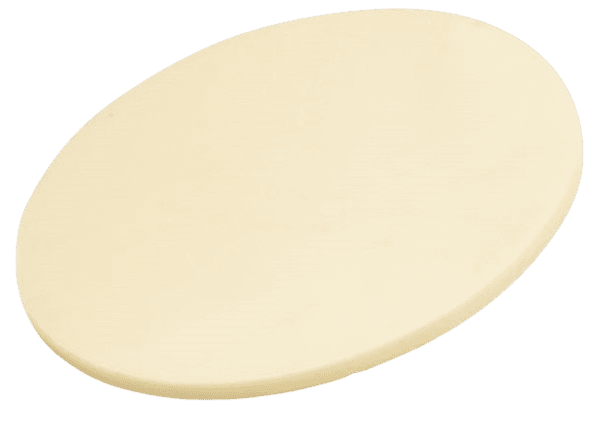
Zinc Oxide doped with Gallium Oxide sputtering targets, commonly known as GZO sputtering targets, are advanced transparent conductive oxide (TCO) materials designed for high-performance thin film deposition. By introducing gallium oxide into the ZnO lattice, these targets deliver improved electrical conductivity, excellent optical transparency, and enhanced thermal stability, making them a strong alternative to ITO for modern optoelectronic applications.
Detailed Description
Zinc Oxide doped with Gallium Oxide sputtering targets are produced by homogeneously dispersing Ga₂O₃ within a ZnO ceramic matrix using controlled powder synthesis and high-temperature sintering. Precise gallium doping is critical, as Ga³⁺ ions act as effective donors in ZnO, increasing carrier concentration while preserving high transparency in the visible range.
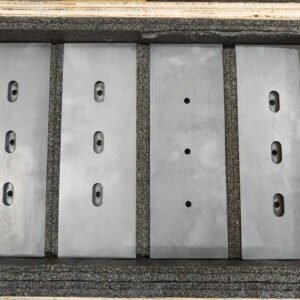
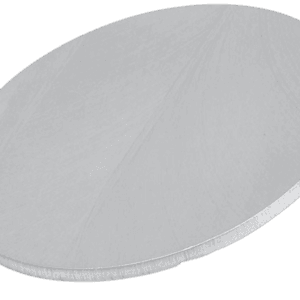
The resulting targets exhibit high density, uniform microstructure, and stable sputtering behavior, which are essential for achieving consistent film thickness, low resistivity, and minimal particle generation during deposition. For higher power densities or extended sputtering cycles, GZO targets can be supplied bonded to copper backing plates to improve heat dissipation and mechanical integrity. Unbonded ceramic targets are also available for smaller sizes or low-power applications.
These targets are typically used with RF magnetron sputtering systems, ensuring efficient deposition of high-quality transparent conductive films in both research and production environments.
Applications
Transparent conductive layers for displays and touch panels
Thin film solar cells and photovoltaic devices
LEDs and optoelectronic components
Flat panel displays (LCD, OLED)
TCO material research and development
Technical Parameters
| Parameter | Typical Value / Range | Importance |
|---|---|---|
| Material | Zinc Oxide doped with Gallium Oxide (GZO) | Transparent conductive oxide |
| Ga₂O₃ Doping Level | 1 – 5 wt.% (customizable) | Controls conductivity & transparency |
| Purity | 99.9% – 99.99% (total) | Affects electrical & optical performance |
| Target Form | Disc / Plate (bonded or unbonded) | Compatible with sputtering systems |
| Diameter | 25 – 300 mm (custom) | Fits standard magnetron cathodes |
| Thickness | 3 – 6 mm (typical) | Influences target lifetime |
| Sputtering Method | RF magnetron sputtering | Ideal for oxide ceramics |
| Backing Plate | Copper (optional) | Enhances heat transfer & stability |
Comparison with Related TCO Targets
| Material | Key Advantage | Typical Application |
|---|---|---|
| Zinc Oxide doped with Gallium Oxide (GZO) | ITO alternative, stable conductivity | Displays & photovoltaics |
| Indium Tin Oxide (ITO) | Very low resistivity | High-end optoelectronics |
| Aluminum-Doped ZnO (AZO) | Cost-effective | Large-area coatings |
FAQ
| Question | Answer |
|---|---|
| Can the gallium oxide content be adjusted? | Yes, Ga₂O₃ concentration can be customized to meet performance requirements. |
| Is RF sputtering required? | RF magnetron sputtering is typically recommended for GZO targets. |
| Are bonded targets available? | Yes, copper-backed targets are available for higher power operation. |
| Can large-diameter targets be supplied? | Yes, targets up to 300 mm or larger can be produced on request. |
| Is a Certificate of Analysis available? | Yes, CoA is available upon request. |
Packaging
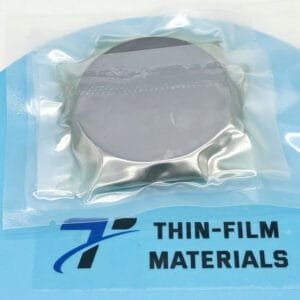
Our Zinc Oxide doped with Gallium Oxide sputtering targets are carefully labeled and vacuum-sealed or inert-gas packed to prevent moisture absorption and contamination. Shock-absorbing materials and export-grade cartons or wooden crates ensure safe transportation and storage.
Conclusion
Zinc Oxide doped with Gallium Oxide sputtering targets (GZO targets) offer an excellent balance of transparency, conductivity, and thermal stability for next-generation optoelectronic and energy applications. With flexible doping control, reliable quality, and full customization support, these targets are well suited for both research and industrial PVD processes.
For detailed specifications and a quotation, please contact us at sales@thinfilmmaterials.com.
Reviews
There are no reviews yet.