
 MSDS File
Introduction
Zinc Sulfide Evaporation Materials (ZnS) are widely used in optical thin film deposition, particularly for infrared (IR) and visible optical coatings. As a II–VI compound semiconductor with high transparency and a relatively high refractive index, ZnS plays a critical role in multilayer interference coatings, IR optics, and protective dielectric layers.
In vacuum deposition systems, ZnS is valued for its stable evaporation behavior and its ability to form dense, uniform films with excellent optical transmission characteristics. High material purity and controlled stoichiometry are essential for maintaining film clarity and minimizing absorption losses.
Detailed Description
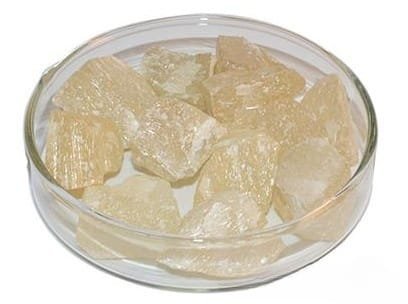
Zinc Sulfide (ZnS) is typically supplied in the form of:
Irregular pieces
Granules
Pressed pellets
Custom-shaped evaporation charges
High-purity ZnS (commonly 99.9% – 99.99%) is produced through controlled synthesis and purification processes to ensure minimal metallic or oxygen-related impurities. Optical-grade ZnS is particularly important for IR applications, where absorption must be tightly controlled.
Key material properties include:
Wide bandgap (~3.6 eV)
High refractive index (~2.2–2.4 in visible range)
Excellent transmission in visible and infrared regions
Chemical stability in dry environments
ZnS evaporation materials are typically used in thermal evaporation or electron beam evaporation systems. Process control—especially substrate temperature and deposition rate—plays a significant role in film density and adhesion performance.
ZnS thin films are often combined with low-index materials (such as fluorides) to form high-performance interference filters and anti-reflective stacks.
Applications
Zinc Sulfide Evaporation Materials are commonly applied in:
Infrared optical coatings
Multilayer interference filters
High-refractive-index dielectric layers
Laser optics and protective coatings
Night vision and IR imaging systems
Display and optoelectronic research
Decorative and functional optical films
In IR optics, ZnS films are widely used due to their high transmission across mid-IR wavelengths.
Technical Parameters
| Parameter | Typical Value / Range | Importance |
|---|---|---|
| Chemical Formula | ZnS | Defines optical and semiconductor properties |
| Purity | 99.9% – 99.99% | Minimizes absorption and scattering losses |
| Form | Pieces / Pellets / Granules | Compatible with various crucibles |
| Size | Custom (2–20 mm typical pieces) | Matches evaporation source capacity |
| Density (bulk) | ~4.09 g/cm³ | Relevant for deposition rate calculations |
| Deposition Method | Thermal / E-beam Evaporation | Ensures controlled film growth |
Custom sizing and packaging options are available to meet specific vacuum system requirements.
Comparison with Related Optical Materials
| Material | Key Advantage | Typical Application |
|---|---|---|
| Zinc Sulfide (ZnS) | High refractive index & IR transparency | IR coatings & filters |
| Zinc Selenide (ZnSe) | Broader IR transmission | CO₂ laser optics |
| Magnesium Fluoride (MgF₂) | Low refractive index | Anti-reflective layers |
| Titanium Dioxide (TiO₂) | Very high refractive index | Visible multilayer stacks |
Compared to ZnSe, ZnS offers strong mechanical stability and excellent performance in visible-to-mid-IR coatings, making it a versatile optical coating material.
FAQ
| Question | Answer |
|---|---|
| Is ZnS suitable for thermal evaporation? | Yes, ZnS is commonly used in both thermal and electron beam evaporation systems. |
| Is optical-grade purity necessary? | For IR and precision optical coatings, high purity is strongly recommended. |
| Can it be used in multilayer stacks? | Yes, it is often paired with low-index materials to form interference coatings. |
| Is ZnS sensitive to moisture? | It is relatively stable but should be stored in dry conditions to prevent contamination. |
| Are customized pellet sizes available? | Yes, material size and form can be tailored to your equipment. |
Packaging
Our Zinc Sulfide Evaporation Materials are meticulously tagged and labeled externally to ensure efficient identification and maintain high standards of quality control. We take great care to prevent any potential damage during storage and transportation, ensuring the materials arrive in perfect condition.
Conclusion
Zinc Sulfide Evaporation Materials (ZnS) provide a reliable, high-performance solution for optical and infrared thin film deposition. With controlled purity, consistent evaporation characteristics, and flexible customization options, they support both research and industrial optical coating applications.
For detailed specifications and a quotation, please contact us at sales@thinfilmmaterials.com.
Reviews
There are no reviews yet.