
 MSDS File
Product Overview
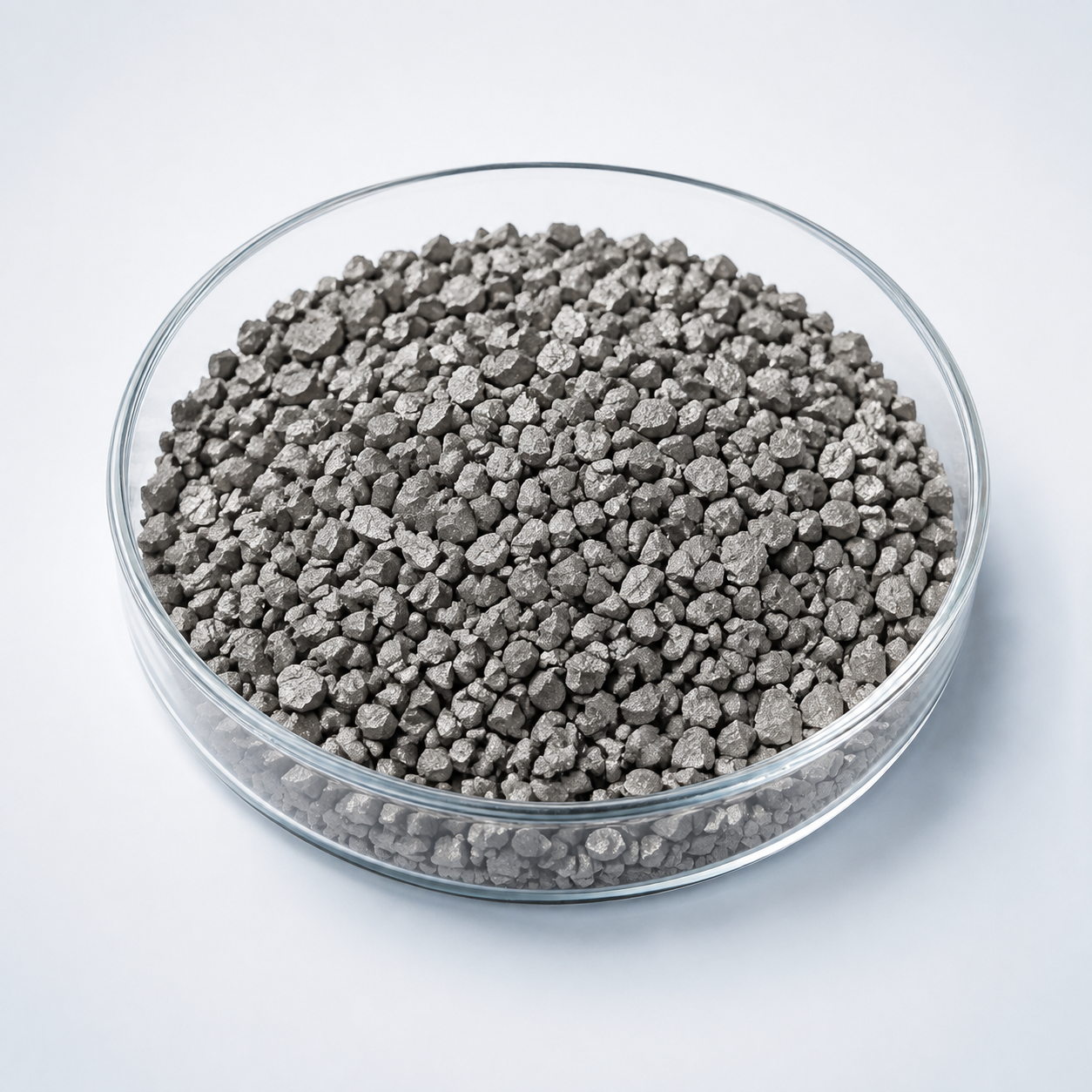
Zirconium Evaporation Materials (Zr) is supplied as a high-purity evaporation source for PVD processes that require refractory metallic thin films. Because refractory metals have high melting temperatures and low vapor pressures, electron-beam evaporation is often more practical than simple resistance heating. Purity, source form, charge size, crucible or hearth compatibility, and the required deposition rate should therefore be considered together when specifying the material.
Explore related source materials and forms in the Evaporation Materials catalog.
Evaporation Behavior and Process Considerations
Electron-beam evaporation is commonly considered because it can concentrate heat directly on the charge without requiring the entire source holder to reach the material’s melting temperature. For high-melting metals, stable hearth cooling, charge placement, beam rastering, and conservative initial conditioning help reduce spitting and local overheating. The film deposition rate should be stabilized before opening the substrate shutter.
Technical Data
| Parameter | Typical Value / Range | Importance |
|---|---|---|
| Material | Zirconium (Zr) | Base metal for zirconium thin films |
| Purity | 99.9% – 99.99% | Minimizes contamination and defects |
| Form | Pellets, pieces, granules, wire | Compatible with various evaporation sources |
| Melting Point | ~1855 °C | Influences evaporation method selection |
| Evaporation Method | Thermal / E-beam | Flexible PVD process compatibility |
| Oxygen Content | Controlled (low ppm) | Critical for film quality and consistency |
| Material | Key Advantage | Typical Application |
|---|---|---|
| Zirconium (Zr) | Strong adhesion, corrosion resistance | Optical & protective coatings |
| Titanium (Ti) | Excellent adhesion | General-purpose PVD films |
| Hafnium (Hf) | Higher temperature stability | High-end optical coatings |
| Question | Answer |
|---|---|
| What evaporation methods are suitable for zirconium? | Both thermal evaporation and electron-beam evaporation are commonly used. |
| Can zirconium be used for reactive evaporation? | Yes, it is frequently used with oxygen or nitrogen to form compound films. |
| Are custom forms available? | Yes, size, shape, and form can be customized. |
| How should zirconium materials be stored? | In vacuum-sealed or inert packaging to prevent oxidation. |
| Is zirconium suitable for optical applications? | Yes, zirconium films and compounds are widely used in optical coatings. |
Typical Thin-Film Applications
- Refractory metallic films, electrodes, diffusion barriers, and high-temperature device layers
- Semiconductor, sensor, optical, and vacuum-device thin-film structures
- Research requiring dense metallic coatings with high thermal stability
Source Form and Ordering Considerations
For quotation, provide material, purity, source form, particle or piece size, quantity, evaporation method, and any boat, basket, crucible, or e-beam hearth constraints. If the material will be used for a specific coating stack, sharing the intended film thickness or deposition application can help with source-form selection and packaging recommendations.
Frequently Asked Questions
Is Zirconium better suited to thermal or e-beam evaporation?
Because refractory metals have high melting temperatures and low vapor pressures, electron-beam evaporation is often the more practical method. The final choice depends on the required rate, charge size, and evaporator design.
What source form is commonly used for Zirconium evaporation?
Pieces, pellets, granules, or other compact charge forms can be supplied depending on the e-beam hearth or crucible geometry. The charge should fit securely and heat evenly.
Why is preconditioning important before evaporating Zirconium?
Gradual preheating helps remove adsorbed gases, stabilize the charge, and establish a repeatable evaporation rate before the substrate is exposed.
Can Zirconium react with the crucible or hearth?
Source compatibility depends on temperature and the chosen holder material. For high-temperature evaporation, the crucible or hearth design should be reviewed to minimize reaction, contamination, or wetting problems.
Does higher purity improve Zirconium thin films?
Higher purity can reduce unwanted metallic and nonmetallic contamination in the deposited layer. The required grade should be selected from the film’s contamination limits and device requirements.
What should I provide for a Zirconium evaporation-material RFQ?
Provide purity, source form, piece or pellet size, quantity, evaporation method, hearth or crucible constraints, and any film-purity or documentation requirements.
Reviews
There are no reviews yet.