

Introduction
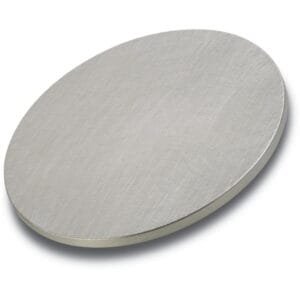
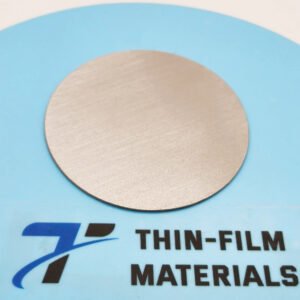
The Zirconium Fluoride Sputtering Target (ZrF₄) is a specialty fluoride ceramic target used in thin-film deposition where low optical absorption, high infrared transparency, and precise fluoride chemistry are required. ZrF₄ is a key material in advanced optical, photonic, and infrared applications, particularly for coatings operating in the mid-IR to far-IR range. Its unique optical and chemical properties make it an important choice for research laboratories and high-end optical coating systems.
Detailed Description
Zirconium Fluoride sputtering targets are produced from high-purity ZrF₄ raw materials using carefully controlled powder processing, consolidation, and sintering techniques. Due to the hygroscopic nature of fluoride materials, strict environmental controls are applied throughout manufacturing, machining, and packaging to prevent moisture uptake and compositional degradation.
The resulting ZrF₄ target features uniform composition, controlled density, and stable sputtering behavior, enabling reproducible thin-film deposition. Compared with oxide targets, ZrF₄ allows the formation of fluoride thin films with lower phonon energy and reduced infrared absorption, which is critical for IR optics and laser-related applications.
ZrF₄ sputtering targets are typically used in RF magnetron sputtering systems. Process parameters such as power density, substrate temperature, and background gas composition are optimized to achieve smooth films with precise stoichiometry and excellent optical performance.
Applications
Zirconium Fluoride sputtering targets are widely used in:
Infrared (IR) optical coatings
Anti-reflection coatings for IR lenses and windows
Fluoride-based optical multilayer stacks
Laser optics and photonic components
Specialty optical and scientific instrumentation
Advanced thin-film materials research
Technical Parameters
| Parameter | Typical Value / Range | Importance |
|---|---|---|
| Chemical Formula | ZrF₄ | Defines fluoride optical properties |
| Purity | 99.9% – 99.99% | Minimizes optical absorption |
| Target Diameter | 25 – 300 mm (custom) | Compatible with standard sputtering guns |
| Thickness | 3 – 6 mm (custom available) | Affects sputtering stability |
| Density | ≥ 95% of theoretical | Ensures uniform erosion |
| Hygroscopic Control | Controlled handling & sealing | Maintains material integrity |
| Deposition Method | RF Magnetron Sputtering | Suitable for fluoride ceramics |
Comparison with Related Fluoride Targets
| Material | Key Advantage | Typical Application |
|---|---|---|
| Zirconium Fluoride (ZrF₄) | Low IR absorption | IR optics & coatings |
| Magnesium Fluoride (MgF₂) | Wide transparency range | AR coatings |
| Yttrium Fluoride (YF₃) | Chemical stability | Optical multilayers |
| Lanthanum Fluoride (LaF₃) | High refractive index | IR optical stacks |
FAQ
| Question | Answer |
|---|---|
| Is ZrF₄ suitable for infrared optics? | Yes, it is widely used for IR optical coatings due to low absorption. |
| Does ZrF₄ absorb moisture? | Yes, strict moisture control and vacuum packaging are essential. |
| Is RF sputtering required? | RF sputtering is recommended for stable deposition of fluoride ceramics. |
| Can small R&D targets be supplied? | Yes, laboratory-scale sizes are available. |
| How is the target packaged? | Vacuum-sealed with moisture-resistant protective materials. |
Packaging
Our Zirconium Fluoride Sputtering Targets (ZrF₄) are meticulously vacuum-sealed and externally labeled to ensure accurate identification and strict quality control. Moisture-resistant wrapping and shock-absorbing packaging are used to protect the target from humidity and mechanical damage during storage and international transportation.
Conclusion
The Zirconium Fluoride Sputtering Target (ZrF₄) provides a reliable solution for depositing high-performance fluoride thin films with excellent infrared transparency and optical stability. With controlled purity, customizable dimensions, and carefully managed handling, ZrF₄ targets are an excellent choice for advanced optical coating and photonic research applications.
For detailed specifications and a quotation, please contact us at sales@thinfilmmaterials.com.

Reviews
There are no reviews yet.