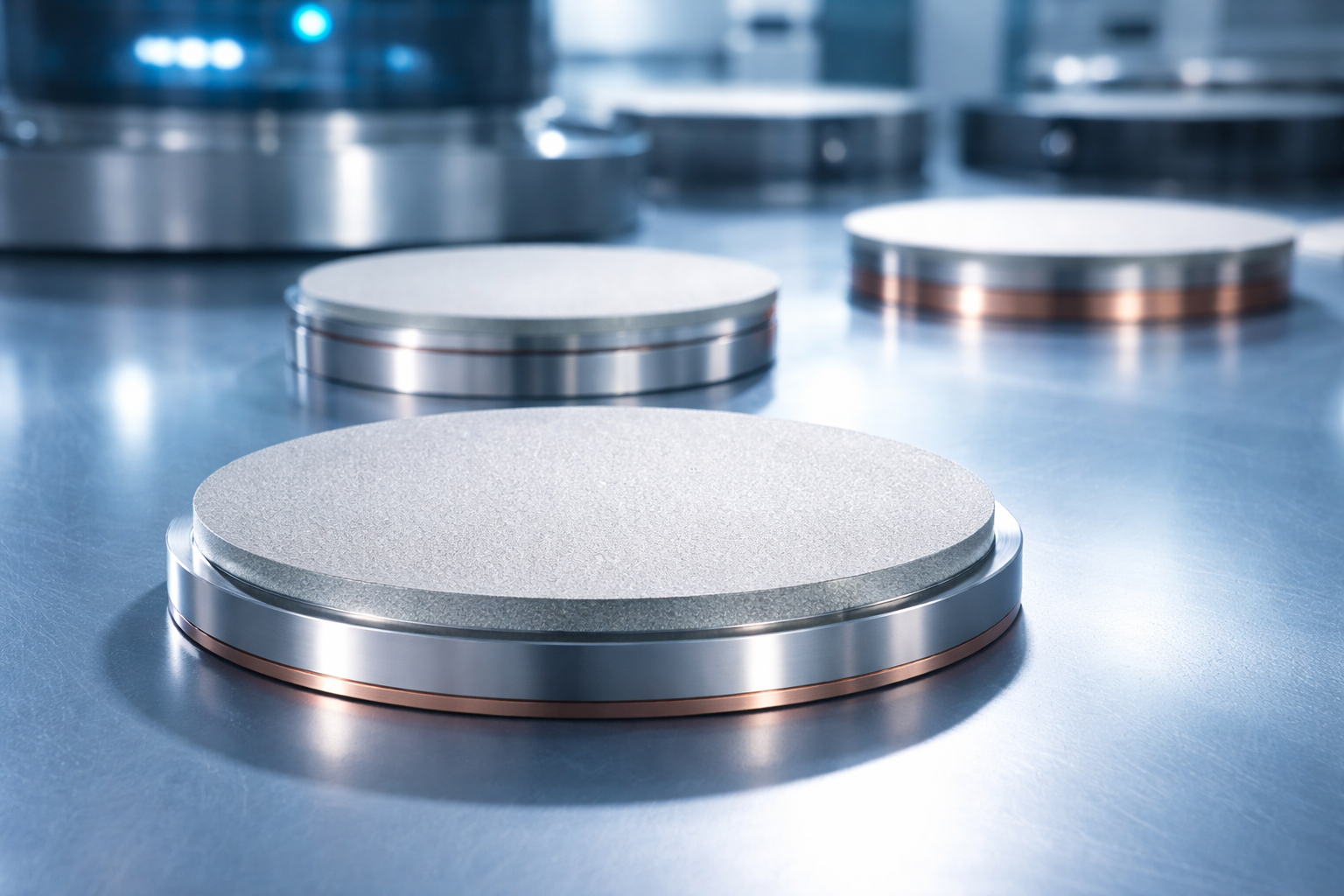

Titanium oxide (TiOx) is one of the most widely used functional oxides in physical vapor deposition (PVD), particularly in reactive and non-reactive magnetron sputtering processes. Its tunable stoichiometry, excellent optical characteristics, high refractive index, photocatalytic activity, and durability make it indispensable in industries ranging from architectural glass and optical interference coatings to semiconductors, microelectronics, sensors, and clean-energy devices.
In recent years, the rapid adoption of rotary sputtering technology—also known as cylindrical magnetron sputtering—has dramatically improved coating uniformity, target utilization, process stability, and industrial throughput. Titanium Oxide (TiOx) rotary sputtering targets have therefore become a core consumable in high-volume thin-film deposition lines for large-area coatings and precision optical films.
This article provides an in-depth exploration of TiOx rotary sputtering targets, covering:
The structure and advantages of TiOx thin films
Stoichiometry variations (TiO, Ti₂O₃, TiO₂, sub-stoichiometric TiOx)
Manufacturing methods for high-density rotary targets
Deposition mechanisms and plasma behavior under DC, pulsed-DC, MF, and RF sputtering
Optical, electronic, and catalytic properties
Applications across optics, microelectronics, energy, sensors, aerospace, and biomedical devices
Process control considerations, bonding, and failure prevention
Comparison with planar TiOx targets
Emerging research trends
The goal is to provide engineers, researchers, and procurement professionals with the most complete technical overview available, optimized for search visibility and industry relevance.
1. Understanding Titanium Oxide as a Functional Thin-Film Material
Titanium oxide exists in a variety of crystalline and amorphous forms, each with distinct properties depending on stoichiometry, deposition conditions, thermal treatments and plasma characteristics.
1.1 Stoichiometric Forms of TiOx
TiO: metallic behavior, high conductivity, dark appearance
Ti₂O₃: semi-metallic, oxygen-deficient
TiO₂ (rutile, anatase, brookite): dielectric, transparent, high refractive index
Sub-stoichiometric TiOx (0 < x < 2): tunable bandgap, color tinting, resistivity control
The family of TiOx films is thus ideal for:
Anti-reflection coatings
High-index layers in multilayer optical stacks
Photocatalytic self-cleaning surfaces
Resistive switching and memristive devices
Conductive or semi-conductive layers for sensors
1.2 Why TiOx Is Important in Thin-Film Industries
Titanium oxide is prized for several functional properties:
| Property | Benefit |
|---|---|
| High refractive index (n ≈ 2.2–2.7 depending on phase) | Essential for interference coatings in optics and displays |
| Wide bandgap (3.0–3.2 eV for TiO₂) | UV transparency; photocatalytic activity |
| Extremely stable chemically and mechanically | Long-term reliability on glass, polymer, and semiconductor substrates |
| Tunable electrical resistivity | Supports resistive devices and optical modulation |
| Compatibility with reactive sputtering | Easy to deposit dense, uniform coatings |
These advantages explain why TiOx sputtering targets—specifically rotary targets—have become a staple in large-scale production.
2. What Is a Titanium Oxide (TiOx) Rotary Sputtering Target?
A rotary sputtering target is a hollow cylindrical target that rotates around its axis during magnetron sputtering. The rotation distributes plasma exposure evenly, reducing hot spots, improving target utilization, and enabling extremely stable long-run processes.
2.1 Structure of a Rotary Target
Most rotary TiOx targets consist of:
- A dense TiOx ceramic tube (fully sintered or vacuum hot-pressed)
- A backing tube, commonly made of stainless steel or high-strength alloys
- Bonding material, typically an elastomer layer or high-temperature epoxy to accommodate thermal mismatch
- Cooling channels in the backing tube to maintain temperature stability during high-power sputtering
2.2 Why Use a Rotary Target Instead of a Planar Target?
Rotary magnetron sputtering provides several key advantages:
| Feature | Rotary | Planar |
|---|---|---|
| Target utilization | 75–90% | 30–40% |
| Coating uniformity | Excellent | Moderate |
| Film stability over long runs | Superior | More drift with target wear |
| Power density | Higher | Lower |
| Best for large-area coatings | Yes | Limited |
Industries such as architectural glass, automotive glass, touch displays, photovoltaics, and optical coatings increasingly shift to rotary targets for these reasons.
3. Manufacturing Technologies for High-Performance TiOx Rotary Targets
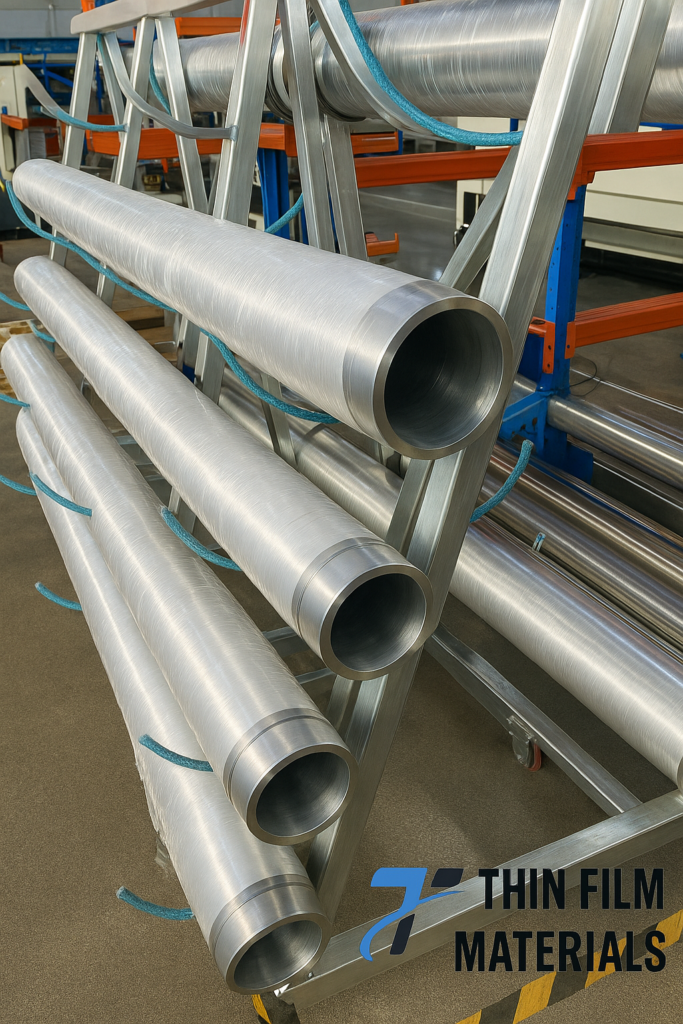
Producing a high-density, crack-resistant TiOx rotary target requires precise control over materials and processes. Several manufacturing routes exist:
3.1 Powder Preparation
Raw TiO₂ powder must meet strict purity and particle-size specifications. Key steps include:
- Milling and classification
- Removal of magnetic and metallic contaminants
- Surface modification for sintering enhancement
Purity levels range from 99.5% to 99.99%, depending on optical and electronic requirements.
3.2 Sintering Methods
There are three primary routes:
A. Cold Isostatic Pressing (CIP) + Pressureless Sintering
- Economical
- Achieves medium density
- Suitable for standard architectural or decorative coatings
B. Hot Isostatic Pressing (HIP)
- Maximizes density and mechanical strength
- Reduces porosity and improves electrical stability
- Preferred for high-precision optics
C. Vacuum Hot Pressing (VHP)
- Offers excellent grain control
- Suitable for long-run industrial coaters
3.3 Bonding to the Backing Tube
The TiOx cylinder is bonded to a stainless steel backing tube via:
- Elastomer bonding
- High-temperature adhesives
- Shrink-fit mechanical assembly
Key objectives include:
- Avoiding delamination
- Managing thermal expansion mismatch
- Ensuring stable cooling during extended sputtering runs
3.4 Quality Assurance and Defect Prevention
Manufacturers must detect:
- Micro-cracks
- Uneven density
- Contaminants (Fe, Cr, Ni, Al, Si)
- Voids that may outgas during sputtering
Ultrasound scanning, density measurement, and XRD are common quality-control tools.
4. Deposition Mechanisms of TiOx in Rotary Magnetron Sputtering
Because TiOx is a ceramic and an oxide, sputtering behavior depends strongly on:
- Oxygen partial pressure
- Target stoichiometry
- Power waveform
- Magnetron design
4.1 Reactive vs Non-Reactive Sputtering
Reactive Sputtering
Metallic Ti targets are sputtered in an Ar/O₂ atmosphere.
Pros:
- High deposition rates
- Flexible stoichiometry control
Cons:
- Target poisoning
- Hysteresis behavior
Non-Reactive Sputtering
TiOx targets deposit oxide films directly.
Pros:
- Stable process
- Excellent repeatability
- Predictable optical/electrical properties
Cons:
- Lower deposition rate than metallic Ti
For high-volume coaters, non-reactive rotary sputtering using TiOx rotary targets is preferred for consistency.
4.2 Electrical Power Modes
| Power Mode | Use Case |
|---|---|
| DC | Sub-stoichiometric TiOx targets |
| Pulsed-DC | Prevents arcing and improves film quality |
| Mid-frequency AC | Used with dual magnetrons |
| RF | Ideal for insulating TiO₂ targets |
4.3 Influence of Target Density
Higher-density targets produce:
- Lower arcing probability
- More stable erosion profiles
- Higher deposition efficiency
- Fewer micro-particles
For optical coatings, dense VHP or HIP TiOx targets are recommended.
5. Thin-Film Properties of TiOx Deposited from Rotary Targets
The performance of TiOx films depends on their final structure:
5.1 Optical Properties
- High refractive index: n ≈ 2.2–2.7
- Transparency: Excellent in visible and IR range
- Adjustable extinction coefficient for tinting applications
Because of this, TiOx is widely used in:
- Anti-reflection coatings
- High-index layers
- Color-control films
- UV-blocking surface layers
5.2 Electrical Properties
By adjusting oxygen:
- Highly insulating films (TiO₂)
- Semi-conducting films (TiOₓ < 2)
- Resistive switching films for RRAM/memristors
5.3 Mechanical and Chemical Stability
TiOx coatings offer:
- Strong adhesion to glass, polymers, and metals
- Excellent hardness and abrasion resistance
- Outstanding corrosion resistance
5.4 Functional Properties
- Photocatalysis for self-cleaning surfaces
- Hydrophilic behavior for anti-fogging glass
- Barrier performance in packaging applications
6. Applications of Titanium Oxide (TiOx) Rotary Sputtering Targets
Below is a detailed, industry-oriented overview.
6.1 Architectural and Automotive Glass Coatings

TiOx is a mainstay in large-area coatings for:
- Low-E (low emissivity) glass
- Solar control windows
- Self-cleaning surfaces
- Decorative tint layers
Rotary targets enable uniformity across large substrates (2–3 meters wide).
6.2 Optical Interference Coatings
TiOx is often paired with:
- SiO₂ (low-index)
- Al₂O₃
- Nb₂O₅
- Ta₂O₅
Applications:
- Mirrors
- Laser optics
- Photonics components
- Precision instruments
- Optical filters
6.3 Semiconductors and Microelectronics
TiOx plays a vital role in:
- Gate dielectrics
- Resistive RAM (RRAM)
- Transparent conducting oxide (TCO) stacks
- Charge trapping layers
- DRAM and transistor passivation
6.4 Sensors and IoT Devices
TiOx’s unique properties support:
- Gas sensors (O₂, H₂, NOₓ)
- Photodetectors
- Biosensors
- Humidity sensors
6.5 Photovoltaics and Clean Energy
TiOx is used in:
- Perovskite solar cell electron transport layers (ETL)
- Dye-sensitized solar cells (DSSC)
- Anti-reflection coatings for silicon PV
- Surface passivation films
6.6 Aerospace, Defense, and Extreme Environments
Applications include:
- Radiation-resistant optical coatings
- Durable sensor layers
- Anti-corrosion barriers for spacecraft optics
- High-index optical filters for imaging systems
6.7 Biomedical and Surface Engineering
TiOx offers excellent biocompatibility and is used in:
- Implant coatings
- Antimicrobial surfaces
- Medical devices needing hard, inert films
7. Process Optimization and Sputtering Considerations
To ensure stable high-rate sputtering, engineers must manage:
7.1 Oxygen Partial Pressure Control
Fine control prevents:
- Target poisoning
- Composition drift
- Arcing and instability
7.2 Temperature Management
Rotary targets dissipate heat effectively, but:
- Excessive heat may cause bonding failure
- Backing tube cooling must be properly calibrated
7.3 Magnetron Design
Key factors:
- Magnetic field strength
- Plasma confinement
- Erosion track shape
7.4 Post-Deposition Annealing
Annealing can:
- Improve crystallinity (rutile/anatase transitions)
- Enhance refractive index
- Reduce film stress
8. Comparison: Rotary vs Planar TiOx Sputtering Targets
| Feature | Rotary | Planar |
|---|---|---|
| Target utilization | 75–90% | 30–40% |
| Uniformity | Excellent large-area uniformity | Good for small chambers |
| Process stability | Very stable | More drift over time |
| Maintenance frequency | Lower | Higher |
| Deposition rate | Higher average | Lower |
| Applications | Glass, PV, optics, displays | R&D, small batch |
Rotary targets are clearly the preferred choice for industrial coaters.
9. Failure Modes and Prevention in TiOx Rotary Targets
9.1 Cracking
Caused by:
- Thermal shock
- Mechanical stress
- Improper bonding
Prevention:
- Use of elastomer bonding
- Controlled power ramping
- Uniform cooling
9.2 Delamination
Usually related to:
- Bonding layer fatigue
- Uneven temperature gradients
9.3 Particle Generation
Minimized by:
- High-density targets
- Proper sintering method
- Clean powder preparation
10. Emerging Research and Future Trends
10.1 TiOx for Next-Generation Electronics
TiOx is central to developing:
- Neuromorphic devices
- RRAM memory architectures
- Transparent electronics
- UV photonics
10.2 TiOx in AI-Driven Optical Systems
High-index TiOx layers improve:
- AR/VR optics
- Waveguides
- Meta-optics and nanostructured optical components
10.3 Advanced Photocatalytic Surfaces
Next-generation TiOx coatings target:
- Air purification
- Water treatment
- Anti-bacterial surfaces
10.4 Green Manufacturing and Recycling
High-utilization rotary targets reduce waste and improve material efficiency.
Conclusion
Titanium Oxide (TiOx) Rotary Sputtering Targets are indispensable across modern thin-film industries. Their high refractive index, tunable electronic characteristics, durability, and compatibility with rotary magnetron sputtering make them a preferred choice for large-area coatings in optics, architectural glass, displays, sensors, and semiconductors.
With the growing demand for advanced thin-film systems—ranging from clean-energy technologies to precision optical components—the importance of high-quality TiOx rotary targets will only continue to rise. Manufacturers using VHP, HIP, and advanced bonding techniques are now providing targets with exceptional density, uniform microstructure, and long service lifetimes.
For technical specifications, customization options (stoichiometry, density, length, ID/OD, bonding), and quotations, please contact:
Our technical team will support you with material selection, target design, sputtering optimization, and large-volume supply programs tailored to your production requirements.