Introduction
Ultra High Vacuum (UHV) systems operate at pressures typically below 10⁻⁹ mbar, where even minute contamination sources can significantly affect experimental accuracy and system stability. Achieving and maintaining such extreme vacuum levels requires careful selection of materials that exhibit low outgassing rates, chemical stability, and compatibility with high-temperature bake-out processes.
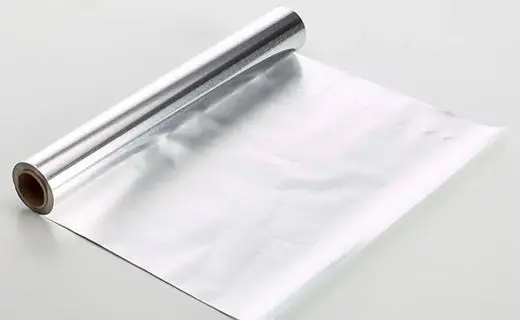
Among the many materials used in vacuum engineering, aluminum foil has become a widely adopted auxiliary material in UHV environments. Despite its simple appearance, aluminum foil offers a unique combination of properties—such as low vapor pressure, excellent thermal conductivity, and high purity availability—that make it particularly valuable in vacuum chambers, cryogenic systems, and scientific instruments.
From thermal radiation shielding to component protection and vacuum masking, Aluminum FoilUltra High Vacuum (UHV) Aluminum Foil plays an important role in many UHV setups used in particle accelerators, semiconductor research, surface science laboratories, and space simulation facilities.
Detailed Description
Low Outgassing Characteristics
One of the primary requirements for materials used in UHV systems is extremely low outgassing behavior. Outgassing refers to the release of trapped gases or adsorbed molecules from a material’s surface when exposed to vacuum conditions.
Aluminum foil performs well in this regard because:
- The natural aluminum oxide layer (Al₂O₃) that forms on its surface acts as a stable protective barrier.
- Aluminum has low vapor pressure, even at elevated temperatures.
- Properly cleaned or degassed aluminum foil can exhibit very low contamination release in vacuum environments.
When baked under vacuum conditions (commonly between 120°C and 200°C), aluminum foil releases most adsorbed gases and becomes even more stable for UHV operation.
Excellent Thermal Conductivity
Aluminum possesses a thermal conductivity of approximately 235 W/m·K, significantly higher than many other structural metals used in vacuum systems.
This property allows aluminum foil to serve effectively in:
- Thermal shielding layers
- Heat distribution surfaces
- Radiation barrier materials
In cryogenic vacuum systems and space simulation chambers, aluminum foil is frequently used as a component of multi-layer insulation (MLI) systems, where alternating layers of reflective foil and spacer materials reduce thermal radiation transfer.
Lightweight and Easily Formed
Another practical advantage of aluminum foil is its exceptional formability. It can easily be shaped, folded, or wrapped around components without requiring specialized tools.
This makes aluminum foil useful for:
- Temporary shielding of sensitive instruments
- Protecting surfaces during vacuum chamber maintenance
- Creating quick custom barriers or masks
Because aluminum foil is extremely lightweight, it adds minimal mechanical load to delicate assemblies within vacuum systems.
Chemical Stability in Vacuum Environments
In ultra high vacuum conditions, chemical stability is essential to prevent contamination of surfaces or deposited thin films.
Aluminum foil remains stable due to its thin but robust oxide layer, which protects the underlying metal from further oxidation or reaction.
Key advantages include:
- Resistance to oxidation in vacuum
- Minimal interaction with many vacuum-compatible materials
- Stable performance during repeated vacuum cycles
This stability makes aluminum foil compatible with vacuum chambers, sample holders, radiation shields, and diagnostic equipment.
Applications of Aluminum Foil in UHV Systems
Aluminum foil is used in a wide range of scientific and industrial vacuum systems. Some of the most common applications include:
1. Thermal Radiation Shielding
In cryogenic and ultra high vacuum environments, aluminum foil is frequently used as a radiation reflector to minimize heat transfer.
Typical systems include:
- Cryogenic vacuum chambers
- Superconducting magnet systems
- Space simulation facilities
- Satellite testing chambers
Multiple layers of aluminum foil can significantly reduce thermal radiation, improving system efficiency.
2. Multi-Layer Insulation (MLI)
MLI is widely used in aerospace and cryogenic research.
It typically consists of:
- Thin aluminum foil reflective layers
- Spacer materials such as polyester or fiberglass mesh
These structures dramatically reduce radiative heat transfer in vacuum environments.
3. Component Protection in Vacuum Chambers
During maintenance or experimental setup, aluminum foil is often used to protect sensitive components from contamination or deposition.
Examples include:
- Shielding optical components
- Protecting detectors or sensors
- Preventing unwanted coating during deposition experiments
4. Masking Material for Thin Film Deposition
In vacuum deposition processes such as physical vapor deposition (PVD) and thermal evaporation, aluminum foil can be used as a temporary masking material.
Applications include:
- Defining deposition areas
- Preventing coating on specific surfaces
- Protecting mechanical fixtures
Because aluminum foil is thin and easy to cut, it is convenient for custom masking configurations.
5. Temporary Sealing and Shielding
Although aluminum foil is not a permanent sealing solution for UHV systems, it is often used for temporary vacuum shielding or barrier creation during testing or equipment preparation.
Technical Parameters (Typical Reference Values)
| Parameter | Typical Value / Range | Importance |
|---|---|---|
| Purity | 99.9% – 99.999% | Higher purity reduces contamination risk |
| Thickness | 5 – 200 µm | Determines mechanical strength and flexibility |
| Thermal Conductivity | ~235 W/m·K | Efficient heat transfer and shielding |
| Outgassing Rate | Very low after bake-out | Critical for UHV stability |
| Operating Temperature | Up to ~400°C in vacuum | Compatible with vacuum bake-out |
Comparison with Other Vacuum-Compatible Foils
| Material | Key Advantage | Typical Application |
|---|---|---|
| Aluminum Foil | Lightweight, excellent thermal conductivity | Thermal shielding, masking |
| Copper Foil | High thermal conductivity and ductility | Vacuum gaskets, thermal contacts |
| Stainless Steel Foil | Mechanical strength and corrosion resistance | Structural shielding |
| Molybdenum Foil | High temperature stability | High-temperature vacuum furnaces |
Aluminum foil offers an excellent balance between cost, thermal performance, and vacuum compatibility, making it suitable for many non-structural UHV applications.
FAQ
| Question | Answer |
|---|---|
| Is aluminum foil compatible with ultra high vacuum systems? | Yes. When properly cleaned and degassed, aluminum foil exhibits low outgassing and is widely used in UHV environments. |
| Can aluminum foil withstand vacuum bake-out? | Aluminum foil can typically withstand bake-out temperatures up to around 200–400°C in vacuum conditions. |
| Does aluminum foil contaminate vacuum systems? | High-purity aluminum foil produces minimal contamination when properly prepared and baked before use. |
| What thickness of aluminum foil is used in vacuum systems? | Thicknesses typically range from 5 µm to 200 µm depending on the application. |
| Can aluminum foil be used in thin film deposition chambers? | Yes, it is commonly used as a masking or shielding material during deposition processes. |
Packaging
Our Ultra High Vacuum (UHV) Aluminum Foil products are carefully packaged to ensure cleanliness and structural integrity. Each foil sheet or roll is securely sealed in clean protective packaging to prevent contamination during storage and transport. External labeling ensures easy identification and maintains strict quality control standards throughout handling and delivery.
Conclusion
Although it is a simple material, aluminum foil plays a surprisingly important role in ultra high vacuum systems. Its combination of low outgassing behavior, high thermal conductivity, lightweight structure, and chemical stability makes it well suited for applications such as radiation shielding, thin film deposition masking, and cryogenic insulation.
As UHV technology continues to advance in fields such as semiconductor research, particle physics, and aerospace engineering, aluminum foil remains a practical and reliable material for supporting vacuum system performance.
For detailed specifications and a quotation, please contact us at sales@thinfilmmaterials.com.