Precious metal crucibles are used when standard ceramic, graphite, or refractory metal containers cannot provide the required chemical cleanliness, thermal stability, or melt compatibility. In high-purity research, crystal growth, thermal analysis, and specialized metallurgical processing, the crucible is not just a container—it directly affects contamination level, reaction behavior, sample accuracy, and process repeatability.
Among precious metal crucibles, gold crucibles, silver crucibles, and iridium crucibles serve very different purposes. Although all three are chemically valuable materials, they are not interchangeable. The right choice depends on working temperature, sample chemistry, atmosphere, mechanical requirements, and cost-performance balance.
1. Why Precious Metal Crucibles Are Used
Precious metal crucibles are selected mainly for three reasons:
First, they offer excellent chemical inertness in selected environments. For sensitive experiments, even trace contamination from ceramic or graphite crucibles may change the final result. A high-purity metal crucible can reduce unwanted reactions between the container and the sample.
Second, precious metals provide stable thermal behavior. Some applications require predictable heat transfer, low contamination, and repeatable melting or reaction conditions.
Third, precious metal crucibles are often used in high-value processes, where the sample material or final product is much more expensive than the crucible itself. In these cases, crucible reliability can be more important than initial purchase cost.
2. Gold Crucibles: Best for Low-Temperature Inert Laboratory Work
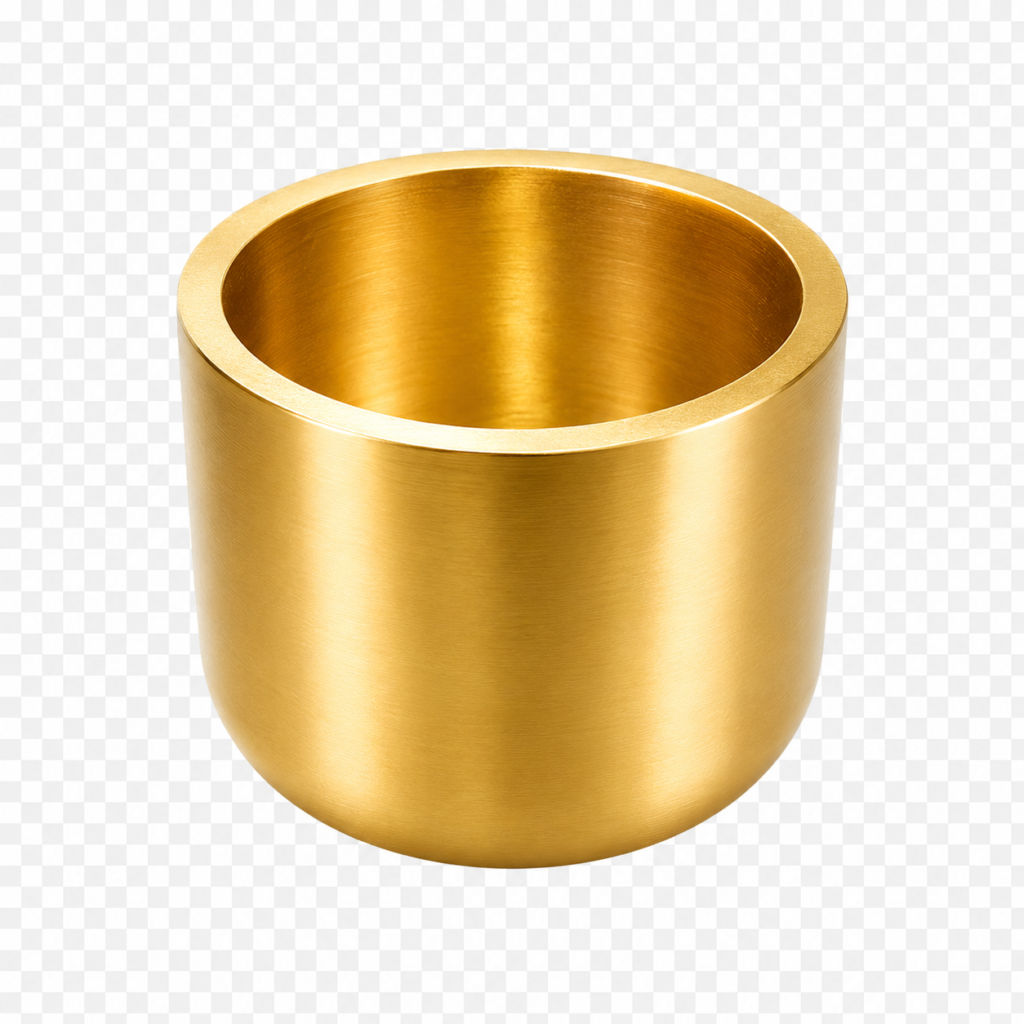
Gold crucibles are mainly used in laboratory-scale thermal analysis, chemical testing, and high-purity sample preparation where chemical inertness is more important than extreme temperature resistance.
Gold has excellent resistance to oxidation and many chemical environments. This makes it useful when the sample must be protected from container contamination. However, gold is not suitable for very high-temperature processing. In thermal analysis applications, gold crucibles are commonly rated for use up to around 750°C, depending on crucible type and instrument conditions.
Typical applications of gold crucibles
Gold crucibles are commonly used for:
| Application | Why Gold Is Used |
|---|---|
| Thermal analysis | Chemically inert container for sensitive samples |
| High-purity laboratory experiments | Reduces contamination from ceramic crucibles |
| Low-temperature melting or reaction tests | Stable behavior under controlled conditions |
| Chemical compatibility studies | Useful when oxidation resistance is required |
Gold crucibles are best when the process temperature is moderate and the buyer needs excellent chemical cleanliness. They are not the right option for aggressive high-temperature oxide melts or long-term furnace service.
3. Silver Crucibles: Good Thermal Conductivity for Specialized Applications
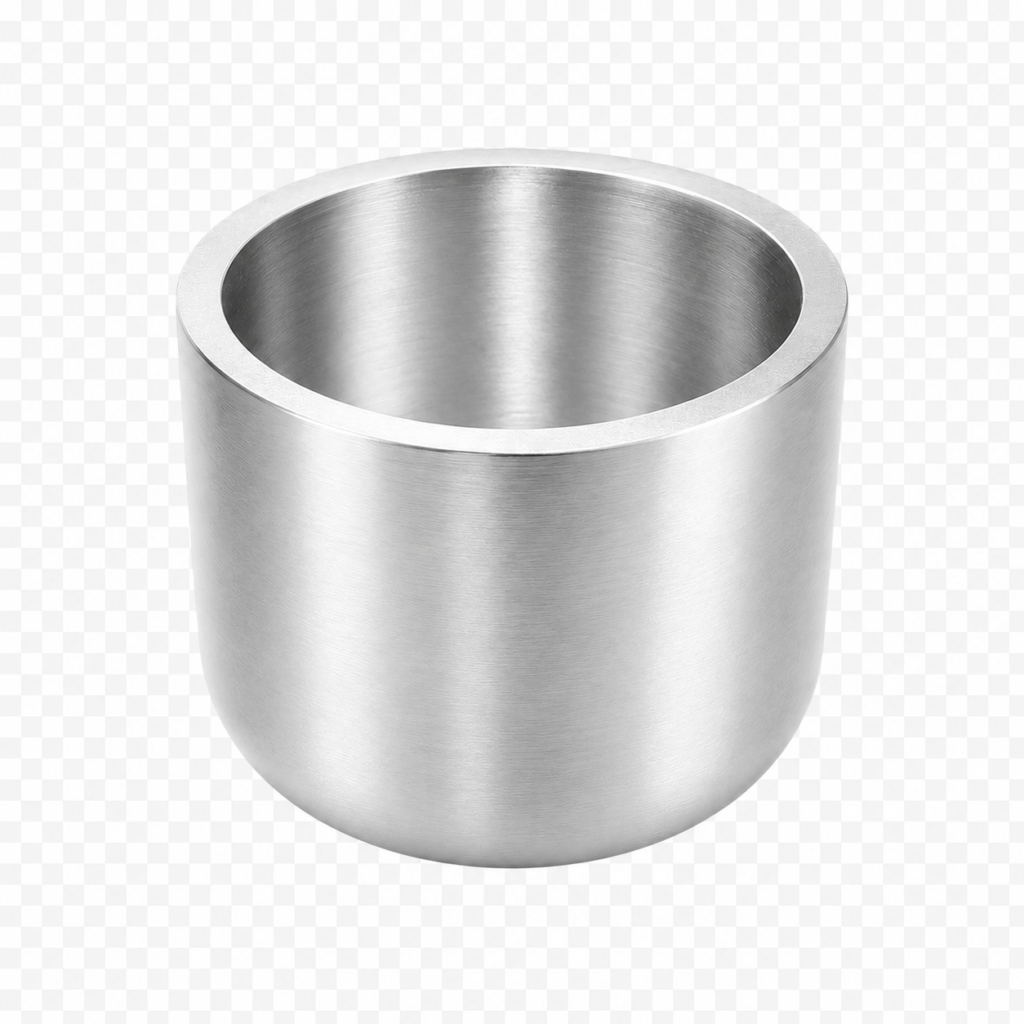
Silver crucibles are often selected when high thermal conductivity and specific chemical compatibility are required. Silver has a melting point of about 961.8°C, so it is generally suitable for lower- to medium-temperature operations rather than extreme high-temperature processing.
One key advantage of silver is its excellent thermal conductivity. This helps achieve fast and uniform heating, which can be useful in certain analytical or metallurgical procedures. Silver crucibles may also be used in special chemical environments where silver shows suitable resistance.
Typical applications of silver crucibles
| Application | Why Silver Is Used |
|---|---|
| Sample preparation | Good heat transfer and controlled heating |
| Specialized chemical reactions | Useful when silver is compatible with the sample |
| Low- to medium-temperature metallurgical work | Better thermal conductivity than many alternatives |
| Fluorine-related analytical preparation | Silver can be useful in certain fluorine compound handling contexts |
Silver crucibles should be chosen carefully because silver can react with some materials or form alloys with certain metals. Before using silver, the buyer should check whether the sample contains elements that may dissolve into or attack the crucible.
4. Iridium Crucibles: The Premium Choice for Ultra-High-Temperature Oxide Crystal Growth
Iridium crucibles are in a completely different category from gold and silver. They are mainly used for ultra-high-temperature applications, especially oxide crystal growth and high-temperature melting of advanced materials.
Iridium has an exceptionally high melting point and excellent high-temperature stability. In crystal growth, iridium crucibles are widely used at temperatures up to approximately 2300°C for high-melting oxide crystals such as sapphire and spinel-related materials.
This makes iridium one of the most important crucible materials for optical crystal production, laser crystals, scintillator materials, and advanced oxide research.
Typical applications of iridium crucibles
| Application | Why Iridium Is Used |
|---|---|
| Oxide single crystal growth | Stable at very high temperatures |
| Sapphire and spinel crystal growth | Suitable for high-melting oxide systems |
| Laser crystal production | Low contamination and strong thermal stability |
| Optical industry materials | Supports high-purity crystal growth |
| Advanced research furnaces | Performs where gold and silver cannot survive |
Iridium is expensive, but in high-temperature crystal growth, it is often the only practical choice among precious metals. However, even iridium has limits. Some oxide crystals with melting points above about 2200°C may require alternative crucible strategies or special furnace designs. Recent research has shown that tungsten crucibles may be considered for certain ultra-high-melting oxides beyond the practical range of iridium or platinum crucibles.
5. Gold vs Silver vs Iridium: Direct Comparison
| Crucible Material | Main Advantage | Temperature Level | Best Use Case | Key Limitation |
|---|---|---|---|---|
| Gold Crucible | Excellent chemical inertness | Low to moderate | Thermal analysis, high-purity lab tests | Not suitable for very high temperature |
| Silver Crucible | Very high thermal conductivity | Low to medium | Sample preparation, special chemical reactions | May alloy or react with some materials |
| Iridium Crucible | Ultra-high-temperature stability | Very high | Oxide crystal growth, sapphire, laser crystals | High cost and difficult fabrication |
6. Selection Guide by Application
For thermal analysis
Choose gold crucibles if the sample requires an inert container and the test temperature is within the suitable range. Gold is especially useful when aluminum, ceramic, or other standard crucibles may interfere with test results.
For fast and uniform heating
Choose silver crucibles when thermal conductivity is important and the sample is chemically compatible with silver. This is useful for specific analytical or metallurgical processes, but compatibility must be checked carefully.
For high-temperature oxide crystal growth
Choose iridium crucibles. For sapphire, spinel, laser crystals, and many advanced oxide materials, iridium provides the high-temperature capability that gold and silver cannot offer.
For cost-sensitive general melting
Gold, silver, and iridium crucibles may not be the best choice. Graphite, alumina, zirconia, or tungsten crucibles may be more suitable depending on the material being processed. Precious metal crucibles should be used when their performance advantage justifies the cost.
7. Key Factors Buyers Should Confirm Before Ordering
Before purchasing a precious metal crucible, buyers should confirm the following details:
| Factor | Why It Matters |
|---|---|
| Working temperature | Determines whether Au, Ag, or Ir can survive the process |
| Sample chemistry | Prevents unwanted reaction, alloying, or contamination |
| Atmosphere | Air, vacuum, inert gas, reducing atmosphere, or oxidizing atmosphere can change performance |
| Crucible shape | Cylindrical, conical, flat-bottom, or custom shape affects furnace compatibility |
| Wall thickness | Influences strength, heat transfer, and service life |
| Purity requirement | Important for analytical and crystal growth applications |
| Reusability | Precious metal crucibles are often reused, so cleaning and handling matter |
| Budget | Iridium is much more expensive but necessary for extreme applications |
8. Common Mistakes When Choosing Precious Metal Crucibles
One common mistake is choosing based only on melting point. A crucible material must not only withstand temperature; it must also resist reaction with the melt.
Another mistake is using gold or silver crucibles for applications that require iridium-level temperature resistance. Gold and silver are valuable materials, but they are not designed for ultra-high-temperature oxide crystal growth.
A third mistake is ignoring atmosphere. Some materials behave very differently in air, vacuum, argon, hydrogen, or oxygen-rich environments. Always match the crucible material to both the sample and furnace atmosphere.
9. Custom Precious Metal Crucibles
In many industrial and research applications, standard crucible dimensions are not enough. Custom precious metal crucibles may be required to match furnace holders, pulling systems, induction coils, or sample volume requirements.
Common customization options include:
| Custom Option | Typical Purpose |
|---|---|
| Diameter and height | Matches furnace or crystal growth system |
| Wall thickness | Balances cost, strength, and heat transfer |
| Bottom shape | Flat, rounded, or tapered for specific processes |
| Lid design | Reduces evaporation or contamination |
| Purity level | Supports high-purity experiments |
| Fabrication method | Forming, welding, machining, or special processing depending on material |
For iridium crucibles, fabrication is more challenging because iridium is extremely hard and has a very high melting point. This is why reliable manufacturing experience is especially important for iridium crucible procurement.
Conclusion
Choosing between a gold crucible, silver crucible, and iridium crucible depends on the real process conditions, not simply on material value.
Gold crucibles are ideal for chemically sensitive, lower-temperature laboratory work. Silver crucibles are useful when high thermal conductivity and special chemical compatibility are required. Iridium crucibles are the premium choice for ultra-high-temperature oxide melting and single crystal growth.
For buyers, the safest approach is to define the working temperature, sample chemistry, furnace atmosphere, crucible dimensions, and purity requirement before requesting a quotation.
For custom precious metal crucibles including Au, Ag, and Ir crucibles, please contact TFM at sales@thinfilmmaterials.com for detailed specifications and quotation support.