

Introduction
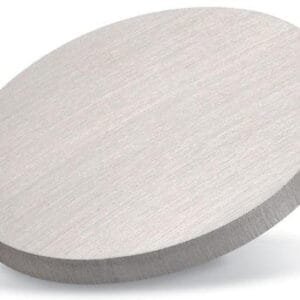
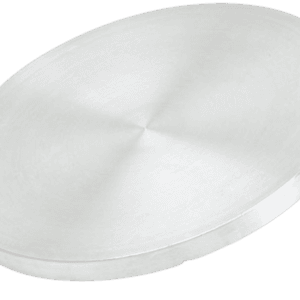
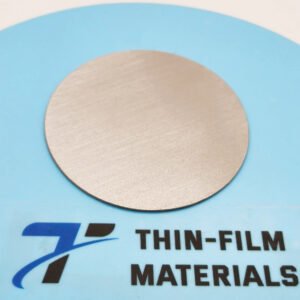
Aluminum Nitride Sputtering Targets (AlN) are widely used ceramic targets for depositing high-performance nitride thin films in semiconductor, electronic, and thermal-management applications. With a unique combination of high thermal conductivity, excellent electrical insulation, and strong chemical stability, AlN has become a critical material for advanced device fabrication where heat dissipation, dielectric reliability, and film purity are essential.
Detailed Description
AlN sputtering targets are manufactured from high-purity aluminum nitride powders through carefully controlled ceramic processing, including powder synthesis, pressing, and high-temperature sintering. This process yields targets with high density, uniform microstructure, and excellent phase purity—key factors for stable plasma behavior and reproducible film properties.
Unlike metallic aluminum targets used in reactive sputtering, AlN compound targets allow direct deposition of aluminum nitride films without relying heavily on nitrogen flow control. This simplifies process windows, improves repeatability, and reduces the risk of target poisoning or compositional drift. Due to the insulating nature of AlN, RF sputtering is typically preferred, although pulsed DC sputtering may also be used in certain system configurations.
AlN thin films deposited from sputtering targets exhibit high resistivity, strong adhesion to common substrates, low dielectric loss, and excellent thermal conductivity, making them suitable for both microelectronics and power device applications.
Applications
Aluminum Nitride sputtering targets are commonly used in:
Semiconductor devices: Dielectric and passivation layers
Power electronics: Insulating films with high thermal conductivity
MEMS & sensors: Piezoelectric and functional nitride layers
RF & microwave devices: Low-loss dielectric films
Optoelectronics: Buffer and insulating layers
Research & development: Nitride thin-film materials studies
Technical Parameters
| Parameter | Typical Value / Range | Importance |
|---|---|---|
| Chemical Composition | AlN (Aluminum Nitride) | Defines thermal & dielectric properties |
| Purity | 99.9% – 99.99% | Reduces defects and contamination |
| Diameter | 25 – 300 mm (custom) | Fits standard sputtering cathodes |
| Thickness | 3 – 6 mm (typical) | Influences target lifetime |
| Density | ≥ 95% of theoretical | Ensures stable sputtering |
| Sputtering Mode | RF (preferred) / Pulsed DC | Suitable for insulating ceramics |
| Bonding | Indium / Elastomer / Direct | Improves thermal and mechanical stability |
Comparison with Related Nitride Targets
| Material | Key Advantage | Typical Application |
|---|---|---|
| AlN | High thermal conductivity, electrical insulation | Power & RF devices |
| Si₃N₄ | Strong mechanical strength | Passivation layers |
| TiN | High conductivity, hardness | Electrodes & hard coatings |
| GaN | Wide bandgap semiconductor | LEDs & power electronics |
FAQ
| Question | Answer |
|---|---|
| Can AlN sputtering targets be customized? | Yes, size, purity, density, and bonding options are available. |
| Why is RF sputtering recommended? | AlN is electrically insulating, making RF sputtering more stable. |
| Can AlN replace reactive sputtering from aluminum? | In many cases, yes—compound targets simplify process control. |
| How are AlN targets packaged? | Vacuum-sealed with moisture-resistant protective packaging. |
Packaging
Our Aluminum Nitride Sputtering Targets (AlN) are meticulously tagged and labeled to ensure accurate identification and strict quality control. Each target is vacuum-sealed and protected with reinforced cushioning to prevent moisture uptake, contamination, or mechanical damage during storage and transportation.
Conclusion
Aluminum Nitride Sputtering Targets (AlN) provide a reliable and efficient solution for depositing high-quality nitride thin films with excellent thermal and dielectric performance. With stable sputtering behavior, precise compositional control, and flexible customization options, AlN targets are well suited for semiconductor manufacturing, power electronics, and advanced research applications.
For detailed specifications and a quotation, please contact us at sales@thinfilmmaterials.com.
Reviews
There are no reviews yet.