

 MSDS File
Introduction
Chromium Molybdenum Evaporation Materials (Cr/Mo) are high-performance alloy sources designed for vacuum thin film deposition where mechanical strength, thermal stability, and corrosion resistance are critical. The Cr–Mo alloy system is widely recognized in structural materials engineering, and in thin film form, it offers a balanced combination of hardness, adhesion performance, and high-temperature stability.
In physical vapor deposition (PVD) processes such as thermal and electron beam evaporation, alloy uniformity and purity directly influence film microstructure and durability. Pre-alloyed Cr/Mo evaporation materials provide stable vapor composition and reproducible coating performance for both research-scale development and industrial production.
Detailed Description
Chromium (Cr) contributes excellent oxidation resistance, hardness, and strong adhesion to substrates. Molybdenum (Mo) offers high melting point stability, good electrical conductivity, and outstanding thermal resistance. When combined, Cr/Mo alloys deliver enhanced mechanical strength and improved high-temperature performance compared to single-element films.
Key characteristics include:
Pre-Alloyed Homogeneous Composition – Ensures consistent evaporation behavior and predictable film chemistry.
Customizable Cr/Mo Ratios – Composition can be tailored (wt% or at%) to achieve specific hardness, conductivity, or corrosion resistance targets.
High Purity Grades (3N–5N typical) – Minimizes impurities that may affect film density or electrical behavior.
Dense Microstructure – Reduces particle generation and supports stable deposition rates.
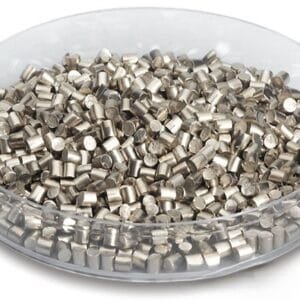
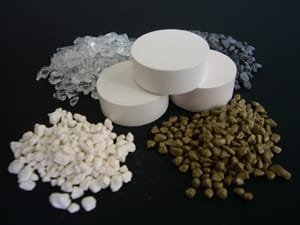
Cr/Mo evaporation materials are typically supplied as pieces, granules, or pellets compatible with tungsten boats, molybdenum crucibles, or graphite liners. Due to the high melting points of both elements (Cr ~1907°C, Mo ~2623°C), electron beam evaporation is often recommended for precise temperature control and stable deposition.
Thin films deposited from Cr/Mo alloys can exhibit improved wear resistance, thermal durability, and mechanical integrity under demanding operating conditions.
Applications
Chromium Molybdenum Evaporation Materials are widely used in:
Protective & Hard Coatings
Wear-resistant metallic layers for tooling and industrial components.High-Temperature Thin Films
Coatings for environments exposed to thermal cycling or oxidation.Microelectronic Barrier Layers
Adhesion and diffusion barrier films in advanced device structures.Aerospace & Energy Research
Thin films requiring high mechanical and thermal stability.Advanced Materials Development
Alloy phase studies and mechanical property optimization in vacuum-deposited films.
Technical Parameters
| Parameter | Typical Value / Range | Importance |
|---|---|---|
| Purity | 99.9% – 99.999% (3N–5N) | Reduces impurity-related defects |
| Composition | Custom Cr/Mo ratio (wt% or at%) | Controls hardness & thermal behavior |
| Form | Pieces / Granules / Pellets | Compatible with evaporation systems |
| Melting Range | >1900°C (composition-dependent) | Requires high-temperature control |
| Density | ≥ 99% theoretical | Ensures uniform vaporization |
| Packaging | Vacuum-sealed / inert-packed | Prevents oxidation |
Comparison with Related Materials
| Material | Key Advantage | Typical Application |
|---|---|---|
| Chromium Molybdenum (Cr/Mo) | High strength & thermal stability | Protective coatings |
| Pure Chromium (Cr) | Strong adhesion & oxidation resistance | Barrier layers |
| Pure Molybdenum (Mo) | Excellent high-temperature conductivity | High-temp films |
| Tungsten Molybdenum (W/Mo) | Extreme thermal resistance | Harsh environment coatings |
Compared to pure chromium, Cr/Mo alloys provide improved high-temperature mechanical stability. Compared to pure molybdenum, the addition of chromium enhances oxidation resistance and adhesion performance.
FAQ
| Question | Answer |
|---|---|
| Can the Cr/Mo ratio be customized? | Yes, alloy composition can be tailored to meet specific mechanical or thermal requirements. |
| Is the material supplied pre-alloyed? | Yes, standard Cr/Mo evaporation materials are pre-alloyed for uniform deposition behavior. |
| What deposition methods are suitable? | Electron beam evaporation is generally preferred due to the high melting points. |
| Are custom sizes available? | Yes, material form and particle size can be customized to fit system requirements. |
| Which industries use Cr/Mo films most? | Aerospace research, semiconductor manufacturing, tooling coatings, and advanced materials laboratories. |
Packaging
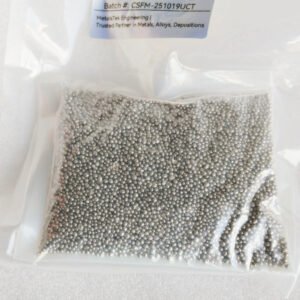
Our Chromium Molybdenum Evaporation Materials are meticulously tagged and labeled externally to ensure efficient identification and maintain high standards of quality control. We take great care to prevent any potential damage during storage and transportation, ensuring the materials arrive in perfect condition.
Conclusion
Chromium Molybdenum Evaporation Materials (Cr/Mo) provide a high-purity, thermally stable solution for depositing durable and high-strength metallic thin films. With customizable alloy ratios, controlled microstructure, and compatibility with advanced evaporation systems, Cr/Mo materials support demanding industrial and research-driven coating applications.
For detailed specifications and a quotation, please contact us at sales@thinfilmmaterials.com.
Reviews
There are no reviews yet.