

Introduction
Copper Zinc (Cu/Zn) Sputtering Target—commonly associated with brass-type alloys—is widely used for depositing conductive, decorative, and functional alloy thin films. By combining copper’s excellent electrical conductivity with zinc’s corrosion resistance and color control, Cu/Zn sputtering targets enable fine tuning of film properties across electronics, optics, and surface engineering applications. Their versatility makes them a practical choice for both R&D and industrial-scale coating processes.
Detailed Description
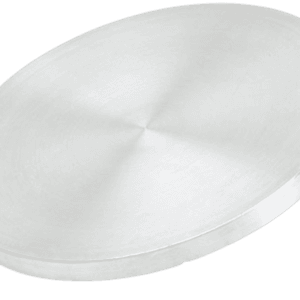
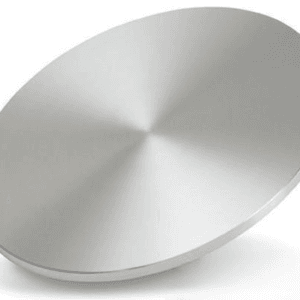
Our Copper Zinc Sputtering Targets are produced from carefully alloyed Cu/Zn materials with tightly controlled composition to ensure uniform sputtering behavior and consistent film chemistry. The Cu-to-Zn ratio can be adjusted to meet specific electrical, mechanical, or aesthetic requirements, which is particularly important for applications where film resistivity, adhesion, or color tone must be precisely controlled.
Manufacturing involves high-purity raw materials, vacuum melting or powder metallurgy routes (depending on specification), and precision machining to achieve excellent dimensional accuracy and surface finish. The dense, homogeneous microstructure minimizes arcing and particle generation during sputtering, contributing to stable plasma conditions and reproducible deposition rates. Targets can be supplied unbonded or bonded to copper or titanium backing plates to improve heat dissipation and mechanical stability in higher-power sputtering systems.
Applications
Copper Zinc Sputtering Targets are used across a broad range of thin film technologies, including:
Decorative coatings with controlled gold-like or bronze color tones
Conductive and semi-conductive alloy films in microelectronics
Wear-resistant and corrosion-resistant surface coatings
Architectural and automotive glass coatings
Optical and functional multilayer thin film stacks
Research and development of Cu-based alloy films
Technical Parameters
| Parameter | Typical Value / Range | Importance |
|---|---|---|
| Chemical Composition | Cu/Zn alloy (custom ratios) | Controls conductivity, color, and corrosion resistance |
| Purity | 99.9% – 99.99% | Ensures stable sputtering and film quality |
| Diameter | 25 – 300 mm (custom available) | Fits standard sputtering cathodes |
| Thickness | 3 – 10 mm | Affects target lifetime and deposition rate |
| Density | ≥ 99% theoretical | Improves plasma stability |
| Bonding | Unbonded / Cu or Ti backing | Enhances thermal management |
Comparison with Related Materials
| Material | Key Advantage | Typical Application |
|---|---|---|
| Cu/Zn | Balanced conductivity and corrosion resistance | Decorative & functional coatings |
| Pure Copper | Excellent electrical conductivity | Interconnects, conductive layers |
| Pure Zinc | Strong corrosion protection | Protective coatings |
| Copper Tin (Cu/Sn) | Higher hardness | Wear-resistant films |
FAQ
| Question | Answer |
|---|---|
| Can the Cu/Zn ratio be customized? | Yes, alloy composition can be tailored to your application requirements. |
| Is DC sputtering suitable for Cu/Zn targets? | Yes, Cu/Zn targets are conductive and compatible with DC sputtering systems. |
| Are bonded targets available? | Yes, bonding to copper or titanium backing plates is available upon request. |
| How are the targets packaged for shipment? | Vacuum-sealed with protective foam and export-grade cartons or wooden crates. |
Packaging
Our Copper Zinc Sputtering Targets are carefully tagged and externally labeled to ensure easy identification and strict quality control. Each target is vacuum-packed and protected to prevent oxidation, contamination, or mechanical damage during storage and transportation.
Conclusion
Copper Zinc (Cu/Zn) Sputtering Target provides a reliable and flexible solution for depositing alloy thin films with tunable electrical, mechanical, and decorative properties. With precise composition control, high density, and customizable dimensions and bonding options, it is well suited for both industrial coating lines and advanced research applications.
For detailed specifications and a quotation, please contact us at sales@thinfilmmaterials.com.

Reviews
There are no reviews yet.