
Introduction
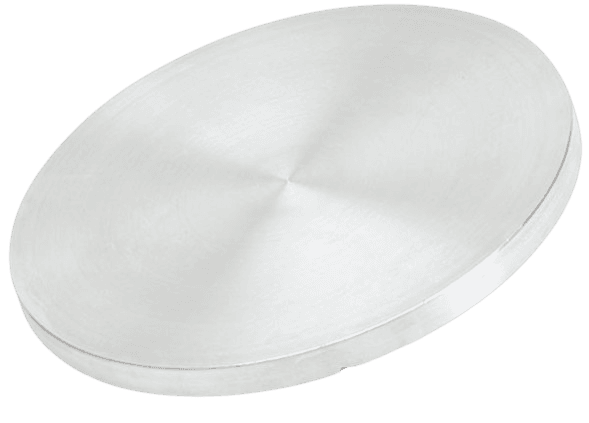
Dysprosium (Dy) Sputtering Target is a high-purity rare earth metal material widely used in magnetic, optical, and advanced electronic thin film applications. Known for its strong magnetic moment and high neutron absorption cross-section, dysprosium plays a critical role in functional coatings, magnet-related devices, and specialized research fields. As a sputtering target, Dy enables controlled deposition of metallic dysprosium films and dysprosium-containing multilayer structures.
Detailed Description
Our Dysprosium Sputtering Targets are produced from carefully refined rare earth metal with tightly controlled impurity levels. Due to dysprosium’s high reactivity, especially toward oxygen, the manufacturing and handling processes are conducted under controlled environments to preserve purity and surface integrity.
The targets are typically fabricated through vacuum melting and precision machining to achieve uniform composition and high density. A dense and homogeneous microstructure ensures stable plasma behavior and consistent sputtering rates during deposition. Dysprosium targets are conductive and compatible with DC sputtering systems, though RF sputtering may also be used depending on equipment configuration. Custom diameters, thicknesses, and bonding options (such as copper backing plates) are available for enhanced thermal management in higher-power systems.
Applications
Dysprosium Sputtering Targets are used in a variety of advanced thin film applications, including:
Magnetic thin films and multilayer structures
Rare earth–based alloy coatings
Research in magneto-optical materials
Neutron absorption and nuclear-related coatings
Functional coatings in advanced electronic devices
Academic and industrial R&D in rare earth materials
Technical Parameters
| Parameter | Typical Value / Range | Importance |
|---|---|---|
| Chemical Composition | Dy | Determines magnetic and neutron absorption properties |
| Purity | 99.9% – 99.99% | Reduces impurity-induced defects |
| Diameter | 25 – 200 mm (custom available) | Compatible with sputtering systems |
| Thickness | 3 – 10 mm | Influences target lifetime |
| Density | ≥ 99% theoretical | Improves plasma stability |
| Sputtering Mode | DC / RF sputtering | Suitable for conductive metal |
| Bonding | Unbonded / Cu backing (optional) | Enhances heat dissipation |
Comparison with Related Rare Earth Targets
| Material | Key Advantage | Typical Application |
|---|---|---|
| Dysprosium (Dy) | High magnetic moment | Magnetic thin films |
| Neodymium (Nd) | Strong permanent magnet properties | Magnetic devices |
| Terbium (Tb) | Magnetostrictive behavior | Sensors & actuators |
| Gadolinium (Gd) | High neutron capture cross-section | Nuclear & research films |
FAQ
| Question | Answer |
|---|---|
| Can the Dy target be customized? | Yes, size, thickness, purity, and bonding options can be tailored. |
| Is DC sputtering suitable for dysprosium? | Yes, Dy is conductive and compatible with DC sputtering. |
| How should dysprosium targets be stored? | In a dry, inert environment to minimize surface oxidation. |
| How is the target packaged? | Vacuum-sealed with moisture protection and export-grade cartons or crates. |
Packaging
Our Dysprosium Sputtering Targets are carefully vacuum-sealed and packaged to prevent oxidation and contamination. Clear labeling ensures traceability, and export-grade packaging protects the targets during international transportation.
Conclusion
Dysprosium (Dy) Sputtering Target provides a reliable solution for depositing high-purity rare earth metal thin films with strong magnetic and functional properties. With controlled composition, high density, and flexible customization options, it is well suited for advanced magnetic coatings and specialized research applications.
For detailed specifications and a quotation, please contact us at sales@thinfilmmaterials.com.
Reviews
There are no reviews yet.