

Introduction
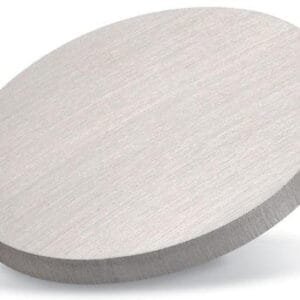
Indium (III) Selenide (In₂Se₃) sputtering targets are key materials for depositing semiconducting thin films used in next-generation optoelectronic and energy devices. As a layered chalcogenide compound, In₂Se₃ exhibits unique electrical, optical, and phase-dependent properties, making it highly attractive for applications such as photovoltaics, photodetectors, and phase-change memory technologies.
Detailed Description
In₂Se₃ sputtering targets are typically manufactured through advanced powder metallurgy and sintering processes to achieve high density and uniform composition. The material exists in multiple crystalline phases (α, β, γ), each offering distinct electrical and structural characteristics, which can influence thin film performance depending on deposition conditions.
High-purity In₂Se₃ targets are essential for ensuring reproducible film quality, particularly in semiconductor and optoelectronic applications where defects and impurities can significantly affect carrier transport and optical absorption. The target microstructure is carefully controlled to minimize porosity and improve sputtering stability, resulting in uniform erosion and consistent deposition rates.
These targets are compatible with RF magnetron sputtering systems due to their semiconducting nature. For enhanced thermal conductivity and mechanical stability during high-power sputtering, bonding to a copper backing plate is often recommended, especially for larger diameters or industrial-scale coating processes.
Key features include:
Layered chalcogenide semiconductor with tunable phase properties
High absorption coefficient for optoelectronic applications
Good carrier transport characteristics for thin film devices
High density and uniform composition for stable sputtering
Available as planar or bonded targets (Cu backing)
Applications
Indium (III) Selenide sputtering targets are widely used in:
Thin film solar cells and photovoltaic devices
Photodetectors and infrared sensing devices
Phase-change memory and data storage technologies
Flexible electronics and wearable devices
Semiconductor and optoelectronic research
Thin film transistors (TFTs)
Technical Parameters
| Parameter | Typical Value / Range | Importance |
|---|---|---|
| Chemical Formula | In₂Se₃ | Defines compound composition |
| Purity | 99.9% – 99.999% | Critical for electronic performance |
| Density | ≥ 95% theoretical | Ensures stable sputtering behavior |
| Diameter | 50 – 200 mm (custom available) | Matches sputtering systems |
| Thickness | 3 – 6 mm | Influences target lifetime |
| Bonding | Indium / elastomer / Cu backing | Improves thermal conductivity |
| Sputtering Type | RF magnetron | Suitable for semiconductors |
Comparison with Related Materials
| Material | Key Advantage | Typical Application |
|---|---|---|
| In₂Se₃ | Tunable phase & optoelectronic properties | Photodetectors, solar cells |
| In₂S₃ | Wider bandgap | Buffer layers in photovoltaics |
| GaSe | Strong nonlinear optical properties | Photonics |
| CdSe | High quantum efficiency | LEDs, quantum dots |
FAQ
| Question | Answer |
|---|---|
| What sputtering method is recommended? | RF magnetron sputtering is typically used due to the semiconducting nature of In₂Se₃. |
| Can the target be supplied with a backing plate? | Yes, copper backing plates are available for improved heat dissipation. |
| Are different crystalline phases important? | Yes, deposition conditions can influence phase formation, affecting film properties. |
| Is customization available? | Yes, size, purity, and bonding options can be tailored. |
| What industries use In₂Se₃ most? | Semiconductor, optoelectronics, and energy research industries. |
Packaging
Our Indium (III) Selenide Sputtering Targets are meticulously tagged and labeled externally to ensure efficient identification and maintain high standards of quality control. We take great care to prevent any potential damage during storage and transportation, ensuring the targets arrive in perfect condition.
Conclusion
Indium (III) Selenide sputtering targets provide a versatile and high-performance solution for advanced thin film applications. With tunable electronic properties, excellent film-forming capabilities, and customizable configurations, they are an ideal choice for cutting-edge research and industrial applications in optoelectronics and energy technologies.
For detailed specifications and a quotation, please contact us at sales@thinfilmmaterials.com.


Reviews
There are no reviews yet.