
Introduction
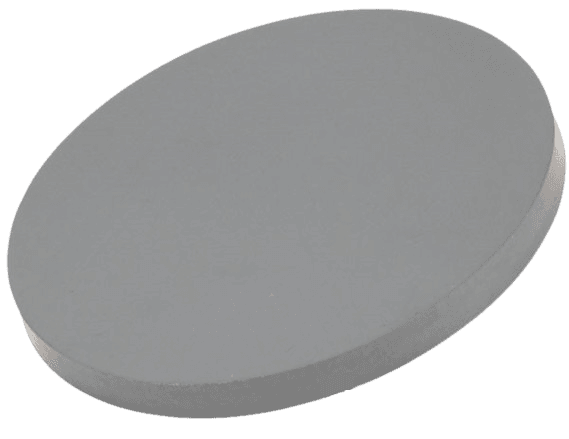
Lanthanum Lithium Titanate sputtering targets are advanced oxide ceramic materials widely used in thin-film research and functional coating development. Owing to their unique crystal structure and excellent ionic and dielectric properties, these targets are particularly important in solid-state batteries, oxide electronics, and advanced energy-related thin-film applications. They provide a reliable material source for depositing high-quality lithium-containing oxide films where compositional control is critical.
Detailed Description
Lanthanum Lithium Titanate, commonly known as LLTO, is a perovskite-type oxide that exhibits high lithium-ion conductivity and good chemical stability. Its structure allows lithium ions to migrate efficiently through the lattice, making LLTO an important material in next-generation solid electrolytes and electrochemical devices.
Our Lanthanum Lithium Titanate sputtering targets are produced from high-purity precursor materials through carefully controlled solid-state synthesis, calcination, and high-temperature sintering processes. These steps ensure homogeneous composition, high density, and stable mechanical strength. Precise control of lithium content is especially important, as lithium volatility can influence film stoichiometry during deposition.
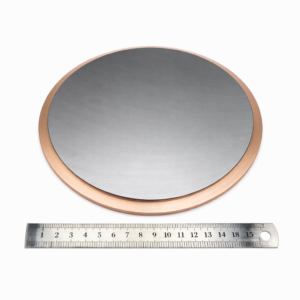
The targets are suitable for RF sputtering and pulsed-DC sputtering systems commonly used for complex oxide deposition. Planar disc targets are available in standard sizes, with optional bonding to copper or other backing plates to enhance thermal conductivity and reduce cracking risk during high-power operation. Custom compositions, dimensions, and bonding solutions can be provided to meet specific research or pilot-scale requirements.
Applications
Lanthanum Lithium Titanate sputtering targets are primarily used in:
Solid-state battery thin films and solid electrolytes
Lithium-ion conducting oxide films
Energy storage and conversion research
Oxide electronics and functional ceramic coatings
Thin-film capacitors and dielectric layers
Academic and industrial R&D on lithium-based oxides
Technical Parameters
| Parameter | Typical Value / Range | Importance |
|---|---|---|
| Material | Lanthanum Lithium Titanate (LLTO) | Defines ionic & dielectric behavior |
| Purity | 99.9% – 99.99% | Minimizes impurity-related defects |
| Crystal Structure | Perovskite-type oxide | Enables lithium-ion conduction |
| Diameter | 1″ – 4″ (custom available) | Fits standard sputtering systems |
| Thickness | 3 – 6 mm | Affects sputtering lifetime |
| Density | ≥ 95% of theoretical | Ensures stable sputtering rate |
| Backing Plate | Optional Cu / Ti | Improves heat dissipation & stability |
Comparison with Related Materials
| Material | Key Advantage | Typical Application |
|---|---|---|
| Lanthanum Lithium Titanate | High lithium-ion conductivity | Solid-state battery films |
| Lithium Lanthanum Zirconate (LLZO) | Wide electrochemical window | Solid electrolytes |
| Lithium Cobalt Oxide (LCO) | High energy density | Battery cathode films |
| Titanium Oxide (TiO₂) | Chemical stability | Functional oxide coatings |
FAQ
| Question | Answer |
|---|---|
| Can the lithium content be customized? | Yes, stoichiometry can be adjusted based on application needs. |
| Is this target suitable for RF sputtering? | Yes, it is commonly used with RF and pulsed-DC sputtering. |
| Are bonded targets available? | Yes, bonded targets with copper or other backing plates are available. |
| How do you control lithium loss? | Optimized synthesis and high-density sintering help maintain composition stability. |
Packaging
Our Lanthanum Lithium Titanate Sputtering Targets are meticulously tagged and labeled externally to ensure efficient identification and strict quality control. Each target is vacuum-sealed and protected with shock-absorbing materials to prevent damage or contamination during storage and transportation.
Conclusion
Lanthanum Lithium Titanate sputtering targets provide a stable and reliable solution for depositing lithium-conducting and dielectric oxide thin films. With high density, controlled composition, and flexible customization options, they are well suited for advanced energy storage research and functional oxide applications.
For detailed specifications and a quotation, please contact us at sales@thinfilmmaterials.com.
Reviews
There are no reviews yet.