
Introduction
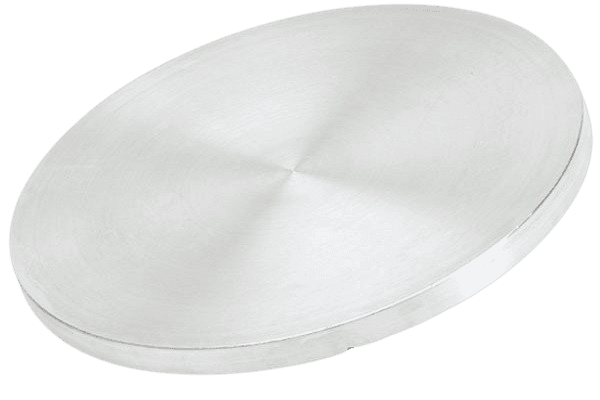
Terbium Iron Cobalt (Tb-Fe-Co) Sputtering Target is a rare-earth transition metal alloy specifically engineered for magneto-optical and magnetic thin film applications. As a classic amorphous magnetic alloy system, Tb-Fe-Co exhibits strong perpendicular magnetic anisotropy, high coercivity, and excellent magneto-optical Kerr effect (MOKE) response.
Tb-Fe-Co sputtering targets are widely used in magnetic storage media, spintronic devices, and advanced research on magnetic thin films. Their composition can be precisely tuned to achieve targeted magnetic switching behavior, thermal stability, and optical response.
Detailed Description
Tb-Fe-Co is a ternary alloy combining:
Terbium (Tb) – Provides strong magnetic anisotropy and magneto-optical activity
Iron (Fe) – Contributes high magnetic moment
Cobalt (Co) – Enhances Curie temperature and improves thermal stability
This alloy system is well known for forming amorphous thin films when deposited by magnetron sputtering. The amorphous structure is particularly advantageous for uniform magnetic domains and predictable switching characteristics.
Typical composition ranges may vary depending on application (e.g., TbₓFeᵧCo_z with customized atomic ratios). Adjusting the Tb content directly influences coercivity and compensation temperature, which are critical parameters for magneto-optical recording and spintronic research.
Tb-Fe-Co sputtering targets are produced through vacuum melting and controlled casting processes to ensure homogeneous composition. Advanced hot pressing or HIP consolidation methods are often applied to achieve high density (≥ 98–99% theoretical density), minimizing arcing and particle generation during sputtering.
Available configurations include:
Planar circular targets (commonly 1″–8″ diameter or larger custom sizes)
Rectangular targets for inline coating systems
Bonded to copper backing plates for improved thermal management
The alloy’s magnetic performance depends strongly on composition uniformity and impurity control. Oxygen and carbon levels are tightly regulated to preserve film purity and magnetic consistency.
Applications
Terbium Iron Cobalt sputtering targets are primarily used in:
Magneto-Optical Recording Media – Perpendicular magnetic recording layers
Spintronic Devices – Magnetic tunnel junctions and spin-based electronics
Magnetic Sensors – Thin film magnetic detection systems
Research & Development – Studies of compensation temperature and domain dynamics
Advanced Memory Technologies – Emerging magnetic storage platforms
Tb-Fe-Co thin films are especially valued for their fast magnetic switching and stable perpendicular anisotropy.
Technical Parameters
| Parameter | Typical Value / Range | Importance |
|---|---|---|
| Purity | 99.9% – 99.99% (metals basis) | Reduces magnetic impurities and improves film stability |
| Composition | Custom atomic ratio (e.g., Tb 20–30%) | Controls coercivity and compensation temperature |
| Density | ≥ 98–99% of theoretical | Minimizes arcing and ensures stable sputtering |
| Diameter | 25 – 200 mm (custom available) | Matches sputtering system holders |
| Thickness | 3 – 6 mm (typical) | Influences target lifetime |
| Bonding | Copper backing plate (optional) | Improves heat dissipation and structural stability |
Comparison with Related Materials
| Material | Key Advantage | Typical Application |
|---|---|---|
| Tb-Fe-Co | Strong perpendicular anisotropy & MOKE response | Magneto-optical storage |
| Gd-Fe-Co | Tunable compensation temperature | Magnetic switching research |
| Co-Pt | High magnetic anisotropy | Perpendicular recording |
| Fe-Co | High saturation magnetization | Magnetic cores & sensors |
Compared to Gd-Fe-Co, Tb-Fe-Co typically offers stronger magneto-optical effects, making it more suitable for optical magnetic recording applications.
FAQ
| Question | Answer |
|---|---|
| Can the Tb-Fe-Co composition be customized? | Yes, the Tb, Fe, and Co atomic ratios can be precisely tailored to achieve desired magnetic properties. |
| Is the target suitable for DC or RF sputtering? | Typically DC magnetron sputtering is used due to the metallic nature of the alloy. |
| Does the target require backing plate bonding? | For higher power or larger diameters, copper backing plates are recommended to enhance thermal management. |
| What is the typical film structure? | Tb-Fe-Co films are generally amorphous when sputtered under standard conditions. |
| How is the product packaged? | Vacuum-sealed with protective cushioning and export-grade cartons or wooden crates. |
Packaging
Our Terbium Iron Cobalt Sputtering Targets are meticulously tagged and labeled externally to ensure efficient identification and maintain high standards of quality control. We take great care to prevent any potential damage during storage and transportation, ensuring the targets arrive in perfect condition.
Conclusion
Terbium Iron Cobalt (Tb-Fe-Co) Sputtering Targets provide a high-performance solution for magneto-optical and advanced magnetic thin film applications. With tunable composition, high density, and reliable magnetic characteristics, Tb-Fe-Co alloys support cutting-edge research and industrial magnetic technologies.
For detailed specifications and a quotation, please contact us at sales@thinfilmmaterials.com.

Reviews
There are no reviews yet.