
Introduction
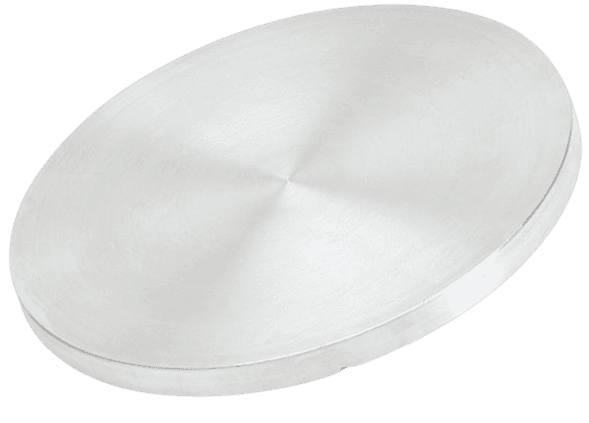
Zirconium Tungsten (Zr/W) Sputtering Target is a high-performance alloy target designed for depositing durable, corrosion-resistant, and high-temperature thin films. By combining zirconium’s strong chemical affinity and oxidation resistance with tungsten’s exceptional hardness and thermal stability, Zr/W alloys provide balanced mechanical strength and functional performance in demanding coating environments.
Zr/W sputtering targets are widely used in protective coatings, diffusion barriers, advanced electronics, and high-temperature applications where both structural integrity and chemical stability are required.
Detailed Description
Zirconium and tungsten form alloy systems that exhibit enhanced hardness, wear resistance, and thermal endurance compared to either element alone. The addition of tungsten improves high-temperature strength and resistance to sputtering erosion, while zirconium contributes corrosion resistance and improved adhesion to various substrates.
Zr/W sputtering targets are manufactured through vacuum melting, powder metallurgy (PM), or hot isostatic pressing (HIP) processes to ensure homogeneous alloy distribution and high density (≥ 98–99% of theoretical density). Tight control of oxygen and interstitial elements is critical, as zirconium is reactive and impurity levels directly influence film performance.
Typical composition ratios are customizable (e.g., Zr:W = 50:50 wt%, 70:30 wt%, or application-specific blends). The selected ratio determines:
Film hardness
Electrical resistivity
Oxidation resistance
Thermal expansion behavior
Available configurations include:
Planar circular targets (1″–8″ diameter or larger custom sizes)
Rectangular targets for inline sputtering systems
Bonded copper backing plates for enhanced heat dissipation
Due to its metallic conductivity, Zr/W targets are typically used in DC magnetron sputtering systems, though RF sputtering may be applied in specific setups.
Deposited Zr/W thin films exhibit:
High hardness and wear resistance
Excellent thermal stability
Strong adhesion to steel, silicon, and ceramic substrates
Improved oxidation resistance compared to pure tungsten films
Applications
Zirconium Tungsten sputtering targets are used in:
Protective Hard Coatings – Wear-resistant industrial surfaces
Diffusion Barriers – Microelectronic interconnect structures
High-Temperature Components – Thermal shielding and structural films
Semiconductor Devices – Stable metallic thin films
Tooling & Mold Coatings – Enhanced durability coatings
Research & Advanced Materials Development – Alloy film engineering
The alloy’s combination of toughness and thermal stability makes it suitable for harsh operating conditions.
Technical Parameters
| Parameter | Typical Value / Range | Importance |
|---|---|---|
| Purity | ≥ 99.9% (metals basis typical) | Reduces contamination and improves film consistency |
| Composition Ratio | Custom (e.g., 50:50 wt% or 70:30 wt%) | Controls mechanical and electrical properties |
| Density | ≥ 98–99% of theoretical | Minimizes arcing and particle generation |
| Diameter | 25 – 200 mm (custom available) | Compatible with sputtering systems |
| Thickness | 3 – 6 mm (typical) | Influences target lifetime |
| Bonding | Copper backing plate (optional) | Enhances heat transfer and stability |
Comparison with Related Materials
| Material | Key Advantage | Typical Application |
|---|---|---|
| Zr/W | Balanced hardness & oxidation resistance | High-temperature coatings |
| Pure Tungsten | Extremely high melting point | Barrier layers |
| Pure Zirconium | Strong corrosion resistance | Chemical environments |
| Zr/Ti | Improved toughness and adhesion | Protective coatings |
Compared to pure tungsten, Zr/W alloys offer improved oxidation resistance and adhesion, while maintaining strong mechanical performance.
FAQ
| Question | Answer |
|---|---|
| Can the Zr/W ratio be customized? | Yes, composition can be tailored to meet specific mechanical and electrical requirements. |
| Is the target suitable for DC sputtering? | Yes, due to its metallic conductivity, DC magnetron sputtering is typically used. |
| Are backing plates recommended? | For larger diameters or high-power applications, copper backing plates improve thermal management. |
| What industries use Zr/W most frequently? | Semiconductor manufacturing, industrial tooling, high-temperature systems, and materials research. |
| How is the target packaged? | Vacuum-sealed with protective cushioning and export-grade cartons or wooden crates. |
Packaging
Our Zirconium Tungsten Sputtering Targets are meticulously tagged and labeled externally to ensure efficient identification and maintain high standards of quality control. We take great care to prevent any potential damage during storage and transportation, ensuring the targets arrive in perfect condition.
Conclusion
Zirconium Tungsten (Zr/W) Sputtering Targets provide a durable and thermally stable solution for advanced thin film deposition. With customizable composition, high density, and reliable performance under demanding conditions, Zr/W alloys support industrial and research applications requiring robust metallic coatings.
For detailed specifications and a quotation, please contact us at sales@thinfilmmaterials.com.

Reviews
There are no reviews yet.