Introduction
Niobium powder has emerged as a strategic material in metal additive manufacturing (AM), particularly for applications requiring exceptional high-temperature stability, corrosion resistance, and mechanical reliability. As industries such as aerospace, energy, and advanced electronics push toward more demanding operating environments, niobium-based materials offer a unique balance of ductility and thermal performance that is difficult to achieve with conventional alloys.
In powder-based AM technologies—especially Laser Powder Bed Fusion (LPBF) and Directed Energy Deposition (DED)—the quality and characteristics of niobium powder directly influence the integrity of the final components. Understanding its properties, processing considerations, and optimization strategies is essential for achieving consistent, high-performance results.
Key Properties of Niobium Powder
1. High Melting Point and Thermal Stability
Niobium has a melting point of approximately 2,477°C, making it suitable for extreme-temperature environments. This property allows AM-produced parts to maintain structural integrity under thermal cycling and prolonged exposure to heat.
2. Excellent Ductility and Formability
Unlike many refractory metals, niobium exhibits relatively high ductility at room temperature. This reduces the risk of cracking during rapid solidification in AM processes.
3. Corrosion and Oxidation Resistance
Niobium forms a stable oxide layer, providing resistance to chemical corrosion in aggressive environments, including acids and molten salts.
4. Superconducting Properties
In specialized applications, niobium powders are used for superconducting components, particularly in research and advanced electronics.
Powder Characteristics for Additive Manufacturing
Particle Morphology
- Spherical powders (typically produced via gas atomization or plasma spheroidization) are preferred
- Improve flowability and packing density
- Enable uniform layer deposition in LPBF systems
Particle Size Distribution (PSD)
- Typical range: 15–53 µm (LPBF)
- Narrow PSD ensures consistent melting behavior and reduces porosity
Purity and Oxygen Content
- High purity (≥ 99.9%) is critical
- Oxygen and interstitial impurities can significantly affect ductility and mechanical strength
Flowability and Apparent Density
- Good flowability ensures smooth recoating
- High packing density leads to improved part density and fewer defects
Additive Manufacturing Processes for Niobium
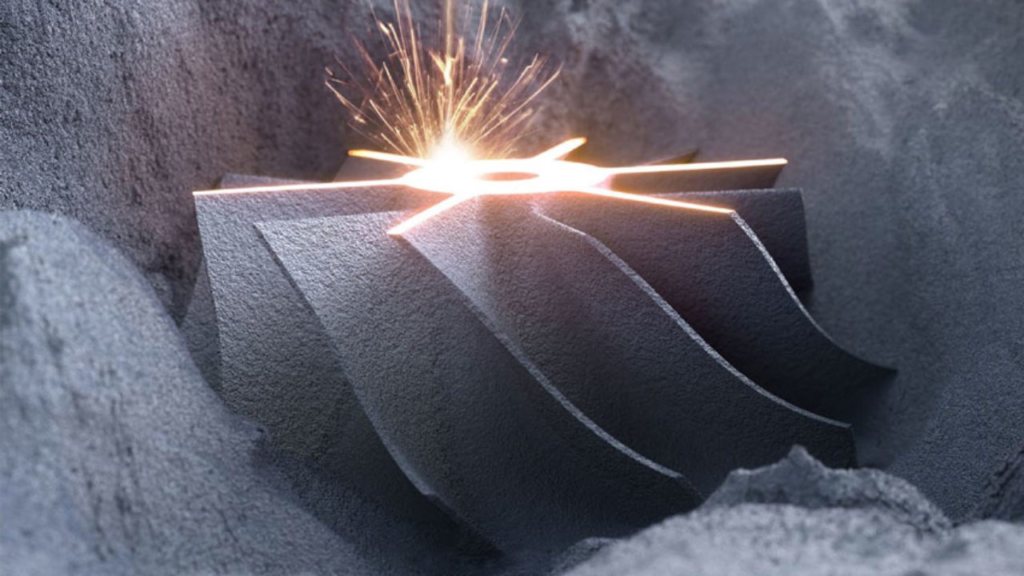
Laser Powder Bed Fusion (LPBF)
- Most commonly used method
- Enables high-resolution, complex geometries
- Requires precise control of laser parameters due to niobium’s high melting point
Directed Energy Deposition (DED)
- Suitable for larger components and repair applications
- Allows gradient materials and hybrid structures
Binder Jetting (Emerging)
- Offers high productivity
- Requires post-sintering, which can be challenging for refractory metals
Processing Challenges and Solutions
1. High Melting Temperature
Challenge: Requires higher laser energy input
Solution:
- Optimize laser power and scan speed
- Use preheating to reduce thermal gradients
2. Oxidation Sensitivity
Challenge: Niobium reacts with oxygen at elevated temperatures
Solution:
- Use high-purity inert gas (argon)
- Maintain low oxygen levels (<100 ppm) in the build chamber
3. Residual Stress and Warping
Challenge: Thermal gradients lead to distortion
Solution:
- Implement substrate preheating
- Optimize scan strategies (e.g., chessboard pattern)
4. Powder Handling and Contamination
Challenge: Fine powders are sensitive to contamination
Solution:
- Store in vacuum-sealed or inert environments
- Use controlled handling systems (glovebox)
Performance Optimization Strategies
Process Parameter Optimization
| Parameter | Optimization Strategy | Impact |
|---|---|---|
| Laser Power | Adjust to ensure full melting | Reduces porosity |
| Scan Speed | Balance with energy input | Improves microstructure |
| Layer Thickness | Typically 20–50 µm | Affects resolution |
| Hatch Spacing | Optimize overlap | Enhances density |
Heat Treatment
Post-processing heat treatments can:
- Relieve residual stress
- Improve grain structure
- Enhance mechanical properties
Alloying and Modification
Niobium is often used in alloy systems (e.g., Nb-Ti, Nb-based superalloys) to:
- Increase strength
- Improve oxidation resistance
- Tailor functional properties
Applications of Niobium Powder in AM
Aerospace Components
- High-temperature structural parts
- Rocket and propulsion system components
Energy Sector
- Heat exchangers
- Components for nuclear and fusion systems
Electronics and Superconductivity
- Superconducting magnets
- Thin film and advanced electronic components
Medical and Specialized Engineering
- Biocompatible implants (emerging)
- Custom high-performance parts
Comparison with Other Metal Powders
| Material | Key Advantage | Limitation |
|---|---|---|
| Niobium | High temperature stability | High cost |
| Titanium | Lightweight | Lower temperature resistance |
| Tantalum | Excellent corrosion resistance | Higher density |
| Molybdenum | High strength at temperature | Brittle behavior |
Future Trends and Development
- Improved powder production techniques for better sphericity and purity
- Hybrid manufacturing approaches combining AM with traditional methods
- Expanded use in extreme environments, especially aerospace and energy
- Development of niobium-based alloys tailored for AM
Conclusion
Niobium powder plays a critical role in advancing additive manufacturing technologies, particularly for applications requiring high-temperature performance, corrosion resistance, and structural reliability. While challenges such as oxidation sensitivity and processing complexity remain, ongoing improvements in powder production and AM process optimization continue to unlock its full potential.
For manufacturers and researchers seeking high-performance materials, niobium powder offers a compelling solution—especially when paired with precise control over powder characteristics and processing parameters.
For detailed specifications and a quotation, please contact us at sales@thinfilmmaterials.com.