

 MSDS File
Introduction
Lanthanum Titanate Evaporation Materials (LaTiO₃) are high-purity perovskite oxide source materials engineered for thin film deposition in advanced oxide electronics and correlated electron systems. LaTiO₃ is a strongly correlated transition metal oxide known for its Mott insulating behavior and its importance in oxide heterostructures, interface engineering, and functional thin film research.
As a complex oxide evaporation material, LaTiO₃ enables the fabrication of epitaxial or polycrystalline films used in superconducting interfaces, oxide electronics, and energy-related research.
Detailed Description
LaTiO₃ crystallizes in a distorted perovskite structure and exhibits unique electronic properties associated with Ti³⁺ valence states. It is widely studied for its role in:
Strong electron correlation phenomena
Metal–insulator transitions
Interface conductivity in oxide heterostructures
Emergent electronic phases
Lanthanum Titanate Evaporation Materials are prepared using high-purity lanthanum and titanium precursors followed by controlled solid-state reaction and sintering processes. High-density ceramic processing ensures uniform composition and stable evaporation behavior.
Because LaTiO₃ is oxygen-sensitive, precise control of stoichiometry is essential during both material preparation and deposition. The feedstock is optimized to maintain phase stability under high-vacuum evaporation conditions.
Available forms include:
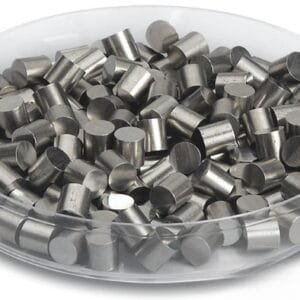
Sintered ceramic pellets
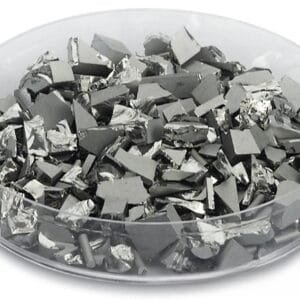
Broken pieces or granules
Custom-sized evaporation feedstock
These forms are compatible with electron beam evaporation and other high-temperature PVD techniques.
Applications
Lanthanum Titanate (LaTiO₃) Evaporation Materials are widely used in:
Oxide heterostructure fabrication
Mott insulator thin films
Superconducting interface research
Metal–insulator transition studies
Spintronic oxide devices
Advanced electronic materials research
Energy storage and catalytic thin films
LaTiO₃ films are often combined with SrTiO₃ or other perovskite substrates to explore interface-driven conductivity and emergent electronic phenomena.
Technical Parameters
| Parameter | Typical Value / Range | Importance |
|---|---|---|
| Chemical Formula | LaTiO₃ | Defines perovskite structure |
| Purity | 99.9% – 99.99% | Reduces impurity phases |
| Form | Pellets / Granules / Pieces | Deposition compatibility |
| Density | ≥ 95% theoretical density | Stable evaporation behavior |
| Melting Behavior | High-temperature oxide ceramic | Suitable for e-beam evaporation |
| Deposition Method | Electron Beam (E-beam) | Thin film fabrication |
| Stoichiometry Control | Optimized during processing | Ensures film phase integrity |
Comparison with Related Materials
| Material | Key Advantage | Typical Application |
|---|---|---|
| LaTiO₃ | Strong electron correlation effects | Oxide electronics |
| SrTiO₃ | Band insulator & lattice template | Epitaxial substrates |
| LaAlO₃ | Interface conductivity with SrTiO₃ | 2DEG structures |
| LaNiO₃ | Metallic oxide behavior | Conductive oxide films |
Compared with SrTiO₃, LaTiO₃ introduces correlated electronic behavior. Compared with LaNiO₃, it exhibits insulating properties driven by electron interactions rather than metallic conduction.
FAQ
| Question | Answer |
|---|---|
| Is LaTiO₃ suitable for electron beam evaporation? | Yes, high-density ceramic forms are optimized for stable e-beam evaporation. |
| Can composition be customized? | Yes, slight stoichiometric adjustments can be discussed for specific research needs. |
| Is oxygen control important during deposition? | Yes, oxygen partial pressure strongly influences film properties. |
| Can small quantities be supplied? | Yes, R&D-scale quantities are available. |
| How is it packaged? | Vacuum-sealed and moisture-protected packaging ensures stability during transport. |
Packaging
Our Lanthanum Titanate Evaporation Materials (LaTiO₃) are meticulously tagged and labeled externally to ensure efficient identification and maintain high standards of quality control. Each batch is carefully protected to prevent contamination and mechanical damage during storage and shipment.
Conclusion
Lanthanum Titanate (LaTiO₃) Evaporation Materials provide a reliable source material for advanced oxide thin film research and strongly correlated electronic systems. With controlled stoichiometry, high purity, and compatibility with electron beam evaporation, LaTiO₃ supports cutting-edge research in oxide electronics and interface-driven phenomena.
For detailed specifications and a quotation, please contact us at sales@thinfilmmaterials.com.
Reviews
There are no reviews yet.